
In 2003, I found myself among a group called “ON THE EDGE,” where we delved into life’s intricacies and sought to push boundaries.
It was during one of these meetings that fellow member Gene Seidman introduced us to the concept of lagniappe—a Creole term signifying that little extra something given by a merchant at the time of purchase. It immediately resonated deeply and stuck with me.
Fast forward 5 years and I’m working within the leadership team of an experiential marketing agency. We created monumental product launches and PR stunts that left a lasting impression. While many of our projects garnered acclaim like the World’s Largest Logo for KFC, I felt a sense of emptiness. The relentless pursuit of spectacle for earned media lacked substance.
Determined to find a more meaningful approach to marketing, I launched a blog titled 9 INCH MARKETING in 2009. Nothing personal [… unfortunately], the name stemmed from an intriguing fact: the average distance between the stem of the brain and the top of the heart is exactly 9 inches.
This notion became symbolic for me—a reminder that the goal of business should be to win the hearts of your customers. It was during a fateful evening in September of that year, amidst the vibrant chaos of NYC, that my perspective underwent a profound transformation.
I was at a rooftop bar with my agency colleague Brad when we struck up a conversation with an older gentleman. Our discussion veered towards the concept of timeliness, sparked by my assertion about the importance of punctuality. In response, the gentleman delivered a paradigm-shattering revelation:
“There is no such thing as being on ‘time.’ You are either early or you are late.”
This epiphany reframed my understanding not only of punctuality but also of customer expectations in business. The notion of merely meeting expectations suddenly seemed inadequate. In business, I realized, that one must either fall short of expectations or surpass them. There is no middle ground.
Reflecting on this revelation, I came to see the fallacy of striving to meet expectations. It was a realization akin to dispelling the myths of childhood—Santa Claus, the Tooth Fairy, and the illusory concept of “meeting expectations.” In truth, exceeding expectations is the true measure of business success.
Armed with this newfound perspective, I embarked on a journey to revolutionize marketing. No longer content with surface-level spectacle, I started the Purple Goldfish Project. The Project was a quest to find 1,001 examples of companies that went beyond the expected to deliver a truly exceptional experience.
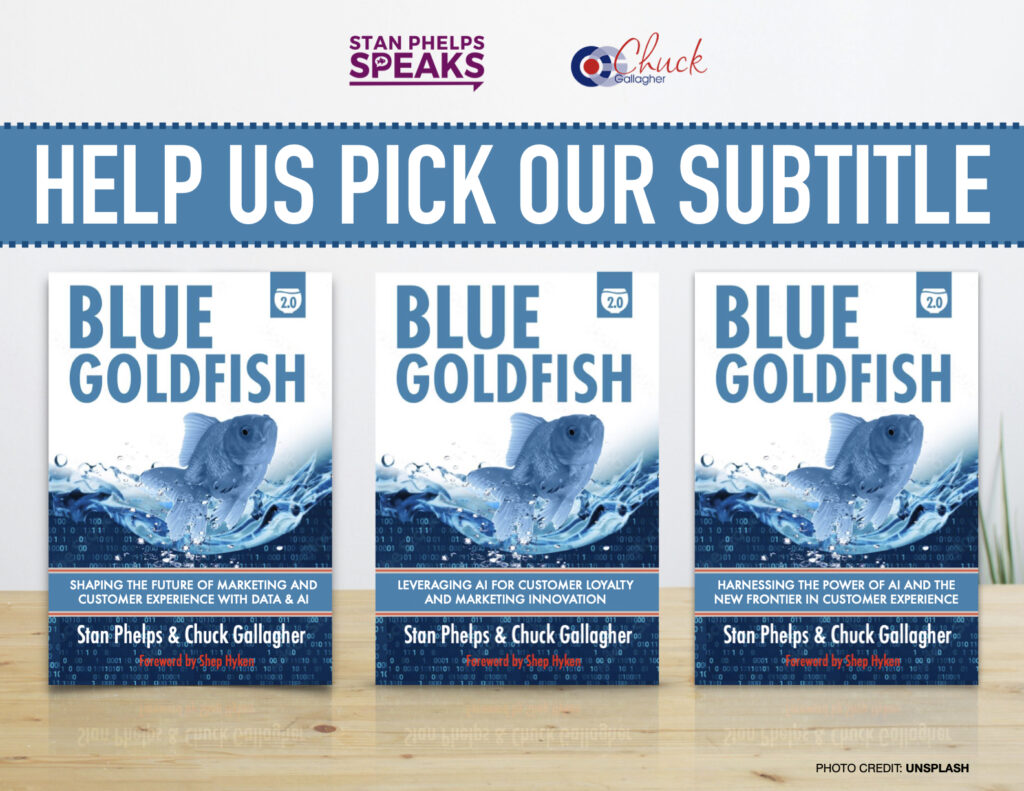
The Project led to my first book in 2012 and eventually to the creation of the Goldfish Series of books, where I shared insights on both customer and employee experience.
So I ask you: What is your lagniappe? How are you going above and beyond the transaction to win the hearts of your employees and customers? How are you navigating the longest and hardest 9 inches?