
Stan Phelp's Blog

The Goldfish Chronicles

Sharing insights on customer experience, employee engagement, and brand strategy.

Dollar Tree Stores made a major move yesterday. The chain announced they will now sell items at $1.25 and $1.50. This is a seismic shift.

A bit of background:

Dollar Tree was founded in Chesapeake, Virginia in 1986. Over the last 35 years it became the largest and most successful single-price-point retailer in North America. They now operate over 15,000 stores across the 48 contiguous US states and five Canadian provinces.

It is no longer a single-price-point retailer. The single differentiator for the chain was previously in its name. Everything costs a dollar. People would make jokes about it. They’d walk around the store and ask an associate, “How much does this cost?” Response, “A dollar.” A minute later they’d pick something else up, “How much does this cost?” I will not admit to doing this.

The chain is spinning the price increase strategy with their chin-up, “For decades, our customers have enjoyed the ‘thrill-of-the-hunt’ for value at one dollar – and we remain committed to that core proposition – but many are telling us that they also want a broader product assortment when they come to shop,” shared Mike Witynski, President and CEO of Dollar Tree in a statement to Entrepreneur Media. “We believe testing additional price points above $1 for Dollar Tree product will enable us over time to expand our assortments, introduce new products and meet more of our customers’ everyday needs.”

It will be interesting to see how customers respond to this shift in strategy. So far, response on social media has not been kind.

In the book “Pink Goldfish 2.0,” David Rendall talk about the cornerstone of our “flawsome” framework. It is the concept of Flaunting. To flaunt means to parade, show off, display, strut, or be ostentatious. It’s also about being unashamed or being proud of something.

For 35 years, Dollar Tree Stores have pioneered and owned single-price-point retail. They have now buckled.

Is only selling items for a dollar a flaw? You bet it is. Does it mean you can’t expand your offerings. Yes.

To flaunt is to be unapologetic about your organization’s flaws. You take pride in your organization’s unique characteristics. You emphasize them, accentuate them, feature them, highlight them, expose them, call attention to them, and openly display them…

You definitely aren’t trying to hide them or fix them. 

What’s your opinion? Add your two cents (or two quarters) in the comments.
Smart strategy or a systematic betrayal of brand equity?

Follow me on Twitter or LinkedIn.
Stan Phelps

Stan Phelps walks the walk. He stands out in the sea of sameness by modeling his own Differentiated Experience (DX) message: Differentiation isn’t just about what you say, it’s about what you do and, more importantly, how and why you do it. Stan leverages his unique collection of 5,000+ case studies on customer, employee, and brand experience to engage audiences with informative learning-based experiences. He believes purposeful DX wins the hearts of employees and customers, and differentiation ultimately boosts loyalty, retention, referrals, and results.

Find Stan’s in-person and virtual keynotes, workshops, and Goldfish tank programs at StanPhelps.com.
Employees First…

Years ago HCL Technologies needed a transformational change.

New CEO Vineet Nayar decided to make a statement. He set out a new strategy focusing on putting “Employees First, Customers Second.”

Vineet understood the importance of interactions between frontline employees and the customer. He calls these 24 inches the “value zone.”

Nayar drew his inspiration from Mahatma Gandhi and his famous Dandi March. Gandhi walked to the sea to make salt as a protest to the British government about their monopoly on salt production in India. This small action ignited change, becoming a catalyst that led to a large-scale uprising.

Nayar knew he needed actions and not words.

One of the Green Goldfish changes HCL Technologies made on their journey was an online forum for employees called U&I. Employees could ask any question to the senior team at HCL Technologies.

It was an open site where everyone could see the question, the questioner, and the answer.

Employees responded favorably as noted by this comment on the policy:

“This is the biggest change we have seen at HCL in years. Now we have a management team that is willing to acknowledge the dirt.”

Why open the window of information?

Vineet uses the analogy of an Amsterdam Window. Having previously lived in Amsterdam, I can attest that these windows are immense.

They are a throwback to the modest Calvinist period when subtle expressions of wealth, such as being able to afford to pay the highest window tax, were favored by the rich.
In the words of writer Joanna Tweedy,

“Today, the centuries-old glass, beautifully imperfect, frames the olive-green waters outside and lets the natural light and the eyes of curious tourists pour in.”

While visiting Amsterdam, Vineet pointed to windows and asked his friend,

“Why so large?”

His friend mentioned all the obvious reasons like letting in light and enjoying the view of the canal, but then offered a much more interesting answer.

“It keeps the house clean.”

It turns out that the bigger your windows, the more glass you have, the more visible your dirt will be—to you and to everyone who visits or passes by.

In Vineet’s words, “If you can see the dirt, you will be much more likely to get rid of it. A transparent house has a dramatic effect on the culture inside.”

Of 75 possible drivers of employee engagement, the ONE that was rated as the most important was
the extent to which “employees believed that their senior management had a sincere interest in their well-being.”

Takeaway: Transparency is key to engaging employees and winning trust. How are you opening up the window of information and demonstrating an interest in the well-being of your team?

Follow me on Twitter or LinkedIn.

Stan Phelps

Stan Phelps walks the walk. He stands out in the sea of sameness by modeling his own Differentiated Experience (DX) message: Differentiation isn’t just about what you say, it’s about what you do and, more importantly, how and why you do it. Stan leverages his unique collection of 5,000+ case studies on customer, employee, and brand experience to engage audiences with informative learning-based experiences. He believes purposeful DX wins the hearts of employees and customers, and differentiation ultimately boosts loyalty, retention, referrals, and results.

Find Stan’s in-person and virtual keynotes, workshops, and Goldfish tank programs at StanPhelps.com.
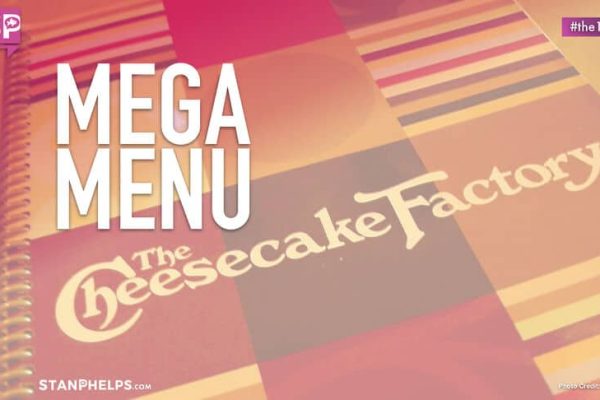
“God, that menu. Too many options” shared Kate McKinnon about The Cheesecake Factory in the movie, “The Spy Who Dumped Me.”

When it comes to menu size, shouldn’t you keep it simple? Don’t paralyze customers with choice. Less is more right? Take for example In-N-Out Burger. Their entire menu has eight items. Or maybe not.

Too much is a flaw. In Pink Goldfish 2.0, David Rendall and I share the strategy of Lopsiding. Taking an apparent flaw and then doubling or tripling down on it.

Boasting 250 menu items, (including 85 different ways to order chicken and 50 different types of cheesecake) The Cheesecake Factory menu is nearly 6,000 words. Their notoriously massive menu consists of 21 oversized and spiral-bound pages of laminated bliss.

What makes the lopsided menu even more impressive is that they are a scratch kitchen. Everything (other than the cheesecakes) is made fresh onsite. Prep begins at 6 a.m. with over 700 ingredients to make the 250 items. There are over 160 sauces made daily.

The large menu had a purpose from the beginning. Founder David Marshall Overton shared with Thrillist that the strategy was basically: the more dishes, the better. If a couple was headed out to dinner and one person was craving Italian while the other wanted Mexican, they could both happily satisfy their appetites at The Cheesecake Factory.

The lopsided size of the menu makes it remarkable. In the words of Jay Baer and Daniel Lemin in their book “Talk Triggers,”

“Because the vastness of the restaurant’s menu is so unusual that it compels conversation among its patrons. Menu breadth is its secret customer-acquisition weapon—it hides in plain sight, in the hands of each and every diner. The menu at The Cheesecake Factory is a talk trigger: a built-in differentiator that creates customer conversations.”

Takeaway: More is sometimes more. The Cheesecake Factory’s lopsided menu leads to lopsided results. Pre-pandemic, their 220 restaurants earned almost $2.5 billion each year.

Follow me on Twitter or LinkedIn.

Stan Phelps

Stan Phelps walks the walk. He stands out in the sea of sameness by modeling his own Differentiated Experience (DX) message: Differentiation isn’t just about what you say, it’s about what you do and, more importantly, how and why you do it. Stan leverages his unique collection of 5,000+ case studies on customer, employee, and brand experience to engage audiences with informative learning-based experiences. He believes purposeful DX wins the hearts of employees and customers, and differentiation ultimately boosts loyalty, retention, referrals, and results.

Find Stan’s in-person and virtual keynotes, workshops, and Goldfish tank programs at StanPhelps.com.
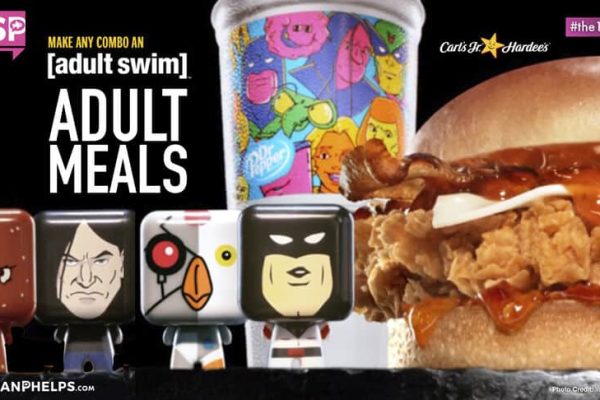
Hardees Restaurants partners with the Cartoon Network‘s [Adult Swim] this Fall to offer Adult Meals. It’s a partnership of two differentiated brands 20 years in the making.

Let’s explore each starting with Adult Swim. It is the adult programming at night on the Cartoon Network. Adult Swim was born out of a unique combination of insights.

1. Ad buyers did not want to buy any ads on the network after 10 p.m. They reasoned that kids were already in bed.

2. At any given time, one out of every three people watching Cartoon Network are adults. Adults who weren’t parents.

In September 2001, the adult programming block was born. It ran two nights a week and was produced practically on zero budget. It needed a name. The creative team considered Aviso, Parental Block, and Insert Quarter before diving all-in with Adult Swim.

Back to Hardee’s and Carl’s Jr. In 2001, the franchise was struggling. New President and CEO Andrew F. Puzder needed something new. He also had a couple of insights:

1. Hardees Restaurants had become in his words, “a jack of all trades and master of none.”

2. In the early 2000s, the industry was in flux. Other fast-food companies were furiously adding healthy options to their menu as a result of the Morgan Spurlock documentary “Supersize Me.” Fast food outlets were now offering water, fruit, yogurt, and salads.

Did they try to get healthier? Nope. Hardee’s and Carl’s Jr. came up with Thickburgers.

What is a Thickburger? It is a very large hamburger (up to 2/3 pounds) with generous amounts of other toppings. The All-American Thickburger is topped with a full hot dog and potato chips as well as lettuce, tomato, mayo, ketchup, onions, and pickles. The Philly Cheesesteak Thickburger piles an already unhealthy sandwich on top of an unhealthy hamburger to form a monster that contains enough calories to fuel the average person for about a week.

In Pink Goldfish 2.0, David Rendall and I share how Hardees Restaurants moved in the opposite direction. They took fast food, which was already tremendously unhealthy, and they lopsided it to make it even unhealthier with the Thickburger. They took fatty foods and made them fattier. They took nasty food and made it nastier. 

THE PARTNERSHIP

Cartoons aren’t just for children. Neither are free toys with your fast food meals. Hardee’s and Carl’s Jr. will be including toys for adults in some of their meals this Fall. There is a catch. To get one of those cool [Adult Swim] character toys, it’ll cost you an extra dollar.

Anyone else up for a Hot Honey Hand-Breaded Chicken Sandwich with a Space Ghost figurine on the side?

Follow me on Twitter or LinkedIn.

Stan Phelps

Stan Phelps walks the walk. He stands out in the sea of sameness by modeling his own Differentiated Experience (DX) message: Differentiation isn’t just about what you say, it’s about what you do and, more importantly, how and why you do it. Stan leverages his unique collection of 5,000+ case studies on customer, employee, and brand experience to engage audiences with informative learning-based experiences. He believes purposeful DX wins the hearts of employees and customers, and differentiation ultimately boosts loyalty, retention, referrals, and results.

Find Stan’s in-person and virtual keynotes, workshops, and Goldfish tank programs at StanPhelps.com.
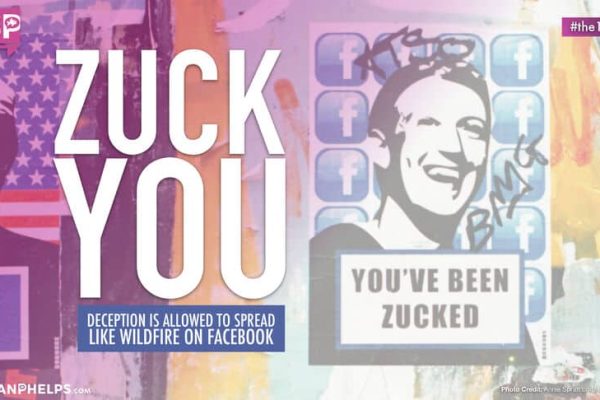
Deception is allowed to spread like wildfire on Facebook. That’s the view of Marc Benioff.

I tend to agree. Yesterday I went back and forth with a friend on vaccinations.

Here’s what I was told:

“Only wish we were given all of the facts.”

“Not saying they are purposely being withheld, but why aren’t they publicly being shared? When this happens, it certainly raises eyebrows and garners yet more questions.”

“Doctors too have been wrong in the past…just saying!”

If I read between the lines, somebody is getting Zucked into a potentially false narrative.

Reporting over the last week from The Wall Street Journal put forth internal documents on how Facebook is well aware of its platforms’ negative effects on users. And how it has repeatedly failed to address them.

Three years ago Benioff bought TIME Magazine in an effort to curb the issue. He feels TIME can be part of the solution by continuing to carry out its journalistic duty. He’s accountable for what he publishes and wants Facebook to carry the same level of accountability.

Benioff wants Congress to review existing laws in an effort to stop the “level of deceit” on social networks.

IS BENIOFF RIGHT OR IS HE AN IDIOT?

If you think he’s an idiot, you are not the only one.

Back in 1999, Benioff invited three friends to his San Francisco apartment. He pitched them a business idea. To say it got a lukewarm response is an understatement. Co­founder Dave Moellenhoff didn’t sugarcoat it,

“You’re an idiot. That’s the stupidest thing. This is never going to work.”

Undaunted, they pressed forward and launched one of the first enterprise cloud software services in the world. Pioneering the concept of delivering enterprise applications via a simple website.

That company was Salesforce.

Follow me on Twitter or LinkedIn.

Stan Phelps

Stan Phelps walks the walk. He stands out in the sea of sameness by modeling his own Differentiated Experience (DX) message: Differentiation isn’t just about what you say, it’s about what you do and, more importantly, how and why you do it. Stan leverages his unique collection of 5,000+ case studies on customer, employee, and brand experience to engage audiences with informative learning-based experiences. He believes purposeful DX wins the hearts of employees and customers, and differentiation ultimately boosts loyalty, retention, referrals, and results.

Find Stan’s in-person and virtual keynotes, workshops, and Goldfish tank programs at StanPhelps.com.
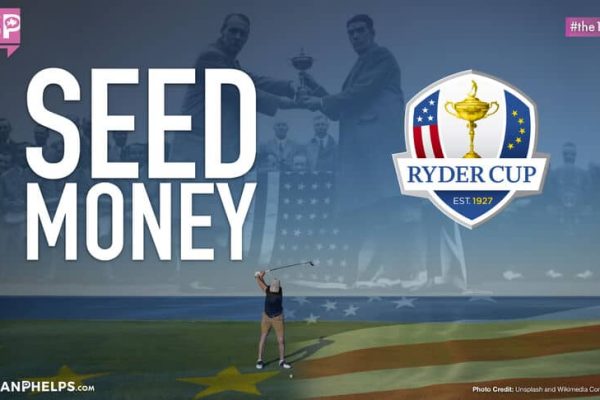
A 50-year-old named Samuel experienced a period of ill health in 1908. A preacher at Trinity Congregational Church in St. Albans suggested that he take up golf as a way to get more fresh air. 

He grabbed a club and quickly became hooked. Soon he was a single-figure handicap golfer.

Over the next two decades, he would begin to sponsor both players and tournaments.

One of those tournaments in 1926 was an informal match was held at Wentworth. It pitted a team of professionals from Great Britain against the US.

It would become the impetus for the first “official” match for the Ryder Cup, staged at Worcester Country Club in Massachusetts the following year.

Samuel Ryder donated the gold trophy for the event. It was manufactured by Mappin & Webb. at a cost of nearly £300 pounds. That’s the equivalent of over $25,000 today. That’s some seed money. In this case, it literally was.

Samuel was a pioneer in business. He made his fortune by selling packets of seeds through the mail. He differentiated via low cost and quick shipping. The packets were priced at one penny each.

Back to the Ryder Cup. It is a study in differentiation:

– Golf is an individual sport, the Ryder Cup is a team competition.

– Professionals play for big prize money, Ryder Cup participants receive no prize money.

– Golf tournaments are played annually, the Ryder Cup is played only every two years.

– Golf is stroke play and won by the lowest score, the Ryder Cup is a series of 28 match play events.

– You win or lose in golf, whereas you can tie in the Ryder Cup.

– Tournaments are usually played on the same course or the same country, the Ryder Cup alternates between the US and Europe.

– Tournaments are played over four days, the Ryder Cup in three.

Back to Samuel. He was able to see the first two home matches of the competition before he passed. It must have been a thrill for the Englishman to present the cup that bore his name to Britain’s successful captain George Duncan in 1929.

I had tickets to go to the Ryder Cup 20 years ago. Due to 9/11, it never happened that year.

Fortunately, I was able to attend the following year. I’ve been blessed to go to many sporting events in my 52 trips around the sun. And even though the US lost in 2002 at The Belfry Hotel & Resort, it ranks as one of the very best experiences of my life. Hat tip to my Aussie mate Ross Shaw who joined me in 2002 and to good friend and fellow speaker Mike Mooney who is currently up in Whistling Straits for the weekend.

Follow me on Twitter or LinkedIn.

Stan Phelps

Stan Phelps walks the walk. He stands out in the sea of sameness by modeling his own Differentiated Experience (DX) message: Differentiation isn’t just about what you say, it’s about what you do and, more importantly, how and why you do it. Stan leverages his unique collection of 5,000+ case studies on customer, employee, and brand experience to engage audiences with informative learning-based experiences. He believes purposeful DX wins the hearts of employees and customers, and differentiation ultimately boosts loyalty, retention, referrals, and results.

Find Stan’s in-person and virtual keynotes, workshops, and Goldfish tank programs at StanPhelps.com.

“Don’t Get Vaccinated.” That’s the message from the Wilmore Funeral Home in Charlotte.

Actually, it’s a message from BooneOakley. The North Carolina advertising firm put together the campaign. The advertising truck commissioned by the agency circled Bank of America Stadium on Sunday.

But here’s the deal. There is no Wilmore Funeral Home.

If you go to wilmorefuneralhome.com, it’s a simple page that says, “Get vaccinated now. If not, see you soon.”

There is only one link. It brings you to StarMed Healthcare. The site features information about the three vaccines. It encourages visitors, “You have a spot. Take your shot.”

The faux campaign has gone viral. According to The Washington Post,

“It turned out to be an elaborate and unorthodox campaign to promote the coronavirus vaccines — one that drew applause from local hospital leaders and social media users as it went viral on Twitter, while leaving some experts in vaccine marketing questioning whether any holdouts would be swayed by the stark message.”

The approach by BooneOakley is a great example of the Pink Goldfish strategy of Opposing. In Pink Goldfish 2.0, David Rendall and I share how opposing is doing the exact opposite of what others are doing. It’s being unlike the competition. It’s doing things that conflict with traditional methods. 

“Everything that’s being done right now is pretty straightforward — ‘get the shot,’ ‘get vaccinated today,’ ” David Oakley shared in an interview with WBTV. “It was a different way of going about the message.”

Instead of more of the same, the agency went in the opposite direction and it go attention.

It’s worth taking a look at the definition of opposite. It means, “contrary or radically different in some respect common to both, as in nature, qualities, direction, result, or significance.” 

Let’s face it. Nothing seems to be working in North Carolina. My adopted home state is lagging behind the national average. Less than half of eligible recipients have been fully vaccinated.

The numbers are troubling. According to NC DHHS, there are currently 3,464 people hospitalized statewide and over 15,000 people have died from COVID-19 since the pandemic began. 

Your take, is this different approach going to be effective?

Follow me on Twitter or LinkedIn.

Stan Phelps

Stan Phelps walks the walk. He stands out in the sea of sameness by modeling his own Differentiated Experience (DX) message: Differentiation isn’t just about what you say, it’s about what you do and, more importantly, how and why you do it. Stan leverages his unique collection of 5,000+ case studies on customer, employee, and brand experience to engage audiences with informative learning-based experiences. He believes purposeful DX wins the hearts of employees and customers, and differentiation ultimately boosts loyalty, retention, referrals, and results.

Find Stan’s in-person and virtual keynotes, workshops, and Goldfish tank programs at StanPhelps.com.
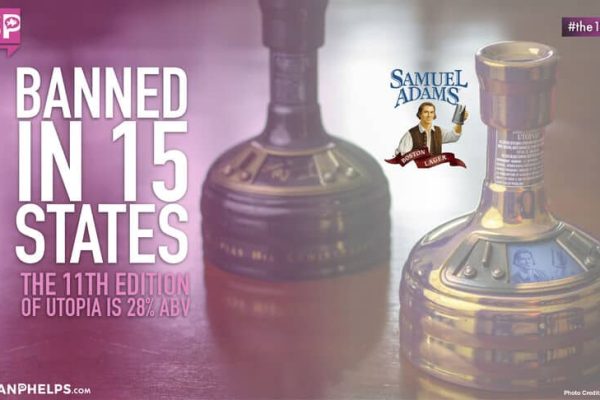
The 11th edition of Sam Adams Utopia is banned in 15 states.

I can’t buy it because I live in North Carolina.

Nor can you if you live in Alabama, Arkansas, Georgia, Idaho, Missouri, Mississippi, Montana, New Hampshire, Oklahoma, Oregon, South Carolina, Utah, Vermont, or West Virginia.

The reason is alcohol content. Sam’s extreme barrel aging creates a beer that is 28% ABV (alcohol by volume) and costs $240 a bottle. That’s 56 proof.

Utopia is released every two years in limited quantities. This edition was finished using 2,000 pounds of cherries bringing a slight sweetness and tartness to the palate.

Some of the beer used has been aging in casks for nearly 30 years. Isn’t that inefficient?

In Pink Goldfish 2.0, David Rendall and I profile Sam Adams in our Flaunting chapter.

We share how efficiency is important for the right things, the things that matter the most to your customers and employees.

But maybe deliberate inefficiency can be a strength.

The Boston Beer Company flaunts that Sam Adams has been, “Brewed Inefficiently since 1984.”

According to a blog post by Tim Williams, “This classic Boston beer brand allows extra time for its hops to fully mature in order to craft its full-flavored lager. Sam Adams could have a more ‘efficient’ brewing process, but it would result in a much less satisfying product.”

At $240 a bottle, you’d think Utopia would be a huge moneymaker for the brand. It’s not given the space the barrels occupy for extended periods.

The word utopia was coined by Sir Thomas More. He used it in a book to describe a perfect, fictional world of the coast of South America. The word itself was a pun taken from the Greek ou-topos meaning “no place” or “nowhere.”

Perhaps it’s an unsolvable quest for the perfect blend, but founder Jim Koch calls Sam Adams Utopia “a labor of love.”

Takeaway – Sometimes a Pink Goldfish is a beer that’s unapologetically strong, expensive, and inefficient. 

Follow me on Twitter or LinkedIn.

Stan Phelps

Stan Phelps walks the walk. He stands out in the sea of sameness by modeling his own Differentiated Experience (DX) message: Differentiation isn’t just about what you say, it’s about what you do and, more importantly, how and why you do it. Stan leverages his unique collection of 5,000+ case studies on customer, employee, and brand experience to engage audiences with informative learning-based experiences. He believes purposeful DX wins the hearts of employees and customers, and differentiation ultimately boosts loyalty, retention, referrals, and results.

Find Stan’s in-person and virtual keynotes, workshops, and Goldfish tank programs at StanPhelps.com.

In business, are you playing chess or checkers? I think we all need to be asking ourselves this question. Are we becoming reactionary to the environment and making moves hastily? That’s typically the mentality of a checkers player.

Or are you seeing the entire board and planning many moves in advance? Sometimes understanding the need to step back and defend. Knowing you might need to lose a piece or two in the short-term, but staying true to your overall strategy. That’s a chess mindset.

My hope is that leaders will step back and take more of a chess mindset. A mindset where you respond thoughtfully to pressure and see business as the ultimate game. This is a concept that we discuss in Diamond Goldfish, co-authored by Travis Carson and Tony Cooper. In the book we share,

“Now referring to business as ‘a game’ isn’t meant to downplay its importance or significance. It’s merely to put it into perspective. The game of business comes with real consequences of success and failure. Making mistakes is frustrating, failing to win a project can really sting, and getting fired (or laid off) could be devastating. But regardless of how those things make you feel, none of them will actually kill you. This is what we mean by calling it a game.”

Which game are you playing?

Follow me on Twitter or LinkedIn.

Stan Phelps

Stan Phelps walks the walk. He stands out in the sea of sameness by modeling his own Differentiated Experience (DX) message: Differentiation isn’t just about what you say, it’s about what you do and, more importantly, how and why you do it. Stan leverages his unique collection of 5,000+ case studies on customer, employee, and brand experience to engage audiences with informative learning-based experiences. He believes purposeful DX wins the hearts of employees and customers, and differentiation ultimately boosts loyalty, retention, referrals, and results.

Find Stan’s in-person and virtual keynotes, workshops, and Goldfish tank programs at StanPhelps.com.

Here are five tips when getting started to deliver a business presentation from the Silver Presentation Matrix. The goal is to come across 5 by 5 (Loud & Clear). The tips range from 1 to 5 based on typical behavior:

1. COPY LAST PRESENTATION – You start with your (or someone else’s) last presentation. You change the date, the group and maybe a few other slides. Easy to produce, dangerous to present.

TIP: Don’t copy. Close PowerPoint and begin with a pen/paper and make an outline first.

2. NO QUESTION OF WIIFY – Your presentation is about what you know, want and feel.

TIP: Ask “What’s In It For You” from the audience point of view.

3. OBJECTIVES (NOT AGENDAS) – Every audience is different.

TIP: Understand what your audience wants, what they need and how they will best receive what you have to say.

4. USE STORIES & EXERCISES – We remember stories and we learn by doing.

TIP: Start with a story that the audience can relate to. Give them an exercise that shows how the presentation relates to them personally.

5. CREATE A MASTER METAPHOR – The goal is to create a memorable business presentation.

TIP: Create a master metaphor that reinforces your messaging and ONE THING you want to communicate.

Follow me on Twitter or LinkedIn.

Stan Phelps

Stan Phelps walks the walk. He stands out in the sea of sameness by modeling his own Differentiated Experience (DX) message: Differentiation isn’t just about what you say, it’s about what you do and, more importantly, how and why you do it. Stan leverages his unique collection of 5,000+ case studies on customer, employee, and brand experience to engage audiences with informative learning-based experiences. He believes purposeful DX wins the hearts of employees and customers, and differentiation ultimately boosts loyalty, retention, referrals, and results.

Find Stan’s in-person and virtual keynotes, workshops, and Goldfish tank programs at StanPhelps.com.

1 19 20 21 22 23 48
A simple illustration of a purple fish facing right on a plain background.

I've had the pleasure of working with teams at:

Three purple fish silhouettes swimming to the right on a dark background.

Find Your Best-Match Program

With over 18 possible keynote speaking presentations, workshops, and GOLDFISH TANK programs available to meet your ever-evolving needs, I’ve created this 2-minute, 6-question quiz to help you understand which program is best for you and your audience.

Meet Your Presenter

Through keynote speaking presentations, hands-on workshops, and GOLDFISH TANK programs, I empower you to power loyalty and growth.

Hi, I’m Stan Phelps. I work with organizations that want to increase loyalty, drive sales, and promote positive word-of-mouth by creating differentiated experiences.

As an author, keynote speaker, and workshop facilitator, my in-person and virtual programs stand out in a sea of sameness because I model my own message of differentiated experience (DX).

I leverage my unique collection of more than 5,500 case studies on customer, employee, and brand experience to engage audiences with practical ideas that inspire action.

A person wearing glasses and a gray quarter-zip sweater stands outdoors in front of a building with a triangular glass roof at dusk.

Every time we do business together, Something amazing happens in the world!

Through my partner B1G1, each program gives back to create global IMPACT

Two students in blue uniforms smile while washing their hands at an outdoor tap.

When we complete a GOLDFISH TANK, we give 1001 days of clean water to school children

Collage of three images: a person washing hands, a child drawing with colored pencils, and a group of people sitting outdoors with some raising their hands.

When we complete a GLOBAL engagement, we give 365 days of clean water access in Peru, 120 days of learning aids in Malaysia, and 50 days of business training for women in Malawi

Hand placing a brick on a surface with text: "One Book = One Brick" and an Amazon logo.

When someone downloads a GOLDFISH eBook, we give one brick toward building school facilities in Cambodia