
Stan Phelp's Blog

The Goldfish Chronicles

Sharing insights on customer experience, employee engagement, and brand strategy.

DELETES FACEBOOK, LEAVES SOCIAL MEDIA, MOVES TO HIMILAYAS, PIGEON DELIVERS NOTE…

“Hi, this is Steve from Sweetwater, just reaching out to make sure you are satisfied with the guitar picks you ordered in the eighth grade. If there is any way I can further assist you in making your customer experience with Sweetwater the best it can be, please feel free to call me anytime and I’ll be glad to help. 
Again, this Steve at Sweetwater, checking in about those guitar picks. My extension is 260.”

Big thanks to Marcey Rader for sharing this with me. In her words,

“This was a joke someone wrote about Sweetwater. They are well known for their customer service. Even if you buy so much as guitar strings, you have a dedicated salesperson who will call you and check in regularly to see how you like your stuff. Kevin doesn’t like it because he feels it’s too much, but his two bandmates LOVE it and say they definitely buy more because they feel it’s so personal. Not sure which goldfish it is, but worth letting you know about.”

This is an epic example of the Purple Goldfish of “Follow Up.”

Today, your brand is no longer what you tell people it is. It’s what your customers experience, how they feel about your brand, and, most importantly, what they tell other people about their experience. Great brands know their customers and create an experience that is memorable and resonates.

What are your one or two signature differentiators in customer experience? Instead of being a “me too,” what is the one special thing your company does that is superior and distinctive in the eyes of your customers? What is that little something extra that is tangible, valuable, and talkable? 

Takeaway – When customers make a joke about your signature differentiator of service, you know you are onto something special.

Follow me on Twitter or LinkedIn.
Stan Phelps

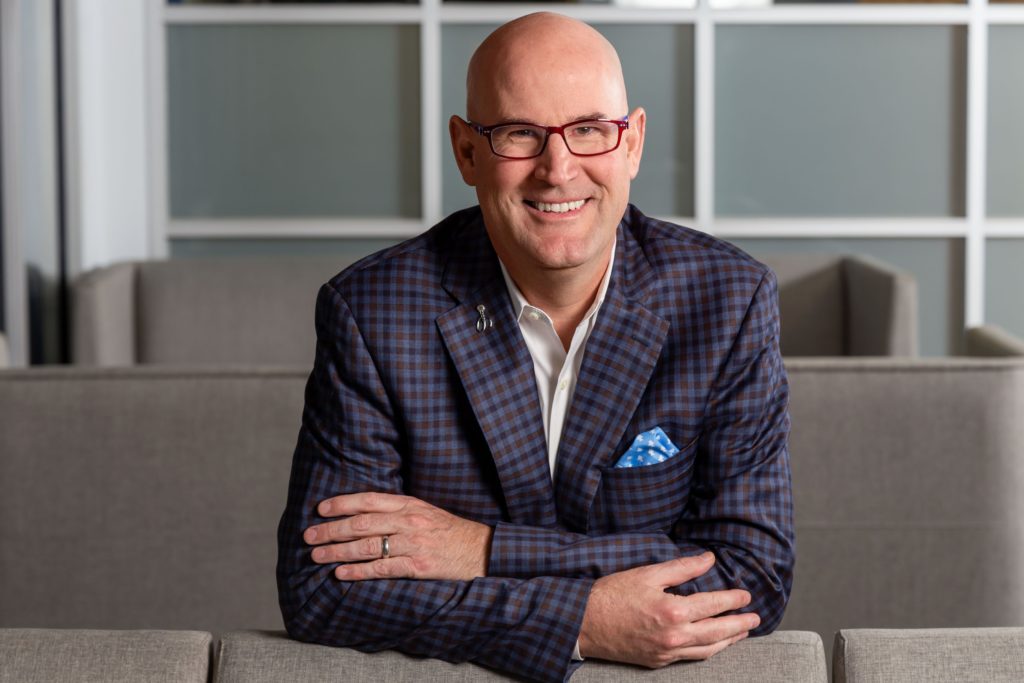
Stan Phelps walks the walk. He stands out in the sea of sameness by modeling his own Differentiated Experience (DX) message: Differentiation isn’t just about what you say, it’s about what you do and, more importantly, how and why you do it. Stan leverages his unique collection of 5,000+ case studies on customer, employee, and brand experience to engage audiences with informative learning-based experiences. He believes purposeful DX wins the hearts of employees and customers, and differentiation ultimately boosts loyalty, retention, referrals, and results.

Find Stan’s in-person and virtual keynotes, workshops, and Goldfish tank programs at StanPhelps.com.

Delta Air Lines will require unvaccinated employees to pay $200 a month more for health insurance. It’s just one of four requirements. Ready to play the DELTAOPOLY UNVACCINATED EDITION?

First off, I want to applaud Delta Air Lines. They have decided not to mandate vaccines for employees. United Airlines opted for a mandate. United employees will face termination if they don’t vaccinate by the end of September. Ouch.

As I wrote last week, I don’t think mandates are ideal. People should have the ability to make a personal choice whether they’ll get the vaccine or pursue a vaccine exemption. But, inaction is also a choice that has consequences.

Ready to roll the dice at Delta?

Unvaccinated Delta employees will be subject to four requirements this Fall:

1.  COVER UP – going forward they will be required to wear masks indoors.

2. SWAB UP – they will be required to take weekly coronavirus tests starting the week of September 12th.

3. LOSE OUT – if they test positive for the virus and/or miss work while having to quarantine, they will lose pay protection starting on September 30th.

4. PAY UP – unvaccinated employees will have to pay an additional $200 per month to remain on the company’s health care plan starting on November 1st.

CEO Ed Bastian laid out the requirements in a letter to employees:

“We’ve always known that vaccinations are the most effective tool to keep our people safe and healthy in the face of this global health crisis…That’s why we’re taking additional, robust actions to increase our vaccination rate.”

Robust may be the understatement of the year. Bastian is targeting the 25% of employees who remain unvaccinated and the financial risk they pose.

It turns out every Delta Air Lines employee who has been hospitalized with COVID over the summer has been unvaccinated. The average hospital stay costs the company $50,000. Like many large companies they self fund their employee healthcare plan. Raising premiums $200 per month offsets this risk.

Question – Do you believe this is fair?

Follow me on Twitter or LinkedIn.

Stan Phelps

Stan Phelps walks the walk. He stands out in the sea of sameness by modeling his own Differentiated Experience (DX) message: Differentiation isn’t just about what you say, it’s about what you do and, more importantly, how and why you do it. Stan leverages his unique collection of 5,000+ case studies on customer, employee, and brand experience to engage audiences with informative learning-based experiences. He believes purposeful DX wins the hearts of employees and customers, and differentiation ultimately boosts loyalty, retention, referrals, and results.

Find Stan’s in-person and virtual keynotes, workshops, and Goldfish tank programs at StanPhelps.com.
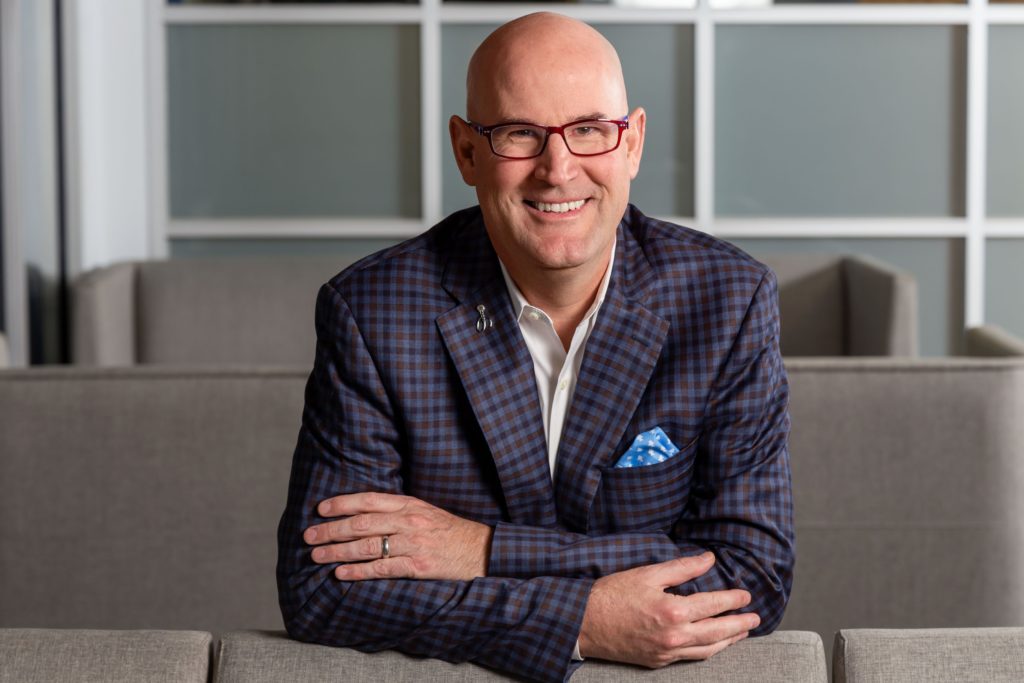
David Rendall and I talk with Adrian Swinscoe on the Punk CX podcast about “Pink Goldfish 2.0: Defy Normal and Exploit Imperfection.” (Here’s the link to Episode 399)

Main Takeaway: We discuss how to make our imperfections work for us and help us stand out and differentiate in business.

Here are some of the highlights of our conversation:

– The world conspires to tell us that we need to be more perfect and more well balanced and well rounded and we need to hide and fix our flaws. But, that’s not true. We should be flaunting our flaws instead of benchmarking against “normal.”

– The number of companies that achieve competitive separation is depressingly small.

– Wabi-sabi, a Japanese term, is the idea that nature is beautiful, but nature is imperfect and its imperfection is the thing that makes it beautiful.

– The book uses a portmanteau “flawsome,” a combination of flawed and awesome, which it turns into an acronym: F.L.A.W.S.O.M.E.

– Each letter in flawsome stands for a different type of Pink Goldfish that you can leverage to your advantage: Flaunting, Lopsiding, Antagonizing, Withholding, Swerving, Opposing, Micro-Weirding, and Exposing.

– Flaunting is not about fixing a flaw, it’s about being unapologetic. Being so proud of it that you can actually brag about it.

– The book goes into detail for each one and provides lots of stories and examples to bring all of these to life.

– We talk about the power of bad reviews. Amber Share found that every national park in the United States has, at least, one 1-star review and she creates beautiful art with them. For example, one visitor to the Grand Canyon gave it a 1-star review and wrote: “A HOLE. A VERY, VERY LARGE HOLE.”

– Only 3% of individuals or businesses have the ability to become extra ordinary or extraordinary. The remaining 97% are constrained by the “norms” of their industry.

– Your weakness is already a strength. You’re just not seeing it that way. And, you’re also not seeing that a strength of a competitor is a weakness.

Adrian shared two great Pink Goldfish examples: Stella Artois: Reassuringly expensive and Guinness: Good things come to those who wait.

Background: The podcast Punk CX takes its title by the book of the same name by Adrian Swinscoe. It was inspired by the emergence of punk music. Punk was in stark contrast to the progressive-rock era of the 1970s. Punk music became a statement to go against the norm. The creators of punk saw “prog rock” as becoming too measured and overly technical. Adrian describes this mindset by stating, “It was a very DIY, democratic, back-to-basics approach. It was more about mindset and daring to be different and being okay that not everybody would like it.” Adrian sees an analogy to how most companies approach customer experience. Companies should drop the technicalities and start committing to action-based solutions.

Follow me on Twitter or LinkedIn.

Stan Phelps

Stan Phelps walks the walk. He stands out in the sea of sameness by modeling his own Differentiated Experience (DX) message: Differentiation isn’t just about what you say, it’s about what you do and, more importantly, how and why you do it. Stan leverages his unique collection of 5,000+ case studies on customer, employee, and brand experience to engage audiences with informative learning-based experiences. He believes purposeful DX wins the hearts of employees and customers, and differentiation ultimately boosts loyalty, retention, referrals, and results.

Find Stan’s in-person and virtual keynotes, workshops, and Goldfish tank programs at StanPhelps.com.
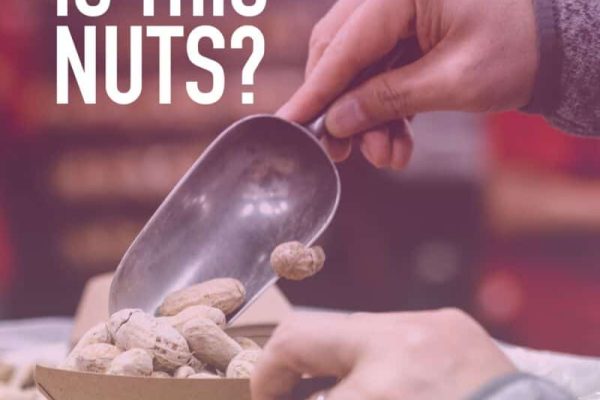
If you want a burger and you have a peanut allergy, Five Guys Burger and Fries won’t do anything to protect you. They fry everything in peanut oil, there are bins of peanuts stacked everywhere, and they leave peanut shells all over the floor. If a person with a peanut allergy goes into Five Guys, they might be risking their life.

Let’s put this into perspective. If you need to fly and you have a peanut allergy, most airlines will try to protect you. They won’t give out peanuts on your flight. They’ll also make an announcement to request that people don’t consume any peanut products on the plane.

As for the Five Guys peanuts policy, it leads to a lot of questions and complaints. Here is how Five Guys responds on their website:

“If so many people are allergic to peanuts, why does Five Guys continue to offer them? Over the last 20 years, peanuts have become part of the Five Guys identity. We by no means want to exclude guests from our store, but at the same time we would not want to disappoint our peanut-eating guests. We make sure that we have signage on our doors and in our restaurants about the fact that we serve peanuts in bulk containers as we would never want someone to risk their health by coming into our restaurants.”

In Pink Goldfish 2.0, David Rendall and I share Five Guys as a case study in our Antagonizing chapter. We’re not sure if it’s possible to be more antagonizing than this. It is one thing for a product or service to make potential customers unhappy. It is another thing for a product or service to physically harm or kill potential customers.

Here’s the interesting thing…Five Guys isn’t even selling peanuts.

They give them away. It costs them millions of dollars a year to provide peanuts for free to every customer, but they won’t stop. They know that their peanuts threaten people’s health, but they refuse to remove them because they are such an important part of their brand identity.

It begs the question WHY? I believe there are two reasons:

1. Waiting – your burger doesn’t hit the grill at Five Guys until you order it. And they will only cook it one way . . . well done. This means you are waiting around 10 minutes for your food. The free peanuts serve as an appetizer while waiting for your food. They give you something to do and stop you from getting hangry.

2. Warning – the bins of peanuts serve as a not-so-subtle warning. The fries are cooked in peanut oil. Without the bins, it could be easy for someone with a peanut allergy to mistakenly eat the fries.

Sometimes a Pink Goldfish causes an allergic reaction. 

What’s your take on this policy? Nuts or a smart differentiator?

Follow me on Twitter or LinkedIn.

Stan Phelps

Stan Phelps walks the walk. He stands out in the sea of sameness by modeling his own Differentiated Experience (DX) message: Differentiation isn’t just about what you say, it’s about what you do and, more importantly, how and why you do it. Stan leverages his unique collection of 5,000+ case studies on customer, employee, and brand experience to engage audiences with informative learning-based experiences. He believes purposeful DX wins the hearts of employees and customers, and differentiation ultimately boosts loyalty, retention, referrals, and results.

Find Stan’s in-person and virtual keynotes, workshops, and Goldfish tank programs at StanPhelps.com.
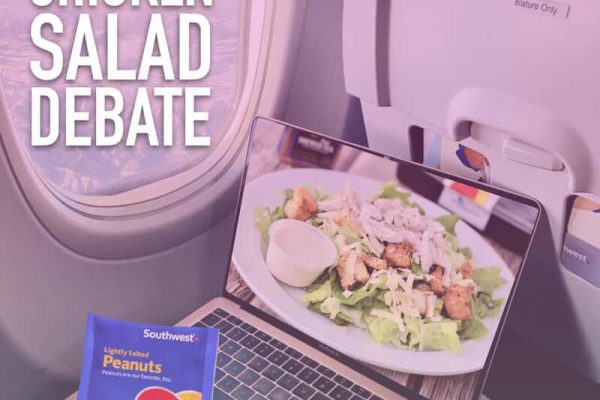
A week ago, I wrote about how FIVE GUYS are unapologetic about serving peanuts in their stores. In contrast, I shared how airlines have been overly sensitive about serving them. In 2018, Southwest Airlines joined all the major carriers and stopped serving peanuts.

Barry Dalton called me out on the comparison in a comment:

“Stan, I think your airline analogy is off base. Serving a tiny bag of 5 peanuts is not (I hope) part of the brand value delivered by an airline. It is for 5G [FIVE GUYS]. Peanuts are an integral part of their brand identity (whether they sell them or not).”

I thanked Barry for his comment, but countered his assertion. What if only providing a tiny bag of peanuts is an integral part of your airline strategy?

David Rendall and I call this differentiation strategy Withholding. It fits Southwest Airlines to a tee.

There is a great story shared by Chip and Dan Heath in the book “Made to Stick” about the late founder Herb Kelleher. Kelleher once posed a question to someone about their strategy,

“Tracy from marketing comes into your office. She says her surveys indicate that the passengers might enjoy a light entree on the Houston to Las Vegas flight. All we offer is peanuts, and she thinks a nice chicken Caesar salad would be popular. What do you say?”

The person stammered for a moment, so Kelleher responded:

“You say, `Tracy, will adding that chicken Caesar salad make us THE low-fare airline from Houston to Las Vegas? Because if it doesn’t help us become the unchallenged low-fare airline, we’re not serving any damn chicken salad.'”

Takeaway – You are not only defined by what you do . . . you are also defined by what you unapologetically decide not to do.

Follow me on Twitter or LinkedIn.

Stan Phelps

Stan Phelps walks the walk. He stands out in the sea of sameness by modeling his own Differentiated Experience (DX) message: Differentiation isn’t just about what you say, it’s about what you do and, more importantly, how and why you do it. Stan leverages his unique collection of 5,000+ case studies on customer, employee, and brand experience to engage audiences with informative learning-based experiences. He believes purposeful DX wins the hearts of employees and customers, and differentiation ultimately boosts loyalty, retention, referrals, and results.

Find Stan’s in-person and virtual keynotes, workshops, and Goldfish tank programs at StanPhelps.com.
Paul grew up in a hard-working, middle-class family in Southern Cal. In second grade, he still didn’t know the alphabet. Efforts by his teachers, parents, and siblings didn’t seem to help. He was eventually diagnosed with both dyslexia and ADHD. After failing a few grades and being expelled from several schools, he finally graduated from high school with a 1.2 GPA and a ranking of 1,482 out of 1,500 students.

Based on his disability and poor performance in school, most people wouldn’t have predicted success for Paul. In fact, Paul himself was often concerned that he would end up homeless. He was fired from multiple jobs.

Paul asked himself, “I couldn’t read. I couldn’t sit still. I had no mechanical ability. What sort of future awaited me?”

He started a small business selling school supplies and copies in a store so small that he had to move the copier out to the sidewalk. Copies were four cents. Paul named the store after his nickname. Because of his curly, red hair, friends called him “Kinko.”

The business eventually grew to 1,200 locations in 10 countries and, in 2004, Paul Orfalea sold Kinko’s to FedEx for more than $2 billion.

How did a dyslexic guy who can’t read or write build such a successful business?

In Pink Goldfish 2.0, David Rendall and I share how Orfalea succeeded because of his disability, not in spite of it. Because of his weaknesses, he had to trust others and rely on them to help him run the business. For example, he needed people to assist him with correspondence. This evolved into a culture of teamwork and collaboration that separated Kinko’s from their competitors.

Because he was restless, he spent most of his time out of his office and in the stores, observing the practices of frontline employees. Because he was impulsive, he quickly implemented new ideas throughout the organization.

Orfalea wrote “Copy This! Lessons from a Hyperactive Dyslexic Who Turned a Bright Idea into One of America’s Best Companies” with journalist Ann Marsh. In it, he credits his disabilities for his success and says he thinks everyone should have dyslexia and ADHD. During speaking engagements, he advises audiences to “like yourself, not despite your flaws and so-called deficits, but because of them.”

Paul Orfalea didn’t just appreciate his own weaknesses; he also created an organization that appreciated the weaknesses of its employees. He turned Kinko’s into a Pink Goldfish by demonstrating sensitivity for the limitations of others, such as stubbornness, impatience, disorganization, and impulsiveness.

Paul wasn’t afraid to be different, and he encouraged his employees to approach their work in unique and creative ways. This created a culture of innovation, trust, and teamwork that made Kinko’s a perennial favorite on Fortune’s 100 Best Companies to Work For.

Takeaway – Courtesy of actor Peter Dinklage, “Once you’ve accepted your flaws, no one can use them against you.”

Follow me on Twitter or LinkedIn.

Stan Phelps

Stan Phelps walks the walk. He stands out in the sea of sameness by modeling his own Differentiated Experience (DX) message: Differentiation isn’t just about what you say, it’s about what you do and, more importantly, how and why you do it. Stan leverages his unique collection of 5,000+ case studies on customer, employee, and brand experience to engage audiences with informative learning-based experiences. He believes purposeful DX wins the hearts of employees and customers, and differentiation ultimately boosts loyalty, retention, referrals, and results.

Find Stan’s in-person and virtual keynotes, workshops, and Goldfish tank programs at StanPhelps.com.
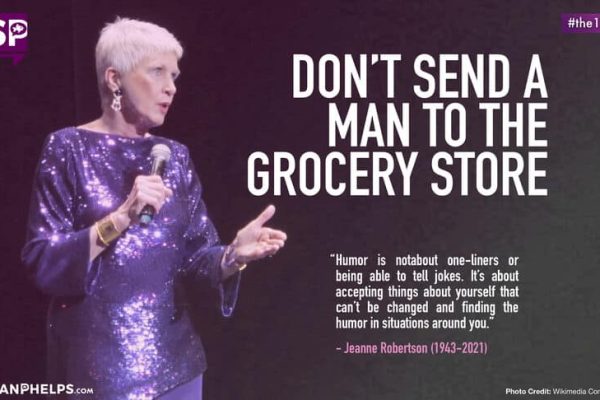
“Don’t send a man to the grocery store.” That’s advice from the late humorist Jeanne Robertson. Here’s the link to the hilarious video with nearly 16 million YouTube views.

Over the weekend, North Carolina and the speaking profession suffered a devastating loss. Jeanne Robertson CSP, CPAE passed at age 77.

According to a posting on her Facebook account, “She had some health challenges lately, but this was unexpected. Celebration of life details and an obituary will be posted here at a later date… We are sure – Jeanne is now telling stories in heaven, all the angels are laughing, and Left Brain is in the back with a big smile.”

“Left Brain” was a reference to her husband Jerry who had passed back in June. Jerry Ray Robertson was a graduate of Duke University. A scholarship basketball player, he captained the team in 1959. Jerry would later receive his master’s degree and doctorate at the University of North Carolina, Chapel Hill. According to Wikipedia, Jerry was a teacher, school principal, and later worked in business.

Jeanne Robertson was figuratively larger than life.

She grew up as Jeanne Swanner in Graham, North Carolina. In 1963, at age 19, she was named Miss North Carolina. Jeanne came up short in her quest for Miss America, but her fellow contestants honored her with the Miss Congeniality award in the competition. The award (not the movie) is for the contestant seen as the most pleasant or kind presence among the competitors.

Nearly 60 years later, at 6 foot 2 inches, Jeanne is still the tallest contestant ever to compete in the Miss America pageant.

Robertson credits Miss North Carolina reign as the catalyst for her career as a speaker. After playing basketball and graduating from Auburn University, Jeanne would teach physical education for eight years. She began speaking professionally in the 1970s.

Her commanding stage presence and storytelling ability as a humorist were legendary. The North Carolina Press Association named Jeanne as its 2001 North Carolinian of the Year for “her popularity on the speaking circuit, her award-winning ways, and her representation of North Carolina.”

Her legacy lives on. Many short segments of her speaking are available on Jeanne’s YouTube channel. Her channel has over 340,000 subscribers.

Having had the honor of meeting Jeanne, I’m inspired by her work ethic and approach to humor. During the pandemic, she created a Livestream series each Saturday called “Live from the Back Porch.” She was continuously developing her stories and adding new material.

Back in May, I hosted a virtual Local Member Dine Around for NSA – Carolinas. It was at 8:30 a.m. Jeanne showed up out of the blue and dazzled everyone.

“Humor is not about one-liners or being able to tell jokes. It’s about accepting things about yourself that can’t be changed and finding the humor in situations around you.” 

– Jeanne Robertson (1943-2021)

Follow me on Twitter or LinkedIn.

Stan Phelps

Stan Phelps walks the walk. He stands out in the sea of sameness by modeling his own Differentiated Experience (DX) message: Differentiation isn’t just about what you say, it’s about what you do and, more importantly, how and why you do it. Stan leverages his unique collection of 5,000+ case studies on customer, employee, and brand experience to engage audiences with informative learning-based experiences. He believes purposeful DX wins the hearts of employees and customers, and differentiation ultimately boosts loyalty, retention, referrals, and results.

Find Stan’s in-person and virtual keynotes, workshops, and Goldfish tank programs at StanPhelps.com.
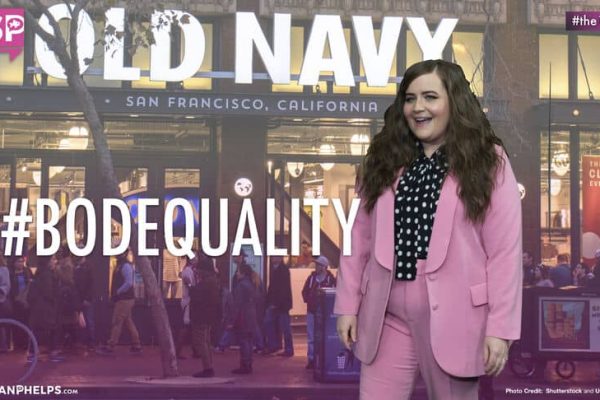
Starting today, Old Navy will now be the first value retailer to offer sizes 0-30 and XS-4X for all women’s styles with no price difference. The BODEQUALITY campaign features SNL star Aidy Bryant.

BODEQUALITY is a portmanteau for body equality. Old Navy shares this is not just a campaign about inclusivity, it’s a brand commitment going forward both online and in its 1,200+ stores. Alison Partridge Stickney of Old Navy shared with Vogue, “It’s simple, right? If more than half of women in America are plus size, we now have clothes for all of them.”

For background, Old Navy was founded back in 1994 with the mantra “fabulous, affordable fashion for everyone.” This strategy certainly touches the “everyone” aspect, but can they do it in a way that’s both “fabulous” and “affordable?”

In “Pink Goldfish 2.0,” David Rendall and I explore this exact conundrum. We share how that there are external pressures to conform and to homogenize our organization’s offerings. Many companies try to find a way that pleases everyone or displeases no one.

We believe it isn’t possible to find an approach that makes all customers happy. That if a company tries to please everyone by becoming perfect, by fixing all of their weaknesses, they will fail.

Can’t companies be well-rounded and balanced and successful?

CASE IN POINT: Kmart.

They provide an illustration of what happens when a company tries to fix weaknesses, instead of focusing on strengths. Their historical leadership in discount retail was based on the blue-light special, a symbol of low prices. Kmart was “The Savings Place.” However, when faced with competition from Walmart, they did not focus exclusively on this price advantage and began to lose customers.

Kmart then began adding designer products from celebrities like Martha Stewart, but wasn’t quite ready to shed their low-price image. This allowed Target to capture higher-income customers who were design-conscious, while Walmart attracted lower-income customers who were cost-conscious.

Kmart’s efforts to fix their weaknesses ultimately led to bankruptcy. They became undifferentiated. They weren’t the best at anything, so customers had no reason to shop there. Their failure illustrates the dangers of trying to eliminate weaknesses and be more well-rounded.

There is a compelling reason to go to Walmart—low prices. There is a compelling reason to go to Target—better service and design. But there is no compelling reason to go to Kmart. Their prices aren’t the lowest and their service and design aren’t the best. In their effort to become well-balanced and well-rounded for everyone, they became average, mediocre, and invisible. 

Question – Is this a smart brand strategy for Old Navy? Can you successfully be the “Everything for Everysize” store?

Follow me on Twitter or LinkedIn.

Stan Phelps

Stan Phelps walks the walk. He stands out in the sea of sameness by modeling his own Differentiated Experience (DX) message: Differentiation isn’t just about what you say, it’s about what you do and, more importantly, how and why you do it. Stan leverages his unique collection of 5,000+ case studies on customer, employee, and brand experience to engage audiences with informative learning-based experiences. He believes purposeful DX wins the hearts of employees and customers, and differentiation ultimately boosts loyalty, retention, referrals, and results.

Find Stan’s in-person and virtual keynotes, workshops, and Goldfish tank programs at StanPhelps.com.
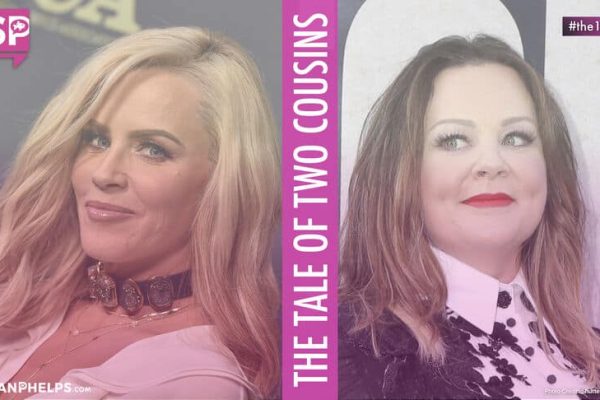
A tale of two cousins:

Jennifer is pretty. She has blond hair and blue eyes. She is relatively tall and thin, but with curves in all the right places. According to online sources, she is 5’ 7” tall and weighs 121 pounds. Her measurements are 38-24-35. She is attractive according to all of the classic American standards of beauty. Because of her stunning good looks, she became a very successful model and her fame increased. It started with television shows and then movies.

Melissa is pretty. She has brown hair and green eyes. She is not thin and not very tall. According to online sources, she is 5’ 2” tall and weighs 207 pounds. Her measurements are 43-38-45. She isn’t considered attractive according to most of the classic American standards of beauty. No one offered to hire her as a model.

Melissa was a little bit older. She was born two years before Jennifer. She had a front-row seat to Jennifer’s growing success. It would have been easy for her to be frustrated and jealous. She could have decided that Jennifer was lucky and she wasn’t. Jennifer was hot and she was not. She could have compared herself to all of Jennifer’s strengths, which would have highlighted her apparent weaknesses. But that’s not what she did.

Melissa pursued success by a different route. She didn’t try to be prettier and thinner and hotter than Jennifer. She didn’t try to become a more famous model. She became a stand-up comedian. She was hilarious. She ended up on television because she was funny. Then she ended up in movies. Now she has a star on the Hollywood Walk of Fame.

You might have already figured out that we are talking about the cousins McCarthy. Jenny became famous in 1993 when she was featured in Playboy. She starred in her own sitcom called Jenny, hosted her own talk show, co-hosted The View, and is a judge on The Masked Singer. She’s been in a few moderately successful movies, like Scream 3 and Santa Baby, but hasn’t become a bona fide movie star.

On the other hand, Melissa has become a superstar. In addition to her success as an actress and comedian, she is also a writer, producer, and fashion designer. Here is a shortlist of her many accomplishments:

• Two Emmy Awards
• Two Academy Award nominations
• Two Golden Globe nominations

A sampling of her movie and television credits include:
– Gilmore Girls
– Mike & Molly
– Identity Thief
– Bridesmaids

The story of Jenny and Melissa is a great example of the Pink Goldfish of Attacking. It looked like Jenny had all of the advantages, all of the strengths. It seemed like Melissa had a lot of disadvantages and weaknesses. It wasn’t likely that Melissa could ever even come close to being as famous and successful as Jenny.

But Melissa did more than just match Jenny’s success, she eclipsed it. She achieved this by competing on her own terms, by playing a different game. She didn’t try to be like Jenny, but better. She decided to be like Melissa, and it worked.

Takeaway: Own who you are.

Follow me on Twitter or LinkedIn.

Stan Phelps

Stan Phelps walks the walk. He stands out in the sea of sameness by modeling his own Differentiated Experience (DX) message: Differentiation isn’t just about what you say, it’s about what you do and, more importantly, how and why you do it. Stan leverages his unique collection of 5,000+ case studies on customer, employee, and brand experience to engage audiences with informative learning-based experiences. He believes purposeful DX wins the hearts of employees and customers, and differentiation ultimately boosts loyalty, retention, referrals, and results.

Find Stan’s in-person and virtual keynotes, workshops, and Goldfish tank programs at StanPhelps.com.
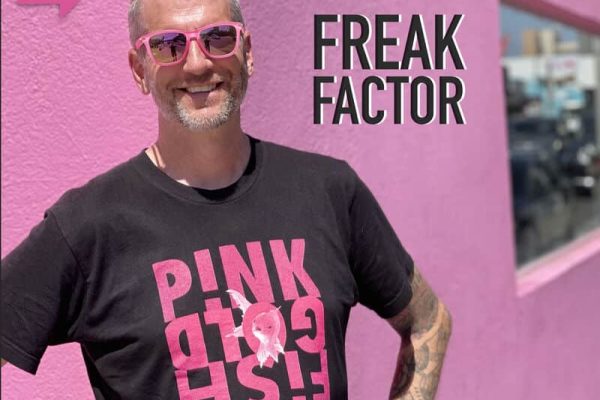
“I spent my whole life getting in trouble because I couldn’t sit still, be quiet, and do what I was told. Then at some point, as an adult, I realized I was getting paid to stand up, talk, and run my own business… The very thing that people spent their whole life telling me not to do (my own parents used to call me “motormouth”) was the thing I was getting paid for. It was the thing that I was doing really well.”

David Rendall learned about the connection between weakness and strength in a very personal way. He further explains his revelation in the seminal book, “The Freak Factor.”

“I discovered that my weaknesses were strengths. I started to wonder whether that may be true for other people and in business. I developed the concept of the Freak Factor, developed an assessment, wrote a book, and started gathering stories about how seemingly obvious weaknesses are also strengths and how the things that sometimes we’re fixing to get better are actually the things we should be flaunting or amplifying or embracing.”

David pointed out an inherent conflict.

“Our parents, teachers, and managers teach us that we need to find and fix our flaws in order to be successful in life and business. There are four elements to this seemingly universal belief system:

1. We believe that to be successful we need to be normal, fit in, and not stand out. This means that we should be strong and follow the herd.

2. We think we should fix weaknesses and improve flaws in our companies. We believe that well-rounded and well-balanced companies are the ones that win.

3. We’re convinced that our company could be great at everything if we are diligent enough. Similarly, we think we could make everyone, or at least most people, happy if we try hard enough.

4. We believe that our company could stand out if we just have the discipline and perseverance to be better than the competition.

All of these beliefs seem empowering, but they are actually debilitating. They tell us that we have the potential to succeed, but they mislead us as to where that potential lies and how we should apply that potential. These beliefs lead to companies defining their strengths and weaknesses using the same measurements and standards as their competitors.”

In Pink Goldfish 2.0, David and I offer four competing beliefs:

1. Fitting in and becoming a copycat brand will never lead to success. Benchmarking and best practices are not the path to greatness.

2. Trying to fix a weakness is a waste of time and effort.
If you try to be great at everything, you will end up being great at nothing.

3. If you try to please everyone, you won’t end up pleasing anyone. You’ll end up average, mediocre, and invisible.

4. Discipline and perseverance are finite resources. We have to be efficient in how and when we choose to use them.

Takeaway: It is good to be different, to stick out, and be unique. Flaunt your weaknesses, instead of fixing them.

Follow me on Twitter or LinkedIn.

Stan Phelps

Stan Phelps walks the walk. He stands out in the sea of sameness by modeling his own Differentiated Experience (DX) message: Differentiation isn’t just about what you say, it’s about what you do and, more importantly, how and why you do it. Stan leverages his unique collection of 5,000+ case studies on customer, employee, and brand experience to engage audiences with informative learning-based experiences. He believes purposeful DX wins the hearts of employees and customers, and differentiation ultimately boosts loyalty, retention, referrals, and results.

Find Stan’s in-person and virtual keynotes, workshops, and Goldfish tank programs at StanPhelps.com.

1 21 22 23 24 25 48
A simple illustration of a purple fish facing right on a plain background.

I've had the pleasure of working with teams at:

Three purple fish silhouettes swimming to the right on a dark background.

Find Your Best-Match Program

With over 18 possible keynote speaking presentations, workshops, and GOLDFISH TANK programs available to meet your ever-evolving needs, I’ve created this 2-minute, 6-question quiz to help you understand which program is best for you and your audience.

Meet Your Presenter

Through keynote speaking presentations, hands-on workshops, and GOLDFISH TANK programs, I empower you to power loyalty and growth.

Hi, I’m Stan Phelps. I work with organizations that want to increase loyalty, drive sales, and promote positive word-of-mouth by creating differentiated experiences.

As an author, keynote speaker, and workshop facilitator, my in-person and virtual programs stand out in a sea of sameness because I model my own message of differentiated experience (DX).

I leverage my unique collection of more than 5,500 case studies on customer, employee, and brand experience to engage audiences with practical ideas that inspire action.

A person wearing glasses and a gray quarter-zip sweater stands outdoors in front of a building with a triangular glass roof at dusk.

Every time we do business together, Something amazing happens in the world!

Through my partner B1G1, each program gives back to create global IMPACT

Two students in blue uniforms smile while washing their hands at an outdoor tap.

When we complete a GOLDFISH TANK, we give 1001 days of clean water to school children

Collage of three images: a person washing hands, a child drawing with colored pencils, and a group of people sitting outdoors with some raising their hands.

When we complete a GLOBAL engagement, we give 365 days of clean water access in Peru, 120 days of learning aids in Malaysia, and 50 days of business training for women in Malawi

Hand placing a brick on a surface with text: "One Book = One Brick" and an Amazon logo.

When someone downloads a GOLDFISH eBook, we give one brick toward building school facilities in Cambodia