
Stan Phelp's Blog

The Goldfish Chronicles

Sharing insights on customer experience, employee engagement, and brand strategy.

“Don’t try to stand out from the crowd… Avoid crowds altogether.” — Hugh MacLeod 
One of my favorite quotes from Pink Goldfish 2.0.

Follow me on Twitter or LinkedIn.
Stan Phelps

Stan Phelps walks the walk. He stands out in the sea of sameness by modeling his own Differentiated Experience (DX) message: Differentiation isn’t just about what you say, it’s about what you do and, more importantly, how and why you do it. Stan leverages his unique collection of 5,000+ case studies on customer, employee, and brand experience to engage audiences with informative learning-based experiences. He believes purposeful DX wins the hearts of employees and customers, and differentiation ultimately boosts loyalty, retention, referrals, and results.

Find Stan’s in-person and virtual keynotes, workshops, and Goldfish tank programs at StanPhelps.com.
Sometimes the opposite of a good thing is also a good thing. According to Barbara Nemitz, the author of “Pink: The Exposed Color in Contemporary Culture,” the color pink contains,

“An extraordinary number of contradictory qualities. . . The pink spectrum can embody practically anything; surface and interior, happiness and suffering, delight and injury, the naive and the corrupt, the sublime and the ordinary, the playful and the existential.”

In other words, pink is full of opposites. Pink is also a color that can be used to oppose the competition.

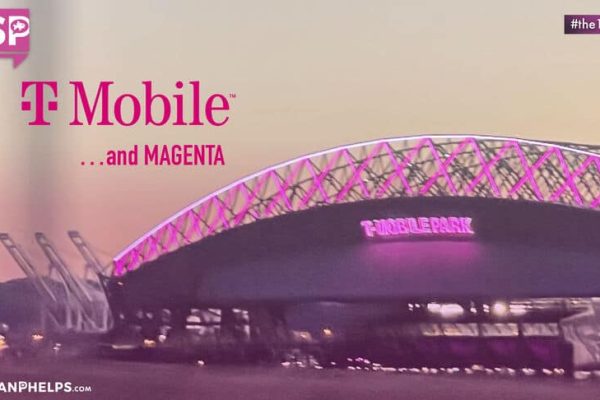
T-Mobile is so committed to pink that they’ve trademarked their particular version of the color (RAL 4010). They call it magenta, and they aren’t messing around. When Aio Wireless started using a similar color (Pantone 676C) in 2014, T-Mobile sued.

They argued that “letting Aio continue to use a variant of magenta would cause [T-Mobile] irreparable harm.” T-Mobile won the exclusive right to their shade of pink and apparently “nearby colors” as well.

Their former CEO, John Legere, would wear a pink T-shirt or a satin pink jacket or pink shoes. That’s unusual. Most big company CEOs wear suits, not T-shirts. Legere argues that pink and his casual style are part of the company’s identity as the “uncarrier,” the opposite of the other carriers.

Pink marks T-Mobile as unique from all the other mobile giants who have chosen traditional CEOs and traditional colors, such as blue (AT&T), red (Verizon), yellow (Sprint), and blue/red (US Cellular).

Pink isn’t a primary color. Experts and studies indicate that most people don’t like pink. Using pink as a mass-market corporation is a great example of the Pink Goldfish of Opposing. It works because it is an obvious contrast to what the rest of the industry is doing. It stands out.

Opposing isn’t for the faint of heart. It involves defying, resisting, and fighting. It’s refusing to give in, to yield, to submit, to surrender to the pressure to conform, to fit in, to follow the crowd. 

Follow me on Twitter or LinkedIn.

Stan Phelps

Stan Phelps walks the walk. He stands out in the sea of sameness by modeling his own Differentiated Experience (DX) message: Differentiation isn’t just about what you say, it’s about what you do and, more importantly, how and why you do it. Stan leverages his unique collection of 5,000+ case studies on customer, employee, and brand experience to engage audiences with informative learning-based experiences. He believes purposeful DX wins the hearts of employees and customers, and differentiation ultimately boosts loyalty, retention, referrals, and results.

Find Stan’s in-person and virtual keynotes, workshops, and Goldfish tank programs at StanPhelps.com.
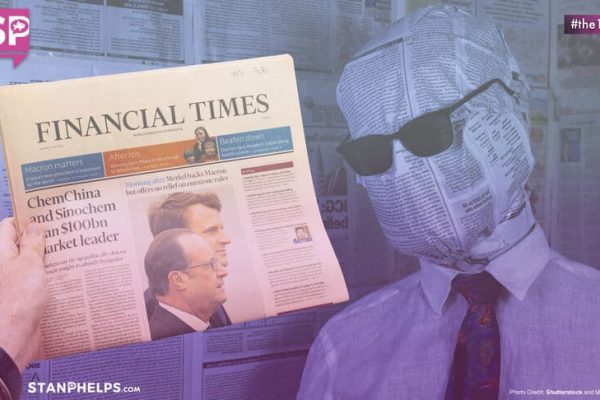
It was 1893 in London, and Douglas Macrae, the publisher of the Financial Times, was looking for a way to distinguish his newspaper from the competition, the Financial and Mining News.

In Pink Goldfish 2.0, David Rendall and I profile the important decision he made. Macrae decided to use pink paper in order to stand out with the following explanation.

“In order to provide outward features which will distinguish the Financial Times from other journals, a new heading and distinctive features will be introduced, and the paper will be slightly tinted.”

An article in Braithwaite argues that the decision to use pink paper “would turn out to be the most significant branding step the company would ever take.”

Initially, it was cheaper to use pink paper than to print on white paper. This is because paper has to be bleached in order to make it white. It is somewhat pink earlier in the process, so they didn’t need to dye the paper to make it pink. They just eliminated a step in the process.
However, pink became such a powerful part of their brand that they made the paper even pinker over the years, and now they actually pay extra to keep the color just right. They even extended the pink onto the background of their current website.

It is important to note that this wasn’t a big decision at the time. Even the paper described the new color as “slightly tinted.” This was a small change, a swerve. It wasn’t a huge transformation. It was a swerve. But it was a minor adjustment that had a major impact. 

More than 125 years have passed since the Financial Times went pink and they are still going strong. As other newspapers are disappearing in response to the rise of digital and social media, they are thriving. In a 2015 article in Quartz, Zachary Seward described them as “one of the world’s most distinctive news brands.”

Indeed, they were sold to Nikkei that same year for $1.3 billion.

Sometimes, little pink changes make a big difference. 

Follow me on Twitter or LinkedIn.

Stan Phelps

Stan Phelps walks the walk. He stands out in the sea of sameness by modeling his own Differentiated Experience (DX) message: Differentiation isn’t just about what you say, it’s about what you do and, more importantly, how and why you do it. Stan leverages his unique collection of 5,000+ case studies on customer, employee, and brand experience to engage audiences with informative learning-based experiences. He believes purposeful DX wins the hearts of employees and customers, and differentiation ultimately boosts loyalty, retention, referrals, and results.

Find Stan’s in-person and virtual keynotes, workshops, and Goldfish tank programs at StanPhelps.com.
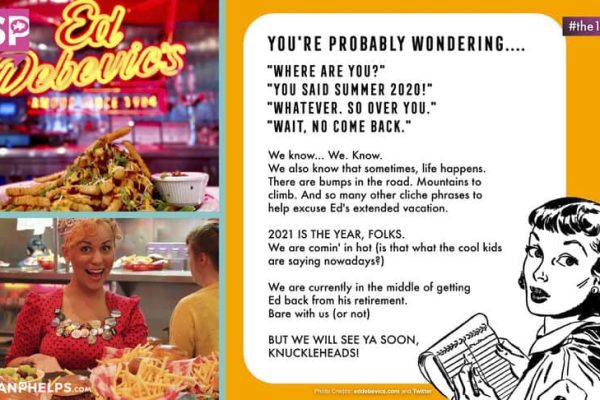
Ed Debevic’s opened in 1984 in #Chicago. Imagine a 1950’s themed diner with burgers, fries, shakes, and really rude servers.

A video of one of their mean servers, Kryssie “Cherry” Ridolfi, went viral in 2015 and has more than 4 million views on social media. They also sell the “world’s smallest sundae.”

After closing for a few years, Ed’s is reopening this year, although that has been delayed because of the COVID-19 pandemic.

One year after Ed opened his doors, Dick’s Last Resort was founded by Dick Chase in 1985. Chase had formerly gone bankrupt while trying to run an upscale fine dining restaurant. He decided to “go sloppy” on his second effort and developed a completely different approach.

Dick’s tagline is “socially unacceptable.” Instead of training their servers to be polite and helpful, they teach them to be rude and obnoxious. They are insulting and intentionally provide customers with bad service. For example, napkins aren’t placed on the table. If someone wants a napkin, one is thrown at them.

Servers aren’t the only thing that is rude at Dick’s. They encourage people to post #dickspicks and #dickmove on social media. They sell offensive T-shirts and bumper stickers proclaiming that “Real Women Love Dick’s” and “I Love Dick’s.”

Ed’s and Dick’s aren’t the only restaurants to succeed with this antagonistic model.

Similarly, Ben Baker told David Rendall and me about The Elbow Room Cafe in Vancouver. It was founded in 1983 by Bryan Searle and Patrick Savoie, and is famous for their snarky, cheeky, and sassy service. Their menu proclaims to customers that “food and service is our name, abuse is our game!” They also offer items such as “Big Ass Pancakes” and “I Have No Imagination” omelets.

The restaurant is so legendary, that Dave Deveau and Anton Lipovetsky wrote a play about it. In 2017, Elbow Room Cafe: The Musical debuted at the York Theatre. Not many diners are unique enough to inspire this kind of attention and affection.

Sometimes a Pink Goldfish is rude service . . . and a musical. 

Follow me on Twitter or LinkedIn.

Stan Phelps

Stan Phelps walks the walk. He stands out in the sea of sameness by modeling his own Differentiated Experience (DX) message: Differentiation isn’t just about what you say, it’s about what you do and, more importantly, how and why you do it. Stan leverages his unique collection of 5,000+ case studies on customer, employee, and brand experience to engage audiences with informative learning-based experiences. He believes purposeful DX wins the hearts of employees and customers, and differentiation ultimately boosts loyalty, retention, referrals, and results.

Find Stan’s in-person and virtual keynotes, workshops, and Goldfish tank programs at StanPhelps.com.
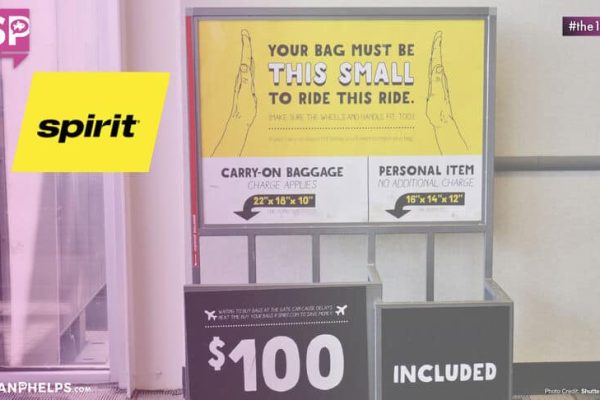
“No one walks into McDonald’s’s and gets disappointed when they don’t see filet mignon on the menu.” This quote was from the former CEO of Spirit Airlines.

Spirit actually began as a trucking company in Michigan in 1964. The Clippert Trucking Company started shipping via air in the 1970s, added passenger service in 1980 as Charter One, and changed its name to Spirit in 1992.

In a world of low-cost airlines, they are an ultra-low-cost airline. David Rendall and I just visited Chicago our on book launch tour. Our friend Denise mentioned she flew during the pandemic to LA for $19 one-way with Spirit.

They keep process and prices low with a brutal combination of the Pink Goldfish of Withholding and Antagonizing.

Spirit pioneered an “a la carte” pricing model that includes a $3 charge for in-flight beverages and a $10 fee for printing a boarding pass at the service desk.

Former CEO B. Ben Baldanza was proud of the fact that Spirit was the first airline to charge for a checked bag in 2010.

Spirit’s restrictive policies and poor customer service have led to a tidal wave of complaints, but the company isn’t apologizing or changing course. They are unapologetic.

“Our complaints are statistically much higher,” Baldanza admits, “but compared to the number of people traveling with us, it’s a tiny drop in the ocean. We’re the Walmart or the McDonald’s’s—not the Nordstrom’s—of the airline industry,”

Spirit withholds almost everything that customers expect, and only provides it for an additional fee.

They also use sexual innuendo in their advertisements, which is Antagonizing to many customers.

Embracing innuendo and being controversial have become hallmarks of Spirit Airlines. They are known for loud campaigns, ads in passenger cabins, and even ads on flight attendants’ aprons.

Spirit Airlines does an amazing job of combining FLAWSOME strategies. You get what you pay for. Traded on the New York Stock Exchange, even the ticker symbol speaks to their focus. It’s SAVE.

A friend of mine once shared a funny story. News anchor Tom Brokaw was once in Florida covering an impending hurricane. A breaking story required Brokaw to get back to New York as soon as possible. The story goes that Brokaw briskly walked into the middle of ticketing at the Miami airport and openly declared, “I need to get to New York City in the worst way.” Right then a woman looked at Brokaw and pointed, “Spirit Airlines is right over there.”

Question – have you or would you fly Spirit?

Follow me on Twitter or LinkedIn.

Stan Phelps

Stan Phelps walks the walk. He stands out in the sea of sameness by modeling his own Differentiated Experience (DX) message: Differentiation isn’t just about what you say, it’s about what you do and, more importantly, how and why you do it. Stan leverages his unique collection of 5,000+ case studies on customer, employee, and brand experience to engage audiences with informative learning-based experiences. He believes purposeful DX wins the hearts of employees and customers, and differentiation ultimately boosts loyalty, retention, referrals, and results.

Find Stan’s in-person and virtual keynotes, workshops, and Goldfish tank programs at StanPhelps.com.
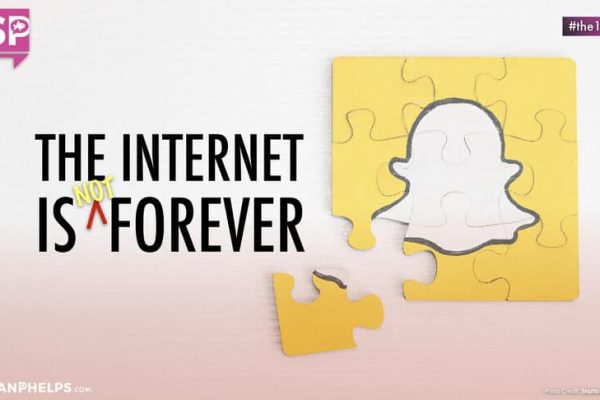
“The internet is forever.” You’ve probably heard some version of this statement before. It means that once your personal information or a tweet or a photo or an article is on the internet, it will never disappear. There is no reliable way to remove it. This phenomenon is called “The Streisand Effect.”

For years, this permanence was seen as a very positive feature. The internet was the perfect place to preserve things that might otherwise be lost. It was the perfect place for photographs.

Shutterfly, Inc. was founded in 1999 as a way for people to store and share their photos online. Flickr started in 2004 with a similar mission. Instagram followed in 2010 and quickly became the dominant player in photo sharing.

How do you attack your competition? Companies with decades of experience. Others with cool cutting-edge features.

The most common and obvious path is to try to do what your competitors are doing but do it even better. Better sharing. Better storage. Better features. But as you’ve probably guessed, there’s another way.

Just make the pictures disappear. That’s right. Don’t store them. Don’t preserve them forever. Delete them by default. Make them fleeting, ephemeral.

That was Evan Spiegel’s idea when he was in grad school at Stanford University. He presented it to his class and got terribly negative feedback. Everyone told him it wouldn’t work.

Fortunately, Spiegel didn’t listen and Snapchat debuted in 2011. Impermanence wasn’t just one of their early features… it was the primary feature.

The main difference between Snapchat and its competitors, at least at the beginning, was that the pictures being shared would automatically be deleted from the recipient’s device.

In our book Pink Goldfish 2.0, David Rendall and I love Spiegel’s explanation of his philosophy:

“Snapchat isn’t about capturing the traditional Kodak moment. It’s about communicating with the full range of human emotion – not just what appears to be pretty or perfect.”

He believed that the permanence of photos on other sites led to anxiety and created pressure for people to only post ideal or positive images. He thought that fleeting photos would free people to spend less time editing their appearance to make it conform to societal norms.

Did it work?

Yes. Almost 10 years after Snapchat was released, they have 229 million daily users creating more than four billion snaps per day and their market cap is over $78 billion. They attacked their competition by framing permanence as a weakness and impermanence as a strength. In doing so, they went against the conventions of their competitors and the Internet itself.

Along the way, they didn’t just succeed. They changed the entire industry. All the major players now have a “stories” feature in which users can post photos and videos that will disappear after a predetermined period of time.

Question – How can you attack the strengths of your competitors?

Follow me on Twitter or LinkedIn.

Stan Phelps

Stan Phelps walks the walk. He stands out in the sea of sameness by modeling his own Differentiated Experience (DX) message: Differentiation isn’t just about what you say, it’s about what you do and, more importantly, how and why you do it. Stan leverages his unique collection of 5,000+ case studies on customer, employee, and brand experience to engage audiences with informative learning-based experiences. He believes purposeful DX wins the hearts of employees and customers, and differentiation ultimately boosts loyalty, retention, referrals, and results.

Find Stan’s in-person and virtual keynotes, workshops, and Goldfish tank programs at StanPhelps.com.
What’s the easiest way to grow your business? It’s selling new items to existing customers. The challenge is that our current customers only know, on average, 20 percent of our capabilities. So, what’s the solution? It’s almost too simple. It’s sampling.

Sampling is the lowest hanging fruit in marketing. There may not be a more cost-effective way for brands to drive purchase intent and conversion. The proof is in the numbers as highlighted in this Arbitron Study:

• 24 percent of consumers bought the product they sampled instead of the item they initially set out to purchase.

• 35 percent of customers who tried a sample bought the product during the same shopping trip.

Most people think of sampling as a way to get new prospective customers. But why does Sampling have to be just about the prospect? Why can’t you leverage current customers with an additional little extra to increase satisfaction, drive retention, and promote word of mouth?

Here’s a trio of companies that are using Sampling to delight their customers and drive sales:

– Kiehl’s hands out samples with every order

– Bigelow Tea put an additional tea bag of another flavor in each box

– Great Harvest Bakery hands out free slices of bread

How are you giving current customers a sample?

Follow me on Twitter or LinkedIn.

Stan Phelps

Stan Phelps walks the walk. He stands out in the sea of sameness by modeling his own Differentiated Experience (DX) message: Differentiation isn’t just about what you say, it’s about what you do and, more importantly, how and why you do it. Stan leverages his unique collection of 5,000+ case studies on customer, employee, and brand experience to engage audiences with informative learning-based experiences. He believes purposeful DX wins the hearts of employees and customers, and differentiation ultimately boosts loyalty, retention, referrals, and results.

Find Stan’s in-person and virtual keynotes, workshops, and Goldfish tank programs at StanPhelps.com.

“Facts tell, stories sell.” This quote by Bryan Eisenberg reinforces the importance of leveraging the power of story when presenting. Why? Because leveraging stories makes your message memorable. Memorability is the holy grail of presenting.

Here are three things to think about when telling stories:

1. When should you use stories? Answer: Early and often. Hall of fame speaker Bill Stainton says, “Start with your second best story . . . finish with your best one.” This technique has been leveraged by comedians for decades. People tend to remember the first thing (primacy) and the last thing they hear (recency).

2. How long should your stories be? Answer: It depends on the time you have. Practice stories in different levels of detail given different times. This allows you to manage time on the fly. Allow for three minutes, but have a one minute and a 10-minute version as well. The moral/lesson doesn’t change.

3. What’s your role in the story? Answer: You are the Guide. Donald Miller of Story Brand states, “To enter into our customer’s story, we should play the role of guide.” The fatal mistake is positioning yourself as the hero in a story instead of the guide. You are Yoda, not Luke.

What’s your advice on using stories when presenting?

Follow me on Twitter or LinkedIn.

Stan Phelps

Stan Phelps walks the walk. He stands out in the sea of sameness by modeling his own Differentiated Experience (DX) message: Differentiation isn’t just about what you say, it’s about what you do and, more importantly, how and why you do it. Stan leverages his unique collection of 5,000+ case studies on customer, employee, and brand experience to engage audiences with informative learning-based experiences. He believes purposeful DX wins the hearts of employees and customers, and differentiation ultimately boosts loyalty, retention, referrals, and results.

Find Stan’s in-person and virtual keynotes, workshops, and Goldfish tank programs at StanPhelps.com.

Ever been to an Inconvenience Store? I’m sure you have, but did the place actually call itself one? Last week, David Rendall and I were on the road in Montana and experienced the Neihart Inconvenience Store.

A bit of background: We were in route to Utah and needed to stop for a podcast with Phil Gerbyshak. The choice was a) stay at the hotel for an extra 90 minutes or b) ride the odds with WIFI from the road. We embraced a potential flaw and chose the latter.

As we left Great Falls, our decision seemed doomed. Driving south, the cell service was minimal. Our backup plan of using a hotpot was immediately foiled. Even worse, we had no way to tell Phil that we might be standing him up.

The plan was to head through Yellowstone later in the day. Route #89 is the main route and the towns are few and far between. The only hope was to find a rest stop or store with WIFI. The clock was ticking. About 10 minutes before our podcast interview, a small dot appeared on our GPS.

It was Neihart, Montana.

5 minutes later we walked into the Neihart Inconvenience Store. The Pink Goldfish 2.0 Book Launch Tour Gods had smiled upon us. How do we know for sure? A printed sign on the entrance said FREE WIFI inside.

The clerk was super-friendly. She shared the password and we were immediately in business. [It’s beerhunter, all lower case in case you need it]

The podcast went off without a hitch from a kitchen table in the General Store.

So what’s the deal behind the Inconvenience Store?

The clerk shared that the store was originally started as a co-op in the small town. A bunch of neighbors got together to create a buying group. They call it the Inconvenience Store because it was rarely ever open. It had been sold to the current owners who keep it running 7 days a week. They decided to keep the name as they reasoned that maybe you leave home and need something. Or you stop by for something and they don’t have it. Both are inconveniences.

Follow me on Twitter or LinkedIn.

Stan Phelps

Stan Phelps walks the walk. He stands out in the sea of sameness by modeling his own Differentiated Experience (DX) message: Differentiation isn’t just about what you say, it’s about what you do and, more importantly, how and why you do it. Stan leverages his unique collection of 5,000+ case studies on customer, employee, and brand experience to engage audiences with informative learning-based experiences. He believes purposeful DX wins the hearts of employees and customers, and differentiation ultimately boosts loyalty, retention, referrals, and results.

Find Stan’s in-person and virtual keynotes, workshops, and Goldfish tank programs at StanPhelps.com.
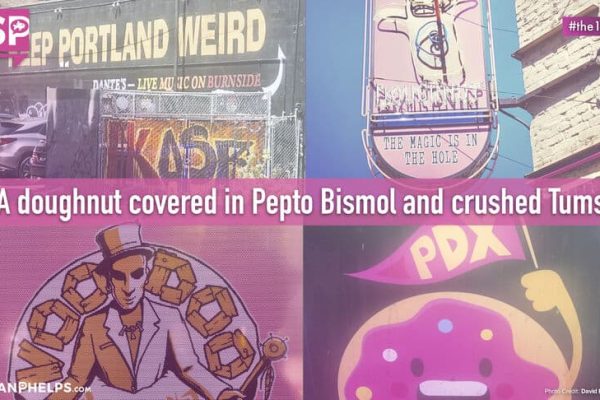
Kenneth “Cat Daddy” Pogson and Tres Shannon founded Voodoo Doughnut in Portland, Oregon, in 2003. David Rendall and I had a chance to visit last week as the Pink Goldfish 2.0 Book Launch Tour. Voodoo is one of our favorite examples of Antagonizing.

Back to the doughnuts. The founders chose “voodoo” because they liked the number of O’s in the word. This is obviously a very scientific approach to the branding process.

To set themselves apart from the standard doughnut shops of the world, the pair decided to create toppings in an entirely new way. Their maple doughnut is layered with two full strips of bacon.

Other doughnuts are covered in Cap’n Crunch or Fruit Loops cereal. “We reinvented the doughnut shop,” says Tres. “Everyone can say what they want, but no one was putting strips of bacon on a maple doughnut before us. No one was using cereal!”

Their signature doughnut is an edible voodoo doll. It’s a plain doughnut with a face and arms and is covered with chocolate frosting and white decorations. A pretzel stick is included and can be used to stab the doll, which is filled with red jelly.

During shop hours, the pair experimented with new ingredients that began to turn heads. “The Nyquil doughnut really built up the hype around us,” says Cat Daddy. “All of a sudden, we were on wacky morning radio talk shows all around the country. They talked about us on The Wire, Jay Leno mentioned us; it was madness especially for our first few months in business.”

A doughnut covered in Pepto Bismol and crushed Tums was next. But both of the drug-laced doughnuts have been removed from the menu. The Portland Health Department determined that it wasn’t safe for people to consume either one of these pharmaceutical pastries. Having your doughnut banned by a government agency definitely counts as a step toward antagonizing.

If that wasn’t enough, their Cock’N’Balls doughnut definitely antagonizes some visitors to their stores. We won’t describe it for you here, but you can find a complete description on their website.

Voodoo Doughnut is also unusual in two other small ways. They only accept cash payments, and their signature pink boxes are famous worldwide. Additionally, you can see the “Keep Portland Weird” sign from the front of Voodoo Doughnut. They are definitely doing their part to fulfill that goal.

Sometimes a Pink Goldfish is a Nyquil doughnut that is banned by the government. 

Follow me on Twitter or LinkedIn.

Stan Phelps

Stan Phelps walks the walk. He stands out in the sea of sameness by modeling his own Differentiated Experience (DX) message: Differentiation isn’t just about what you say, it’s about what you do and, more importantly, how and why you do it. Stan leverages his unique collection of 5,000+ case studies on customer, employee, and brand experience to engage audiences with informative learning-based experiences. He believes purposeful DX wins the hearts of employees and customers, and differentiation ultimately boosts loyalty, retention, referrals, and results.

Find Stan’s in-person and virtual keynotes, workshops, and Goldfish tank programs at StanPhelps.com.

1 22 23 24 25 26 48
A simple illustration of a purple fish facing right on a plain background.

I've had the pleasure of working with teams at:

Three purple fish silhouettes swimming to the right on a dark background.

Find Your Best-Match Program

With over 18 possible keynote speaking presentations, workshops, and GOLDFISH TANK programs available to meet your ever-evolving needs, I’ve created this 2-minute, 6-question quiz to help you understand which program is best for you and your audience.

Meet Your Presenter

Through keynote speaking presentations, hands-on workshops, and GOLDFISH TANK programs, I empower you to power loyalty and growth.

Hi, I’m Stan Phelps. I work with organizations that want to increase loyalty, drive sales, and promote positive word-of-mouth by creating differentiated experiences.

As an author, keynote speaker, and workshop facilitator, my in-person and virtual programs stand out in a sea of sameness because I model my own message of differentiated experience (DX).

I leverage my unique collection of more than 5,500 case studies on customer, employee, and brand experience to engage audiences with practical ideas that inspire action.

A person wearing glasses and a gray quarter-zip sweater stands outdoors in front of a building with a triangular glass roof at dusk.

Every time we do business together, Something amazing happens in the world!

Through my partner B1G1, each program gives back to create global IMPACT

Two students in blue uniforms smile while washing their hands at an outdoor tap.

When we complete a GOLDFISH TANK, we give 1001 days of clean water to school children

Collage of three images: a person washing hands, a child drawing with colored pencils, and a group of people sitting outdoors with some raising their hands.

When we complete a GLOBAL engagement, we give 365 days of clean water access in Peru, 120 days of learning aids in Malaysia, and 50 days of business training for women in Malawi

Hand placing a brick on a surface with text: "One Book = One Brick" and an Amazon logo.

When someone downloads a GOLDFISH eBook, we give one brick toward building school facilities in Cambodia