
Stan Phelp's Blog

The Goldfish Chronicles

Sharing insights on customer experience, employee engagement, and brand strategy.

Lopsiding more for less, how AriZona Iced Tea stole Snapple’s juice…

It was 1992 and Snapple was king. The New York brand was named after the portmanteau of Snappy and Apple. The inspiration came from fermentation in an early apple cider that had caused caps to fly off.

Snapple introduced its first iced tea in 1987. In five years it was leading this new segment of the beverage market.

The Snapple Lady was doing quirky commercials, Howard Stern was a pitchman, and budding tennis star Jennifer Capriati was signed to an endorsement deal.

Was there room for another Tea brand? How could you compete with the quirky leader with facts under every popping cap?

Enter the Don from Long Island. AriZona Bottling co-founder Don Vultaggio was formerly a beer distributor. He drew inspiration from tall boy Schlitz beer cans to challenge rival Snapple.

In a classic Pink Goldfish move, he lopsided some aspects of the product, leveraged withholding, and added some micro-weirdness as well.

AriZona’s large 23 ounce iced tea was launched in 1992. It cost 99 cents. To put that price in perspective . . . that was nearly the price for a gallon of gas.

30 years later the price is still the same.

“99 cents is a hot number and because of that we get a lot of attention at retail” says Vultaggio.

It’s not easy to stay the course with this strategy.

Faster production lines, shipping at night, using 50% less aluminum in the can, lighter boxes, and more facilities have helped to keep costs down over the decades.

Part of their strategy means doing less of what others do as normal. Vultaggio shared to CNN,

“A lot of large companies use advertising as their vehicle to get shelf space and consumer awareness. We use packaging, a value story, and a great product inside.”

That’s why you won’t find any random celebrities hawking AriZona IcedTea.

How about those weird designs on the packaging? Credit Don’s wife Ilene for the pastels and the southwestern motif. He shared with Forbes, “Pastels had never really been used at that point. It was attractive — but, more importantly, different.” 

It took less than a decade and AriZona was bigger than Snapple.

Even in the midst of our current record inflation, AriZona is committed to keeping the price at 99 cents. Last year the brand sold a billion cans of the 99-cent variety.

Fans of the brand have said, “This is the most stable relationship I’ve ever had!”

How are you lopsiding and/or withholding to stand out in the marketplace?

Lagniappe: Perhaps the only greater “more for less” story comes from Costco Wholesale. Since 1985, you can buy a quarter-pounder hot dog with all the fixings and a 24-oz soda for a mere $1.50.

In a third-quarter earnings call, Costco quelled any rumors about raising food court prices. It may go beyond good business. Founder Jim Sinegal once told current CEO Craig Jelinek, “If you raise the [price of the] effing hot dog, I will kill you.”

Follow me on Twitter or LinkedIn.
Stan Phelps

Stan Phelps walks the walk. He stands out in the sea of sameness by modeling his own Differentiated Experience (DX) message: Differentiation isn’t just about what you say, it’s about what you do and, more importantly, how and why you do it. Stan leverages his unique collection of 5,000+ case studies on customer, employee, and brand experience to engage audiences with informative learning-based experiences. He believes purposeful DX wins the hearts of employees and customers, and differentiation ultimately boosts loyalty, retention, referrals, and results.

Find Stan’s in-person and virtual keynotes, workshops, and Goldfish tank programs at StanPhelps.com.
Last week I wrote about Chewy and the special way they treated a customer at the end of Gus’ life. It was a great example of the Peak-End Rule.

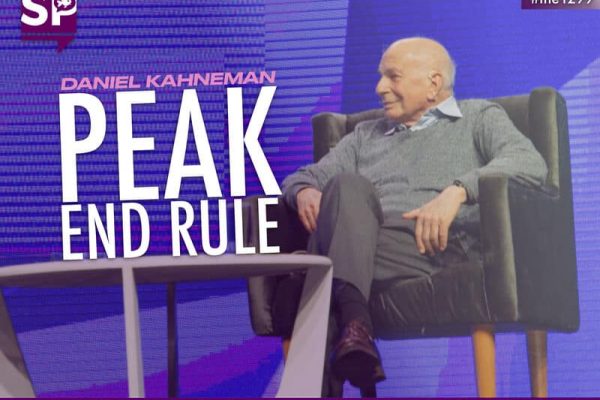
Nobel Prize Winner Daniel Kahneman coined the Peak-End Rule. It is based on his belief that we judge our past experiences almost entirely on how they were at their peak (whether pleasant or unpleasant) and how they ended.

According to Dean Crutchfield:

“Designing for the peak-end rule is another way of not focusing on what is less important, but about focusing on what brings the most value to the customer experience. In other words, make sure that your peak and end is memorable, branded, and differentiated.”

You never get a second chance to make a last impression.

Translation: You need give the customer something to talk about right before they leave, hang up, or log out. 

One of the foundations Purple Goldfish Strategy is the idea of leveraging recency. They say (whoever “they” are) that customers tend to remember the last thing they experience.

Credit to Adrian Swinscoe for featuring the following story of Virgin Holidays in his tremendous book “Punk CX.” 

When Pauline Wilson started her role as Operations Director of Virgin Holidays, she went undercover with her Marketing Director on one of their own holidays, to experience it through the eyes of their customers.

One of the biggest lightbulb moments from their trip came when their customers kept telling them how much they didn’t like the last day of their holiday.

Not because they hadn’t had a great holiday, but more because after they had checked out of their hotel, they were left with time to kill and little access to any facilities before heading off to the airport to catch their flight home.

Overall, they felt forgotten, and that, after they had checked out, the company had switched its focus away from them to the new arrivals.

That was a real wake-up call for Pauline and her colleague and made them realize that the finish of any experience is just as important as the start.

That insight helped them develop a new concept: The Departure Beach.

This involved a dedicated Virgin Holidays beach lounge at the hotel, which aims to help their customers get the most out of the last day of their holiday.

Are you overlooking the end of your customer’s experience with you?

What could you do to make the end of your customer’s experience better?

Adrian summed it up best. What are you doing to improve the last experience your customer has with your brand? 

Follow me on Twitter or LinkedIn.

Stan Phelps

Stan Phelps walks the walk. He stands out in the sea of sameness by modeling his own Differentiated Experience (DX) message: Differentiation isn’t just about what you say, it’s about what you do and, more importantly, how and why you do it. Stan leverages his unique collection of 5,000+ case studies on customer, employee, and brand experience to engage audiences with informative learning-based experiences. He believes purposeful DX wins the hearts of employees and customers, and differentiation ultimately boosts loyalty, retention, referrals, and results.

Find Stan’s in-person and virtual keynotes, workshops, and Goldfish tank programs at StanPhelps.com.
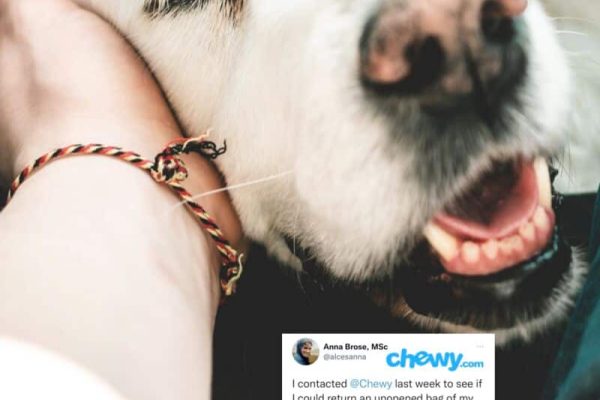
Great customer service story from Chewy. And what I love the most is that it’s not a random act of kindness from the brand.

My friend Joshua Crum shared a tweet from Anna Brose. She tweeted this on Tuesday night:

“I contacted @Chewy last week to see if I could return an unopened bag of my dog’s food after he died. They 1) gave me a full refund, 2) told me to donate the food to the shelter, and 3) had flowers delivered today with the gift note signed by the person I talked to??”

Her dog (not the one pictured above) was named Gus.

This act of kindness is what I call a Purple Goldfish. Little things that go above and beyond to honor your relationship with the customer.

There are three types of acts of kindness:

1. Random Act of Kindness – the 1.0 kind. We’ve all seen this before. Good deeds or unexpected acts such as paying tolls, filling parking meters, or buying gas for consumers. They are usually one-off, feel-good activations. A random act of kindness draws upon gift economy principles, giving with no expectation of immediate return, except maybe for potential PR value.

2. Branded Act of Kindness – next level 2.0. Here the item given is usually tied closely with the brand and its positioning. It’s less random, more planned, and potentially a series of activations. This has the feel of a traditional marketing campaign.

3. Lagniappe Act of Kindness – 3.0 stuff. Kindness is embedded into your brand. Giving little unexpected extras (g.l.u.e.) is part of your product or service. This is rooted in the idea of “added value” to the transaction. Not a one-off or a campaign, but an everyday practice that’s focused on customers of your brand.

The beauty of creating a Purple Goldfish as a branded act of kindness is that there is no waste. You are giving that little extra to your current customers, and they will talk about it, giving you word-of-mouth credibility. 

As for Anna’s one tweet, it has resulted in nearly 7,000 comments and nearly a half of million likes. That’s some good word of mouse!

Follow me on Twitter or LinkedIn.

Stan Phelps

Stan Phelps walks the walk. He stands out in the sea of sameness by modeling his own Differentiated Experience (DX) message: Differentiation isn’t just about what you say, it’s about what you do and, more importantly, how and why you do it. Stan leverages his unique collection of 5,000+ case studies on customer, employee, and brand experience to engage audiences with informative learning-based experiences. He believes purposeful DX wins the hearts of employees and customers, and differentiation ultimately boosts loyalty, retention, referrals, and results.

Find Stan’s in-person and virtual keynotes, workshops, and Goldfish tank programs at StanPhelps.com.
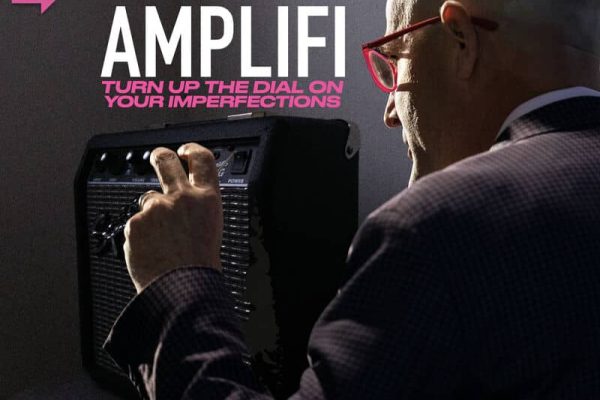
What are your organization’s unique weaknesses? What if you took them one louder?

Here are 11 sample questions and answers that might help:

1. Are your products cheap? Make them cheaper.
Some customers want the most inexpensive option, regardless of quality.

2. Are your services too expensive? Increase the price.
Some customers will see them as luxurious, lavish, or extravagant.

3. Is your company boring? Make it even duller.
Some customers like to keep things simple or prefer a conservative approach.

4. Are your products too complex? Make them even more confusing.
Some customers will see them as intricate, sophisticated, and challenging.

5. Is your service too impersonal? Remove people altogether.
Some customers prefer automated systems.

6. Is your company too serious? Become even more serious.
Some customers will see you as professional, businesslike, and distinguished.

7. Is your company too silly? Become even more ridiculous.
Some customers will see you as irreverent and hilarious.

8. Are your products too offensive? Make them even more shocking.
Some customers want stuff that is bold and daring.

9. Do you offer slow service? What if you made it even slower?
Some customers enjoy the sense of anticipation.

10. Are you failing to offer enough options? What if you offered even fewer?
Some customers get overwhelmed with too many choices.

11. Are you too cynical? What if you got even more pessimistic?
Some customers will see it as realistic or satirical.

To Amplifi isn’t simply having awareness, knowing your strengths and weaknesses. It isn’t just appreciation, valuing your strengths and weaknesses. In “Pink Goldfish 2.0” David Rendall and I share how amplifying is the process of getting weirder by getting weaker.

There are two ways to AMPLIFI: maximizing and minimizing.

1. Maximizing is spending MORE time, energy, and resources on what makes us imperfect.

2. Minimizing is spending LESS time, energy, and resources conforming to traditional models of success.

Ready to AMPLIFI?

Follow me on Twitter or LinkedIn.

Stan Phelps

Stan Phelps walks the walk. He stands out in the sea of sameness by modeling his own Differentiated Experience (DX) message: Differentiation isn’t just about what you say, it’s about what you do and, more importantly, how and why you do it. Stan leverages his unique collection of 5,000+ case studies on customer, employee, and brand experience to engage audiences with informative learning-based experiences. He believes purposeful DX wins the hearts of employees and customers, and differentiation ultimately boosts loyalty, retention, referrals, and results.

Find Stan’s in-person and virtual keynotes, workshops, and Goldfish tank programs at StanPhelps.com.
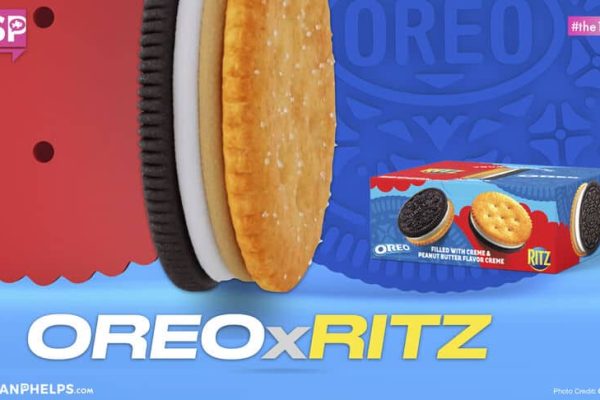
Salty sweet question. Would you try an OREO x RITZ frankencookie?

Two weeks ago, Mondelēz International took the century-old classic chocolate and cream OREO cookie and mashed it up with the salty RITZ cracker for a limited-time treat. 

The interior of the cookies combines the OREO vanilla cream filling smooshed along with peanut butter.

Why you may ask?

Spokeswoman Anna Whitelaw shared with USA TODAY, “We saw some chatter on social and thought, why not? Sounds delicious! After a few tries – 12 to be exact – we found the perfect combination.”

OREO x RITZ is a great example of the Pink Goldfish of micro-weirding.
Micro-weirding is about using minuscule actions to differentiate your brand and make it talkable. The idea is that you can set your brand apart without some cohesive master plan; you can be just a tiny bit weird.

But, just because something is micro-weird, doesn’t mean it has a micro-impact. Itty-bitty actions can have a massive impact on your brand.

The limited-time promotion of 1,000 packages dropped on May 26th, but it sold out within four days. Don’t worry, you can score this sold-out product on the secondary market. TheTakeout.com reported finding it on eBay for a mere $600.

Follow me on Twitter or LinkedIn.

Stan Phelps

Stan Phelps walks the walk. He stands out in the sea of sameness by modeling his own Differentiated Experience (DX) message: Differentiation isn’t just about what you say, it’s about what you do and, more importantly, how and why you do it. Stan leverages his unique collection of 5,000+ case studies on customer, employee, and brand experience to engage audiences with informative learning-based experiences. He believes purposeful DX wins the hearts of employees and customers, and differentiation ultimately boosts loyalty, retention, referrals, and results.

Find Stan’s in-person and virtual keynotes, workshops, and Goldfish tank programs at StanPhelps.com.
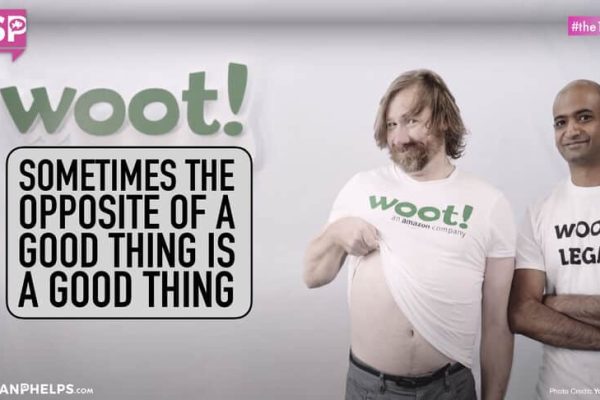
Beating Amazon. Sometimes the opposite of a good thing is also a …

… good thing.

Amazon is big. Very, very big. They sell almost everything, to almost everyone, almost everywhere, every hour of every day.

How can you compete with that? Is it possible to be bigger than Amazon?

Can you sell more things from A to Z, to more people, in more places, more often? Probably not. So what can you do?

Call it George Costanza logic, but what if you sold one thing, to a small number of people, in one place, for just one day?

Would that work?

Matt Rutledge created Woot, Inc. and it went online in July 2004. The site was simple. Woot! offered one item, in limited amounts, only to US residents, for just one day or until the item sold out.

Their tagline was “One Day, One Deal.”

The items weren’t announced in advance. It was like an online garage sale. First come, first served.

It created an urgency that no one would ever feel with Amazon.

Products could not be exchanged because most items sold out. This added an element of risk and excitement that Amazon doesn’t have.

There was no customer support. Sorry! Buyers were directed to the manufacturer’s website for assistance. Rutledge encouraged copywriters at Woot! to be entertainingly frank about the flaws and shortcomings of the often obsolete products sold on the site:

“We feel that if we don’t do a good job describing what’s wrong with a product, people will assume we just don’t know. That’s where most retailers fail. To them, every product is perfect.”

Customers had to be willing to make a trade-off warts and all in order to get a bargain. These products were flawsome.

And forget Prime Now, this was Prime Nothing. There was no free shipping, especially since many of the items were bulky and expensive to transport. The low prices often offset the shipping costs.

Did it work?

In just four years Woot! was named the number one Fastest Growing Private Retail Company in America. Woot’s unconventional strategy worked so well that Amazon bought Woot! in 2010 in a nine-figure deal.

Amazon was smart enough to realize that Woot! was a legitimate competitor.

They saw the strengths in Woot’s apparent weaknesses and added Woot! in order to diversify their company.

Woot! is a strong example of the Pink Goldfish of Opposing. Opposing involves defying, resisting, and fighting. It’s refusing to give in, to yield, to submit, to surrender to the pressure to conform. You refuse to fit in and to follow the crowd. 

How are you doing the opposite of what everyone does as “normal”? Because sometimes the opposite of a good thing is also a good thing.

Follow me on Twitter or LinkedIn.

Stan Phelps

Stan Phelps walks the walk. He stands out in the sea of sameness by modeling his own Differentiated Experience (DX) message: Differentiation isn’t just about what you say, it’s about what you do and, more importantly, how and why you do it. Stan leverages his unique collection of 5,000+ case studies on customer, employee, and brand experience to engage audiences with informative learning-based experiences. He believes purposeful DX wins the hearts of employees and customers, and differentiation ultimately boosts loyalty, retention, referrals, and results.

Find Stan’s in-person and virtual keynotes, workshops, and Goldfish tank programs at StanPhelps.com.
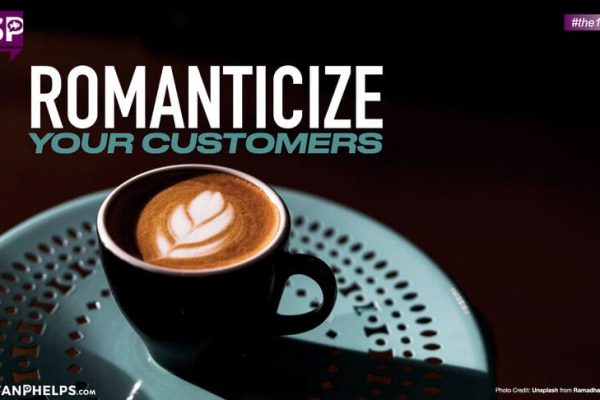
The phrase “romanticize your life” was popularized during the pandemic.

The concept according to an article by Christina Caron in The New York Times,

“… asks us to appreciate what we have right in front of us and to live with intention, no matter how mundane our daily rituals might be — a reminder to look for moments of beauty and embrace minimalism.”

The idea is to be more mindful to appreciate life’s “little things”. This mantra isn’t new. The great philosopher Ferris Bueller shared a similar sentiment all the way back in 1986,

“Life moves pretty fast. If you don’t stop and look around once in a while, you could miss it.”

But, what if we challenged ourselves to embrace this concept in business?

Too many times we take both our employees and customers for granted. We fail to be present and business becomes stale and transactional.

What if we sought out small ways to honor the relationship with our customers? Looking for opportunities to romanticize the experience we provide.

I call these little things Purple Goldfish. They are signals or beacons. Small signs that show you care. A little extra beyond the transaction to honor the relationship. Something extra to either add value or make things easier for your customers.

The challenge is to find ways to bake this into your customer experience. Make the little extra part of your business rituals.

Do these little things resonate?

I subscribe to the philosophy that Malcolm Gladwell offered in the “The Tipping Point,”

“The little things can make the biggest difference.”

What’s your Purple Goldfish?

Follow me on Twitter or LinkedIn.

Stan Phelps

Stan Phelps walks the walk. He stands out in the sea of sameness by modeling his own Differentiated Experience (DX) message: Differentiation isn’t just about what you say, it’s about what you do and, more importantly, how and why you do it. Stan leverages his unique collection of 5,000+ case studies on customer, employee, and brand experience to engage audiences with informative learning-based experiences. He believes purposeful DX wins the hearts of employees and customers, and differentiation ultimately boosts loyalty, retention, referrals, and results.

Find Stan’s in-person and virtual keynotes, workshops, and Goldfish tank programs at StanPhelps.com.

Want your brand to stand out and make an impression? Perhaps you should consider THIGHVERTISING.

Years ago, DDB Auckland was working with the apparel retailer Superette. The New Zealand-born organization boasts six retail locations and a thriving online store. They bill themselves as “a lifestyle destination to experience high-end design with an edge.”

Speaking of edges . . . the brand pioneered thighvertising and created quite a literal impression.

The campaign featured modified benches in Auckland. The raised letters pressed against a naked thigh read:

SHORT
SHORTS
FOR SALE
SUPERETTE

Big thanks to Danny Rosin and the team at Brand Fuel for putting this on my radar.

So, here is the question: Is this super marketing or a shortsighted gimmick?

Follow me on Twitter or LinkedIn.

Stan Phelps

Stan Phelps walks the walk. He stands out in the sea of sameness by modeling his own Differentiated Experience (DX) message: Differentiation isn’t just about what you say, it’s about what you do and, more importantly, how and why you do it. Stan leverages his unique collection of 5,000+ case studies on customer, employee, and brand experience to engage audiences with informative learning-based experiences. He believes purposeful DX wins the hearts of employees and customers, and differentiation ultimately boosts loyalty, retention, referrals, and results.

Find Stan’s in-person and virtual keynotes, workshops, and Goldfish tank programs at StanPhelps.com.
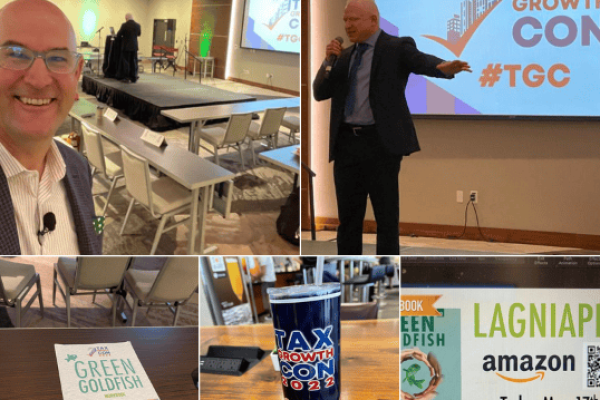
How can companies boost employee morale and drive high performance?

The simple answer is doing the little extras beyond compensation to demonstrate commitment to your employees.

Yesterday I shared lessons from Green Goldfish in Dallas at #TaxGrowthCon.

We examined how companies go above and beyond to create signature extras.

While collecting 1,001 examples of employee lagniappe, a few key themes emerged. Specifically, the different types of Green Goldfish can be categorized as the 3 B’s.

Here are 10 of the 15 types:

1. BUILDING: RECRUITING & ONBOARDING
Attitudes begin to form at the initial point of contact with an organization. There is no better place to start than when you are recruiting and eventually welcoming new employees to your company. Research shows that employees make the critical decision to stay or leave within the first six months. When new hires participate in an onboarding program, the company can maximize retention, engagement, and productivity.

2. BUILDING: SHELTER
Pure and simple—space matters. It sets the stage for how you both work and interact on the job. Beyond functionality, the physical environment should be able to tell the story of the company.


3. BUILDING: WELLNESS
Getting to the heart of your employees involves wellness, little extras designed to support healthy behavior in the workplace and improve health outcomes. Without health, we have nothing.

4. BUILDING: TIME AWAY
A recent survey polled over 200 employees from 98 companies to find out what rewards they valued the most. Across all ages and cultures, time off was absolutely number one.

5. BUILDING: TRANSPARENCY
Sunlight is the best disinfectant. Transparency creates a trusting environment.

6. BELONGING: FLEXIBILITY
Flexibility is about control, and everyone wants flex. According to research, if there’s one work perk that rises above the rest, it’s flexible work arrangements.

7. BELONGING: TEAM BUILDING
Success is frequently seen as a purely individual achievement, often at the expense of others. But in the corporate world, an organization can only thrive with the collective help of everyone. For employees, being part of a team helps create a sense of belonging.

8. BELONGING: ATTABOYS AND ATTAGIRLS
Reaching the heart of your employees involves recognition. “YOU MATTER.” These two words can change your mood, change your mind, and have the power to change lives if we leverage them in the right way.

9. BECOMING: TRAINING AND DEVELOPMENT
Investing in your employees involves training and development. Going the extra mile to allow employees to learn how to become the best version of themselves.

10. BECOMING: PAYING IT FORWARD
Embracing purpose and giving back to society are strong drivers of employee engagement.

Follow me on Twitter or LinkedIn.

Stan Phelps

Stan Phelps walks the walk. He stands out in the sea of sameness by modeling his own Differentiated Experience (DX) message: Differentiation isn’t just about what you say, it’s about what you do and, more importantly, how and why you do it. Stan leverages his unique collection of 5,000+ case studies on customer, employee, and brand experience to engage audiences with informative learning-based experiences. He believes purposeful DX wins the hearts of employees and customers, and differentiation ultimately boosts loyalty, retention, referrals, and results.

Find Stan’s in-person and virtual keynotes, workshops, and Goldfish tank programs at StanPhelps.com.
What’s your behavioral style? Are you a Casey, an Izzy, a Peyton, or an Avery?

MEET CASEY
Casey is a hard-charging thinker who usually sits in the front of the room. Typically well dressed and image-conscious, Casey wants to accomplish big things and can come across as assertive, maybe even pushy, about their ideas. Casey loves to strategize and craves CONTROL.

Here’s a quote that represents Casey’s behavioral style: “Strategy is a style of thinking, a conscious and deliberate process.” – Pete Johnson

MEET IZZY
Izzy is a people person, a facilitator, who gravitates toward connecting with others and ideas. Izzy is typically loaded with possibilities about everything and appears to think quickly on their feet. Izzy lives “in the now,” craves action, and seeks to INFLUENCE others.

Here’s a quote that represents Izzy’s behavioral style: “You have to be fast on your feet and adaptive or else a strategy is useless.” – Charles de Gaulle

MEET PEYTON
Peyton is a workhorse who is engrossed in work and thrives on to-do lists. Peyton likes sticking to the plan and will POWER through almost anything to achieve desired results. Peyton’s goal is to produce large volumes of work and do it quickly!

Here’s a quote that represents Peyton’s behavioral style: “In reality, strategy is actually very straightforward. You pick a general direction and implement like hell.” – Jack Welch

MEET AVERY
Avery is an analyzer who loves to focus on gathering information to get into the details. Avery lives in the past and wants to get everything exactly right—all of the time, and so needs to become an AUTHORITY on a particular topic before being able to push forward with a decision.

Here’s a quote that represents Avery’s behavioral style: “However beautiful the strategy, you should occasionally look at the results.” – Sir Winston Churchill

Casey, Izzy, Peyton, and Avery represent the four Market Force Behavioral Styles:

Casey is a CONTROL
Izzy is an INFLUENCE
Peyton is a POWER
Avery is an AUTHORITY

Using the chart below, you can see the concerns of each of the four Styles and how they behave under pressure.

What’s your style? I’m an Izzy (Influence).

Follow me on Twitter or LinkedIn.

Stan Phelps

Stan Phelps walks the walk. He stands out in the sea of sameness by modeling his own Differentiated Experience (DX) message: Differentiation isn’t just about what you say, it’s about what you do and, more importantly, how and why you do it. Stan leverages his unique collection of 5,000+ case studies on customer, employee, and brand experience to engage audiences with informative learning-based experiences. He believes purposeful DX wins the hearts of employees and customers, and differentiation ultimately boosts loyalty, retention, referrals, and results.

Find Stan’s in-person and virtual keynotes, workshops, and Goldfish tank programs at StanPhelps.com.

1 8 9 10 11 12 48
A simple illustration of a purple fish facing right on a plain background.

I've had the pleasure of working with teams at:

Three purple fish silhouettes swimming to the right on a dark background.

Find Your Best-Match Program

With over 18 possible keynote speaking presentations, workshops, and GOLDFISH TANK programs available to meet your ever-evolving needs, I’ve created this 2-minute, 6-question quiz to help you understand which program is best for you and your audience.

Meet Your Presenter

Through keynote speaking presentations, hands-on workshops, and GOLDFISH TANK programs, I empower you to power loyalty and growth.

Hi, I’m Stan Phelps. I work with organizations that want to increase loyalty, drive sales, and promote positive word-of-mouth by creating differentiated experiences.

As an author, keynote speaker, and workshop facilitator, my in-person and virtual programs stand out in a sea of sameness because I model my own message of differentiated experience (DX).

I leverage my unique collection of more than 5,500 case studies on customer, employee, and brand experience to engage audiences with practical ideas that inspire action.

A person wearing glasses and a gray quarter-zip sweater stands outdoors in front of a building with a triangular glass roof at dusk.

Every time we do business together, Something amazing happens in the world!

Through my partner B1G1, each program gives back to create global IMPACT

Two students in blue uniforms smile while washing their hands at an outdoor tap.

When we complete a GOLDFISH TANK, we give 1001 days of clean water to school children

Collage of three images: a person washing hands, a child drawing with colored pencils, and a group of people sitting outdoors with some raising their hands.

When we complete a GLOBAL engagement, we give 365 days of clean water access in Peru, 120 days of learning aids in Malaysia, and 50 days of business training for women in Malawi

Hand placing a brick on a surface with text: "One Book = One Brick" and an Amazon logo.

When someone downloads a GOLDFISH eBook, we give one brick toward building school facilities in Cambodia