
Stan Phelp's Blog

The Goldfish Chronicles

Sharing insights on customer experience, employee engagement, and brand strategy.

Imagine that you are a professor at Harvard. You want to offer a new course to help students communicate more effectively.
What do you call it?

How will you get students interested?

How will you communicate the content and value of the course?

There are thousands of courses offered at Harvard each semester. How will yours stand out?

This isn’t a hypothetical scenario. Alison Wood Brooks, Ph.D. is an associate professor of business administration at Harvard. She is an expert in the psychology of conversation and she had a new course designed to help students get better at talking with each other.

So what did she call it?

She called it “How to Talk Gooder in Business and in Life.”

What?!?

Gooder isn’t even a real word. Why would a class at a prestigious university about how to speak well have a deliberate grammatical error in the title?

So what happened? Did anyone sign up for the brand-new class with an incorrect title? Yes, indeed. So many students, nearly 1,000, signed up and the class was full almost immediately.

This is an elective course. No one has to take it. Professor Brooks needed to do something different if she wanted anyone to even know that the class was being offered. So she did. She used bad grammar to teach people how to talk gooder to each other. 

This a great example of Wabi-sabi that David Rendall and I share in Pink Goldfish 2.0. Wabi-sabi is a combination of two old Japanese words with overlapping definitions. Grounded in the Buddhist view that both life and art are beautiful, not because they are perfect and eternal, but, because they are imperfect and fleeting. It is a design aesthetic of intentional imperfection. 

Follow me on Twitter or LinkedIn.
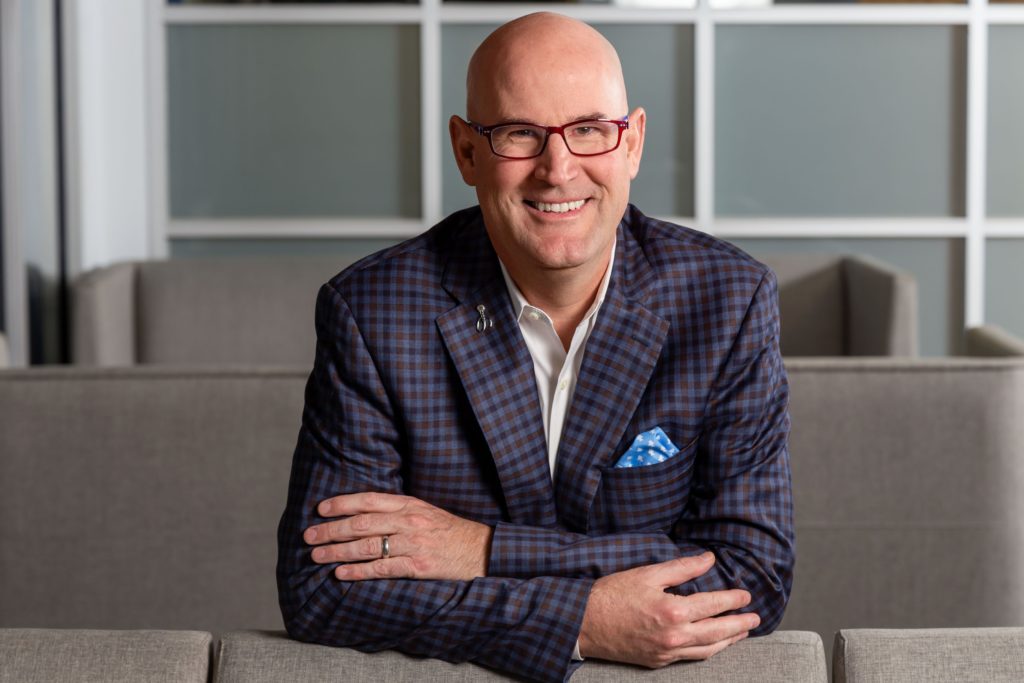
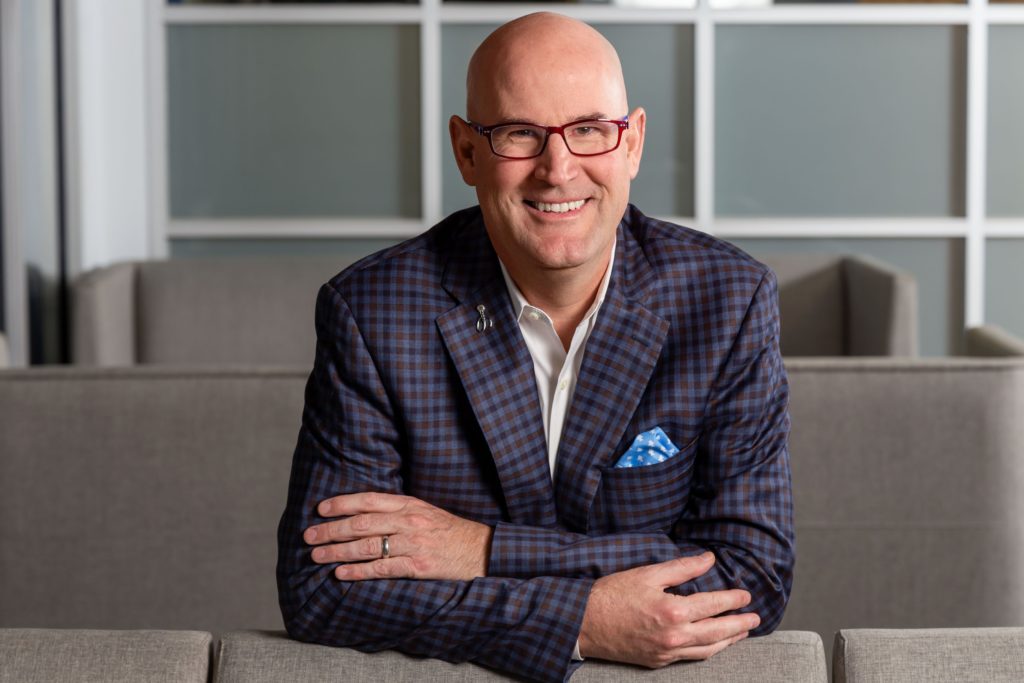
Stan Phelps

Stan Phelps walks the walk. He stands out in the sea of sameness by modeling his own Differentiated Experience (DX) message: Differentiation isn’t just about what you say, it’s about what you do and, more importantly, how and why you do it. Stan leverages his unique collection of 5,000+ case studies on customer, employee, and brand experience to engage audiences with informative learning-based experiences. He believes purposeful DX wins the hearts of employees and customers, and differentiation ultimately boosts loyalty, retention, referrals, and results.

Find Stan’s in-person and virtual keynotes, workshops, and Goldfish tank programs at StanPhelps.com.
“If you say my name, I won’t exist anymore?” What’s the answer to this riddle?

SILENCE

This riddle was shared in the movie, “Life is Beautiful.”

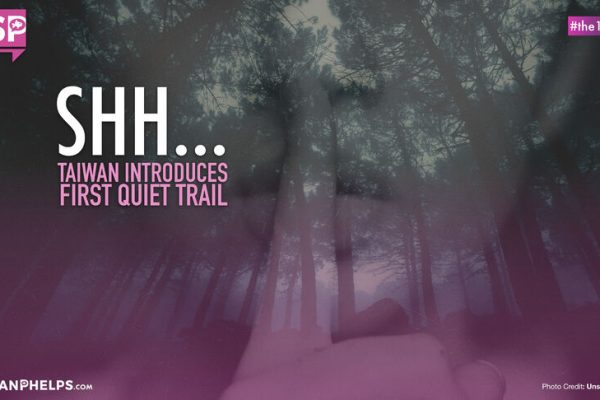
Now there is another answer to the riddle. It’s the Cuifeng Lake Circular Trail. A pristine hiking route hugging Taiwan’s largest alpine lake which is now certified QUIET.

Shh…if you say its name while hiking, it won’t exist anymore.

This is a great example of both the Pink Goldfish of Withholding and Lopsiding. Take away something and ramp us something else to differentiate.

You might be asking, “I get that they are limiting noise on the trail, but what are they maximizing?”

It turns out the trail is already super quiet. According to the US certifying body Quiet Parts International (QPI), “The trail snakes through a lush and moist cypress forest carpeted with thick green moss, which acts like a layer of natural sound-absorbing foam.”

How quiet? The lowest measured volume on the trail is fewer than 25 decibels. QPI classifies that as almost silent.

Lin Hua-ching, director of the Taiwan Forestry Bureau shared with CNN Travel, “I encourage people to walk this trail with a humble attitude and open their hearts to listen.”

That might be the best advice I’ve heard since Ted Lasso shared, “Be Curious, Not Judgmental.”

LAGNIAPPE: One more riddle from the movie Life is Beautiful:

“The bigger it is, the less you see it.”

Answer: OBSCURITY

Follow me on Twitter or LinkedIn.

Stan Phelps

Stan Phelps walks the walk. He stands out in the sea of sameness by modeling his own Differentiated Experience (DX) message: Differentiation isn’t just about what you say, it’s about what you do and, more importantly, how and why you do it. Stan leverages his unique collection of 5,000+ case studies on customer, employee, and brand experience to engage audiences with informative learning-based experiences. He believes purposeful DX wins the hearts of employees and customers, and differentiation ultimately boosts loyalty, retention, referrals, and results.

Find Stan’s in-person and virtual keynotes, workshops, and Goldfish tank programs at StanPhelps.com.
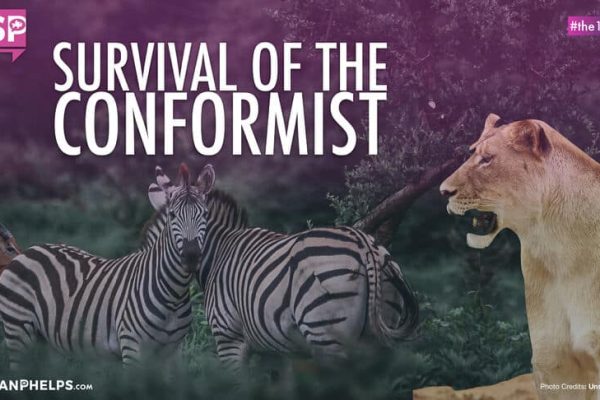
What ZEBRAS can teach us about human motivation and business strategy…

Dr. Jordan Peterson uses an insight from Stanford biologist Dr. Robert Sapolsky about zebras to explain a fundamental aspect of human behavior. Zebras (they are black with white stripes) are not camouflaged against their surrounding environment. Instead, they are camouflaged to blend in with the herd. 

This blending effect makes it difficult for researchers to study individual zebras. You notice something about a zebra and make a note. Then you look up and you can’t tell if it’s the same zebra. 

What can you do?

Peterson shares how researchers would mark the zebra they wanted to study with red paint or a tag on its ear. But they found that once the zebra was marked, it was quickly killed by the lions.

Oops.

Lions don’t necessarily kill the weakest in the herd, they typically go after those zebras they can identify. 

This helps lions organize their hunt. A small zebra, a zebra with a limp, those with red paint on their hind quarters, or those who stick their head up… they all become targets.

The stripes of a zebra creates a blending effect. It is impossible for an individual zebra to stand out amongst the herd. This is good for safety as lions see the herd as one huge object and won’t attack it. 

But this blending makes standing out and differentiating a non-starter. You can’t add stripes and be different. It’s just more of the same. This is what David Rendall and I call a MATCH strategy in the book “Pink Goldfish 2.0.”

People and brands camouflage themselves to fit into the herd. They keep their stripes on and heads down so the lions don’t get them. The motivation to avoid suffering outweighs the pursuit of success.

Peterson points out the tendency to move into the middle of the herd. The benefit of being in the middle is the protective ring from the lions. 

Sure, you might be successful by standing out, but you also might be dead. So the fundamental human motivation according to Jordan Peterson is to be invisible and left alone. It’s not Survival of the Fittest, rather it’s Survival of the Conformist.

Research shows that only 3% of people and brands have the ability to become extraordinary.

Because there is a real danger in being visible, people and brands are afraid to stand out. Brands are motivated to benchmark the leaders and emulate similar attributes. This isn’t a path to innovation. It’s a recipe for sameness. Most practice R&D as if it stands for… Ripoff & Duplicate.

You can become part of that 3% by deciding to break your industry norms and stand out from the herd. Be less like zebras or cows and more like peacocks and polar bears.

This shift against conformity is the essence of Pink Goldfish strategy. Do MORE of what makes you different or intentionally do LESS of what everyone considers normal in your industry. Do MORE of what your customers value and unapologetically LESS of what they don’t.

Less cow, more cowbell.

Follow me on Twitter or LinkedIn.

Stan Phelps

Stan Phelps walks the walk. He stands out in the sea of sameness by modeling his own Differentiated Experience (DX) message: Differentiation isn’t just about what you say, it’s about what you do and, more importantly, how and why you do it. Stan leverages his unique collection of 5,000+ case studies on customer, employee, and brand experience to engage audiences with informative learning-based experiences. He believes purposeful DX wins the hearts of employees and customers, and differentiation ultimately boosts loyalty, retention, referrals, and results.

Find Stan’s in-person and virtual keynotes, workshops, and Goldfish tank programs at StanPhelps.com.
“The law of the vital few and the trivial many.” That’s how the late Joseph Juran referred to Pareto’s principle. It is commonly referred to as the 80/20 rule.

Juran was the first to apply Vilfredo Pareto’s research. He found:

– 80% of the World’s GDP is controlled by 20% of the people
– 80% of the complaints come from 20% of the customers
– 80% of a company’s sales come from 20% of its products

I believe it’s high time to apply the 80/20 principle to traditional marketing.

If we subscribe to the principle that 80% of your results will be generated by 20% of your efforts, then we respectfully put forth the Purple Goldfish Corollary: 80% of your traditional marketing efforts will net you 20% of the results.

Today, traditional marketing is woefully ineffective. This attribution phenomenon isn’t new. According to the late legendary 19th-century retailer Joseph Wanamaker,

“Half the money I spend on advertising is wasted … the problem is that I don’t know which half.”

We believe 50% is an understatement and therefore propose that the vast majority of marketing dollars spent on the traditional funnel (the 80%) will net one dollar worth of return for every four that you spend given the Purple Goldfish 80/20 Corollary.

The overwhelming traditional view of marketing is the process of acquiring prospective customers. It is not uncommon to find companies spending 80 percent of their marketing budgets on getting consumers into the purchase funnel. We’ve become so preoccupied with generating awareness and interest that we tend to forget about our most important asset, our current customers.

We need to flip that ratio and apply it to traditional marketing. We need to heed Pareto’s Law and determine the 20% of traditional marketing we are doing that is generating the strongest ROI. Once you’ve earmarked that vital 20%, it’s time to focus a majority of the remaining 80% squarely on current customers.

By putting the focus on your current customers, you eliminate waste, drive differentiation, and generate the following three benefits:

– Reduce attrition
– Increase loyalty
– Drive positive word of mouth 

Follow me on Twitter or LinkedIn.

Stan Phelps

Stan Phelps walks the walk. He stands out in the sea of sameness by modeling his own Differentiated Experience (DX) message: Differentiation isn’t just about what you say, it’s about what you do and, more importantly, how and why you do it. Stan leverages his unique collection of 5,000+ case studies on customer, employee, and brand experience to engage audiences with informative learning-based experiences. He believes purposeful DX wins the hearts of employees and customers, and differentiation ultimately boosts loyalty, retention, referrals, and results.

Find Stan’s in-person and virtual keynotes, workshops, and Goldfish tank programs at StanPhelps.com.

It is impossible to play the Old Course on a Sunday. Why?

Every Sunday (outside of tournaments), golf is not played there. It’s been that way for hundreds of years.

But here is the fantastic part… the public (and even dogs!) are welcomed on the fairways. The Old Course in St. Andrews becomes a park for one day a week.

A huge bark park. At 45 acres, it is one the biggest dog parks in the world. According to Golf Inc. Magazine, “The only rules are obvious: 1. Please pick up after your four-legged friend. 2. Please stay off the greens. (The latter is only loosely followed.)”

When Jenn and I took a tour of the Old Course nearly two decades ago. The tour guide said something that stood out. He shared how residents of St. Andrews would lay out their laundry to dry on Sundays. Or that fishermen spread their nets on the fairways to mend them. 

In “Pink Goldfish 2.O” David Rendall and I share how Chick-fil-A Restaurants stand out through a concept called Withholding. Like the Old Course, it is also closed on Sundays.

According to The New York Times, “Historians trace the Old Course’s Sunday closure to religious laws dating at least to the 16th century, when some residents of St. Andrews were cited in town criminal logs for playing on the Sabbath.”

Sometimes you can stand out by doing less of what everyone does as normal…

In the words of James Murphy, “Can one imagine this happening at that silly place in Augusta, Georgia? I can’t.”

Follow me on Twitter or LinkedIn.

Stan Phelps

Stan Phelps walks the walk. He stands out in the sea of sameness by modeling his own Differentiated Experience (DX) message: Differentiation isn’t just about what you say, it’s about what you do and, more importantly, how and why you do it. Stan leverages his unique collection of 5,000+ case studies on customer, employee, and brand experience to engage audiences with informative learning-based experiences. He believes purposeful DX wins the hearts of employees and customers, and differentiation ultimately boosts loyalty, retention, referrals, and results.

Find Stan’s in-person and virtual keynotes, workshops, and Goldfish tank programs at StanPhelps.com.
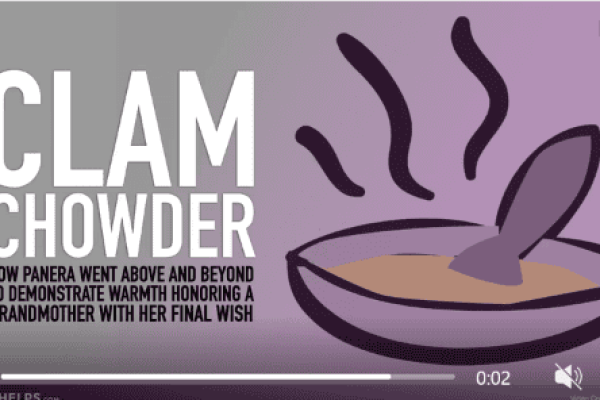
Ten years ago Brandon Cook was visiting his grandmother in the hospital. The prognosis was dire…

Brandon’s grandmother had pancreatic cancer and was down to her last few days.

One of the horrible side effects of pancreatic cancer is that you get to the point where you can no longer eat. Brandon was watching his grandmother suffer, and he was pleading with her to eat something.

After the consistent pleading, Brandon’s grandmother said,

“I’d like to have some soup.” She then qualified her request.

“But not the shit they serve at the hospital!”

She wanted a bread bowl of clam chowder.

Where do you get a bread bowl of clam chowder? You get it at Panera Bread. But here was the problem. Due to demand, Panera only serves clam chowder on Fridays during the summer.

This was a Monday. Oop.

Brandon wasn’t going to let that get in the way. He picked up his phone and called the closest Panera in Nashua, NH. Within a minute, he was speaking to Sue Fortier, the manager.

Brandon explained the situation and his grandmother’s wishes. Upon hearing the story, Sue stopped Brandon and told him to come over. They would be happy to help him and his grandmother. Brandon drove the 10 minutes to Panera and met Sue and her team.

Sue gave Brandon a couple bread bowls of clam chowder. As a little extra, the team also threw in a small box of cookies.

Brandon returned to the hospital and had a wonderful lunch with his grandmother. For a short time, it sustained her and made her happy.

Driving home that afternoon, Brandon reflected on this small act of kindness by Panera. He decided he was going to do something about it.

Sidebar: How do we know Brandon Cook was a good kid?

Well, he must have been as he took the time to visit his grandmother. He was also thoughtful because he fulfilled her clam chowder request.

How do we know for sure? We can be 100 percent sure because Brandon was friends with his mom on Facebook.

Brandon wrote about his experience on the social networking site.

Brandon’s mom, Gail, saw the post and was extremely moved. She copied it and placed it on Panera’s Facebook page.

That’s when something amazing happened. In less than four weeks, a single Facebook post by Brandon Cook had garnered more than 800,000 likes, 34,000+ comments, and scores of national media.

Why?

Because Panera empowered its employees to demonstrate warmth and competence by doing the little extra. A concept I call a Purple Goldfish.

The idea of warmth and competence is not just theory. It draws from original research spanning multiple studies. Companies need to find ways to leverage individual customer and employee relationships by doing a tangible extra.

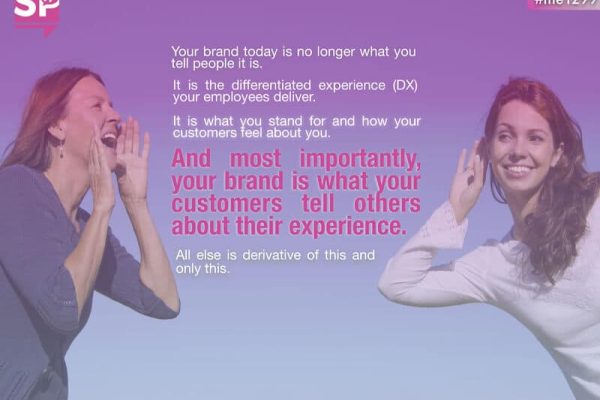
Actions speak louder than words. Because your brand is no longer what you tell people it is. It’s what your customers (like Brandon) experience, it’s how they feel, and most importantly, it’s what they tell others about their experience.

Follow me on Twitter or LinkedIn.

Stan Phelps

Stan Phelps walks the walk. He stands out in the sea of sameness by modeling his own Differentiated Experience (DX) message: Differentiation isn’t just about what you say, it’s about what you do and, more importantly, how and why you do it. Stan leverages his unique collection of 5,000+ case studies on customer, employee, and brand experience to engage audiences with informative learning-based experiences. He believes purposeful DX wins the hearts of employees and customers, and differentiation ultimately boosts loyalty, retention, referrals, and results.

Find Stan’s in-person and virtual keynotes, workshops, and Goldfish tank programs at StanPhelps.com.
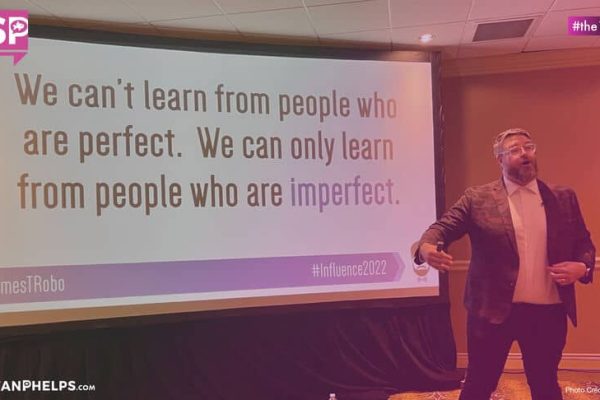
“We can’t learn from people who are perfect. We can only learn from people who are imperfect.” – James Robilotta, CSP®

That was my main takeaway from James’ excellent session on “The Power of Relatability – How to Deliver Memorable Messages” at NSA #Influence22.

James shared that we are all weird. And that it’s the “weirds” that are the things that connect us. This is similar to the maxim from my Pink Goldfish 2.0 co-author David Rendall,

“What makes us weak is also what can make us strong. And what makes us weird is what makes us wonderful.”

Robilotta challenged us as speakers to think of the moments that create humanity. Because those things make us relatable.

Brené Brown echoed this sentiment in her book “The Gifts of Imperfection“:

“Most of us spend our lives trying to be, and seem, ‘perfect.’ We try to protect ourselves. It can sometimes be difficult to drop the pretense
and own up to your flaws and faults – it takes courage.”

The main takeaway from the session is that we should own our lies and flaws. That reliability is more important than credibility.

In James’ words, “Your credibility doesn’t make you a good speaker. The [relatable] way you tell your story about it does.”

Follow me on Twitter or LinkedIn.

Stan Phelps

Stan Phelps walks the walk. He stands out in the sea of sameness by modeling his own Differentiated Experience (DX) message: Differentiation isn’t just about what you say, it’s about what you do and, more importantly, how and why you do it. Stan leverages his unique collection of 5,000+ case studies on customer, employee, and brand experience to engage audiences with informative learning-based experiences. He believes purposeful DX wins the hearts of employees and customers, and differentiation ultimately boosts loyalty, retention, referrals, and results.

Find Stan’s in-person and virtual keynotes, workshops, and Goldfish tank programs at StanPhelps.com.
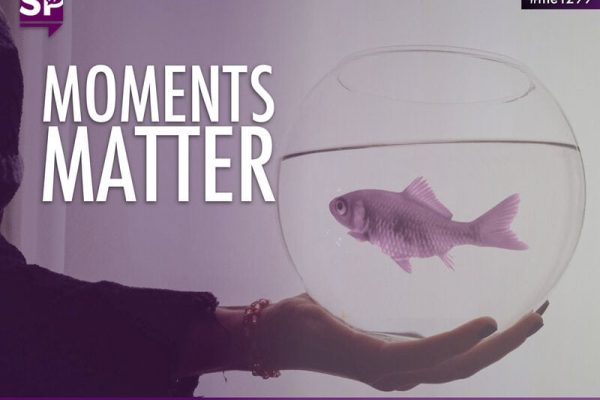
Moments matter. Little things that create delight in the customer experience can be revenue gold…

Research shows that companies focus 80% of their time on fixing problems instead of only 20% on creating peak moments. Peak moments matter because they hold value according to authors Chip and Dan Heath. The revenue opportunity from raising peaks can be as much as 9x greater.

In addition to increasing revenue, why would you want to create these little extra magical moments? I believe there are three distinct reasons and corresponding benefits of the status gained by delivering little extras:

1. Positioning – Stand out from your competition. If everyone is providing x, the fact that you provide x + y (little extra) differentiates your offering. Less than 30% of customers buy mainly on price. And competing on price is a race to the bottom. You want to tap into the more than 70% of customers who are looking for value and a strong customer experience. 

Benefit: Differentiation

2. Loyalty – Giving a little extra enhances the customer experience. It creates a bond between the business and the customer. The benefits of that bond include increased loyalty and ultimately patronage as a form of repayment. 

Benefit: Retention

3. Reciprocity – Part of giving extra is to create goodwill (inequality). That inequality is repaid by positive word of mouth, spoken or digital. The best form of marketing is referral marketing. By giving a signature extra you provide something for your customers to talk, tweet, blog, or post about. 

Benefit: Referrals

I call these little extras Purple Goldfish. They are signature elements in the customer experience that help you stand out, improve retention, and drive positive word of mouth. They are little consistent extras that either add value or reduce customer effort.

These little extra moments can deliver tremendous ROI. In their book “The Power of Moments,” Chip and Dan Heath share a story about visiting Southwest Airlines headquarters.

They asked Southwest if they knew the impact of funny flight safety announcements. The team said no, but added they had the data to figure it out. They came back a week later. It turns out that humorous safety announcements take place on 1.5% of all Southwest flights. The data shows that passengers on those flights flew on average one leg more the following year. That additional flight represents $138 million of revenue for Southwest. And I bet you dollars to donuts that those passengers spoke about the funny flight safety announcement to friends and colleagues.

Sometimes little things can make a big difference. And the difference between ORDINARY and extraORDINARY is just a little extra.

Follow me on Twitter or LinkedIn.

Stan Phelps

Stan Phelps walks the walk. He stands out in the sea of sameness by modeling his own Differentiated Experience (DX) message: Differentiation isn’t just about what you say, it’s about what you do and, more importantly, how and why you do it. Stan leverages his unique collection of 5,000+ case studies on customer, employee, and brand experience to engage audiences with informative learning-based experiences. He believes purposeful DX wins the hearts of employees and customers, and differentiation ultimately boosts loyalty, retention, referrals, and results.

Find Stan’s in-person and virtual keynotes, workshops, and Goldfish tank programs at StanPhelps.com.
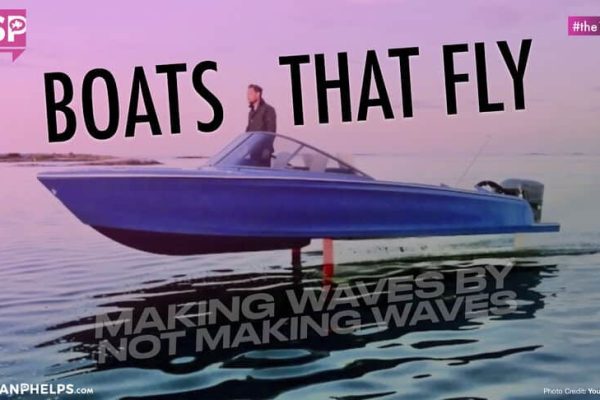
Can boats fly? Yes they can in Sweden. Have you heard about the Tesla of the seas?

Candela | Electric Hydrofoil Boats has already sold more than 100 of its 28-foot leisure boat called the C-8. Another 200 have been reserved. And next year its passenger ferries will hit the water in Stockholm.

How do they fly? One word: Hydrofoils

A century-old technology, they are wing-like structures that are attached to the underside of the boat. As the boat begins to accelerate, the hydrofoil wings lift it out of the water.

Once the ultralight hull is out of the water, the boat begins to fly.

Why fly? Friction is reduced and there is little to no wake created. That means its energy-efficient, up to 2.5 times faster, and has a much smoother ride. It’s also better for the environment and marine life.

Stockholm is the right market for this. The residents of the Sweden own over 750,000 boats. Lots of room to stand out in a “sea of sameness.”

Similar to buying an electric vehicle, it costs more initially. But Candela claims that operational costs are cut by up to 90% compared to combustion engine boats.

Candela is challenging the old joke that BOAT is an acronym for Bust Out Another Thousand.

Sometimes the best way to make waves… is by not making waves.

Follow me on Twitter or LinkedIn.

Stan Phelps

Stan Phelps walks the walk. He stands out in the sea of sameness by modeling his own Differentiated Experience (DX) message: Differentiation isn’t just about what you say, it’s about what you do and, more importantly, how and why you do it. Stan leverages his unique collection of 5,000+ case studies on customer, employee, and brand experience to engage audiences with informative learning-based experiences. He believes purposeful DX wins the hearts of employees and customers, and differentiation ultimately boosts loyalty, retention, referrals, and results.

Find Stan’s in-person and virtual keynotes, workshops, and Goldfish tank programs at StanPhelps.com.
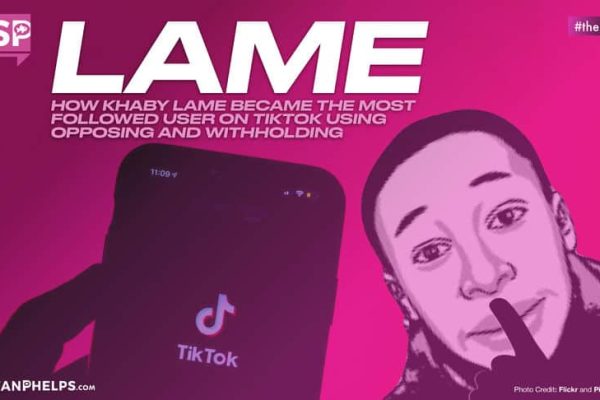
TikTok is LAME. How Khabane Lame became the most followed user on TikTok without saying a word…

First off, he’s not lame. His last name is pronounced LAH-MAY. He uses a shortened version of his first name Khaby. And he has 144.4 million followers.

Khaby is a 22-year-old from Senegal. He now lives in Italy and began using TikTok after being laid off from his factory job in 2020. 

Khaby started making videos because he wanted to make people laugh in the difficult period of COVID lockdown. 

Initially, he emulated others on the platform by creating clips of himself dancing and watching video games.

But you don’t stand out by doing more of what is normal. Instead, he began antagonizing the makers of life-hack videos. 

And he did by doing the opposite of what most commenters do. Khaby did it without saying a word. Not even a syllable.

Simply shaking his head, giving a shrug, or looking at the camera with exasperation.

Lame told CNN last year, 

“I came up with the idea because I was seeing these videos circulating, and I liked the idea of bringing some simplicity to it… I thought of a way to reach as many people as possible. And the best way was not to speak.”

In our book “Pink Goldfish 2.0,” David Rendall and I call this strategy withholding. Withholding is one of eight ways to differentiate by being FLAWSOME.

Withholding is about limitations, restrictions, boundaries, and constraints. It’s not about doing LESS of what makes you different… It’s about doing less of what makes others “normal.”

In addition to the life hack videos, Lame also posts short comedy skits using other funny videos. 

And he does those as well without a word. See a couple of example videos in the comments. The fishing one is my favorite.

According to research by Alfred Mehrabian, when we communicate something with emotion … only 7% of what we communicate are the words we use. The majority of what we communicate (55%) is our body language and gestures.

Is it working for Khaby? Yes. To the tune of 2.3 billion likes on the platform. His TikTok bio says it all…

“Se vuoi ridere sei nel posto giusto😎
If u wanna laugh u r in the right place😎”

Follow me on Twitter or LinkedIn.

Stan Phelps

Stan Phelps walks the walk. He stands out in the sea of sameness by modeling his own Differentiated Experience (DX) message: Differentiation isn’t just about what you say, it’s about what you do and, more importantly, how and why you do it. Stan leverages his unique collection of 5,000+ case studies on customer, employee, and brand experience to engage audiences with informative learning-based experiences. He believes purposeful DX wins the hearts of employees and customers, and differentiation ultimately boosts loyalty, retention, referrals, and results.

Find Stan’s in-person and virtual keynotes, workshops, and Goldfish tank programs at StanPhelps.com.

1 7 8 9 10 11 48
A simple illustration of a purple fish facing right on a plain background.

I've had the pleasure of working with teams at:

Three purple fish silhouettes swimming to the right on a dark background.

Find Your Best-Match Program

With over 18 possible keynote speaking presentations, workshops, and GOLDFISH TANK programs available to meet your ever-evolving needs, I’ve created this 2-minute, 6-question quiz to help you understand which program is best for you and your audience.

Meet Your Presenter

Through keynote speaking presentations, hands-on workshops, and GOLDFISH TANK programs, I empower you to power loyalty and growth.

Hi, I’m Stan Phelps. I work with organizations that want to increase loyalty, drive sales, and promote positive word-of-mouth by creating differentiated experiences.

As an author, keynote speaker, and workshop facilitator, my in-person and virtual programs stand out in a sea of sameness because I model my own message of differentiated experience (DX).

I leverage my unique collection of more than 5,500 case studies on customer, employee, and brand experience to engage audiences with practical ideas that inspire action.

A person wearing glasses and a gray quarter-zip sweater stands outdoors in front of a building with a triangular glass roof at dusk.

Every time we do business together, Something amazing happens in the world!

Through my partner B1G1, each program gives back to create global IMPACT

Two students in blue uniforms smile while washing their hands at an outdoor tap.

When we complete a GOLDFISH TANK, we give 1001 days of clean water to school children

Collage of three images: a person washing hands, a child drawing with colored pencils, and a group of people sitting outdoors with some raising their hands.

When we complete a GLOBAL engagement, we give 365 days of clean water access in Peru, 120 days of learning aids in Malaysia, and 50 days of business training for women in Malawi

Hand placing a brick on a surface with text: "One Book = One Brick" and an Amazon logo.

When someone downloads a GOLDFISH eBook, we give one brick toward building school facilities in Cambodia