
Stan Phelp's Blog

The Goldfish Chronicles

Sharing insights on customer experience, employee engagement, and brand strategy.

A Whopper of a commercial. Burger King just launched a global campaign based on an apparent weakness.

Research found that 6 out of 7 people couldn’t name more than one burger on Burger King’s menu. For a global brand . . . that’s borderline pathetic.

Bjorn Stahl, chief creative officer of the Swedish agency INGO behind the project sees lemonade. He shared with Adweek,

“I think it shows how amazingly strong the Whopper is as a product and brand. We decided to look at the study as the glass is half full.”

The 90-second spot (below) lopsides how folks in Tokyo, London, Stockholm, and Mexico are befuddled with the question.

INGO is also the creative genius behind “The Moldy Whopper” and “Not Big Mac” campaign.

The Moldy Whopper speaks for itself. A timelapse that shows how Burger King doesn’t use preservatives on its burger. Did it work?

The Moldy Whopper campaign drove sales up 14% and boosted awareness of the removal of artificial preservatives by more than 400%. It also resulted in at least 8.4 billion impressions and gave the brand $40 Million in earned media.

The “Not Big Mac” was the result of McDonald’s losing a legal battle. The arches lost the trademark on the words “Big Mac.” Enter INGO. They launched a new line of burgers called “Not Big Macs” for a limited time at locations in Sweden.

The burgers were regular BK burgers with temporary name changes. The items included:

– Big Mac-ish but flame-grilled of course
– Like a Big Mac but actually big
– The burger Big Mac wished it was
– Kind of like a Big Mac but juicier and tastier
– Anything but a Big Mac

Big thanks to Kirby Hasseman and Bill Petrie for the heads up on the naming campaign.

Follow me on Twitter or LinkedIn.
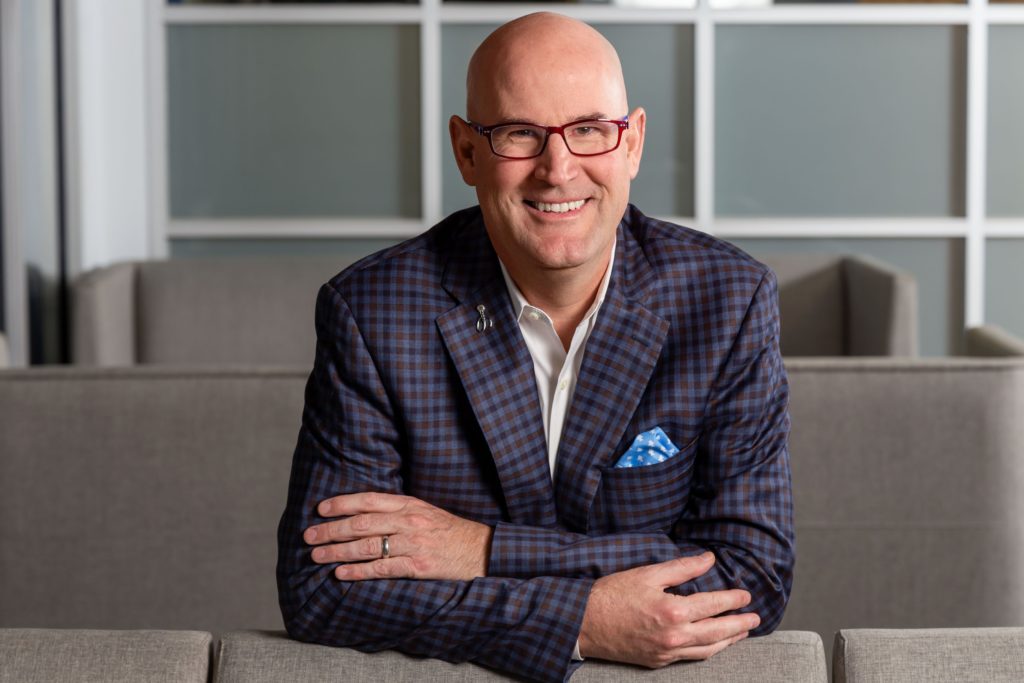
Stan Phelps

Stan Phelps walks the walk. He stands out in the sea of sameness by modeling his own Differentiated Experience (DX) message: Differentiation isn’t just about what you say, it’s about what you do and, more importantly, how and why you do it. Stan leverages his unique collection of 5,000+ case studies on customer, employee, and brand experience to engage audiences with informative learning-based experiences. He believes purposeful DX wins the hearts of employees and customers, and differentiation ultimately boosts loyalty, retention, referrals, and results.

Find Stan’s in-person and virtual keynotes, workshops, and Goldfish tank programs at StanPhelps.com.

In 2008, I was working as part of the leadership team for an experiential marketing agency. We created larger-than-life product launches, PR stunts, sponsorship activations, and mobile tours. The goal was to create brand experiences that drove impressions (eyeballs) through earned media.

Many of our activations were successful. Some even went viral and won awards. But they were neither scalable nor sustainable. I became disenchanted with this type of interruption marketing. I thought there had to be a better way forward.

So, I launched a blog called 9 INCH marketing. The goal was to write and discover 50 marketing axioms. I was searching for a game changing concept in business.

DISCLAIMER: Sadly, there is nothing personal with the 9 INCH reference. Nine inches is the average distance between the stem of your brain and the top of your heart. Those nine inches are personal to 85% of the people reading this post.

Don’t believe me?

Then grab a paperback book and spread your hand out. Stretch your fingers as wide as they’ll go and place your fingers along the spine of the book. The distance between your thumb and pinky is exactly nine inches. Or if you live outside the US, Libya, or Myanmar. . . it’s exactly 23 centimeters.

I refer to those nine inches or 23cm as the “longest and hardest” for any marketer, given the ultimate goal of winning the hearts of your customers.

Back to my blog. I finished the series of 50 marketing axioms. One of those posts highlighted a concept I called a Purple Goldfish.

That post would be the spark that ignited my purpose. It became the impetus for starting the Purple Goldfish Project. The project was an ambitious attempt to crowdsource 1,001 examples of Purple Goldfish.

1,001… what the hell was I thinking?

It took more than 27 months to break the thousand mark. The result was the first book in the Goldfish Series in 2012.

That same year our family moved from Norwalk, CT to Cary, NC.

BANG! As Mike Michalowicz has coined, I started to pursue my …

B ig
A udacious
N oble
G oal

Being the single income in our family, I cashed in over $100,000 in my 401(K) and left my agency role as EVP and Chief Solutions Officer.

I embarked on the journey of being an author and speaker. My “BANG” was to change the paradigm of business. To challenge leaders to think about the customer they had as opposed to focusing on chasing the prospect they wanted.

I wanted to inspire organizations to think beyond the transaction and do the little things to honor the relationship. To focus on providing an experience that would win customers and influence word of mouth.

Ten years, 11 colors, 17 books, 600+ speaking engagements. . . and my focus remains the same. I work with organizations that want to create a differentiated experience that wins the hearts of customers and employees.

What’s your B.A.N.G?

Follow me on Twitter or LinkedIn.

Stan Phelps

Stan Phelps walks the walk. He stands out in the sea of sameness by modeling his own Differentiated Experience (DX) message: Differentiation isn’t just about what you say, it’s about what you do and, more importantly, how and why you do it. Stan leverages his unique collection of 5,000+ case studies on customer, employee, and brand experience to engage audiences with informative learning-based experiences. He believes purposeful DX wins the hearts of employees and customers, and differentiation ultimately boosts loyalty, retention, referrals, and results.

Find Stan’s in-person and virtual keynotes, workshops, and Goldfish tank programs at StanPhelps.com.
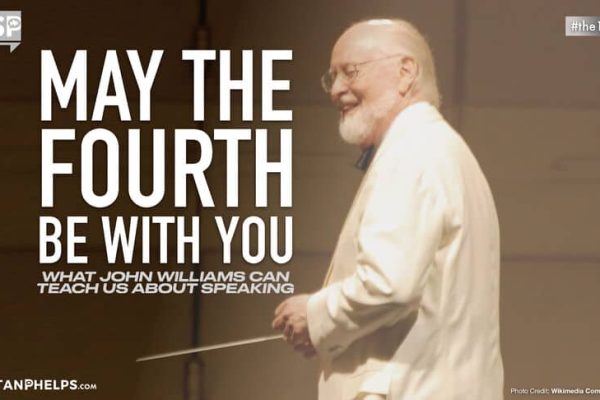
May the Fourth Be With You. Today we celebrate all things “Star Wars.” And it’s impossible to think of the entire saga without hearing the theme music from legendary composer John Williams.

The Star Wars theme is among the most widely recognized in film history. It is also the highest-grossing non-popular music recording of all time. It won John Williams the Academy Award for “Best Original Score.”

TRIVIA – speaking of the Academy Awards, there is only one person who has been nominated for an Academy Award more than Willams’ 52 times. As a film producer, Walt Disney holds the record for most Academy Awards earned by an individual, having won 22 Oscars from 59 nominations. Next year John Williams will compose his final score to the fifth installment of the “Raiders of the Lost Ark” series.

What makes John Williams an amazing composer? After all, his scores are associated with 9 of the Top 25 Grossing films of all time. His secret sauce is something we can all leverage when presenting.

Williams has mastered a technique called “leitmotif.” The word leitmotif is an anglicization of the German word Leitmotiv  meaning guiding motif.

John White in the “Analysis of Music” describes it as a succession of notes that has some special importance in or is characteristic of a composition: “the smallest structural unit possessing thematic identity.”

In presenting, we call this concept of leitmotif the “Central Idea.” Your entire presentation should be built around just one thing. It’s a few words or one sentence.

When composing, John Williams could do it in as little as two notes. You can read the following word with hearing two notes of E and F…. Jaws.

I was just chatting about this yesterday to fellow speaker and “Pink Goldfish 2.0” co-author David Rendall. Dave is amazing at simplifying things down when he coaches presenters. He shared with me his mantra, “Persuasive presenters tell powerful stories built around a central idea.”

Here’s the takeaway: Your presentation should be as short as needed to accomplish your objectives and share your “leitmotif” of a central idea. 

Follow me on Twitter or LinkedIn.

Stan Phelps

Stan Phelps walks the walk. He stands out in the sea of sameness by modeling his own Differentiated Experience (DX) message: Differentiation isn’t just about what you say, it’s about what you do and, more importantly, how and why you do it. Stan leverages his unique collection of 5,000+ case studies on customer, employee, and brand experience to engage audiences with informative learning-based experiences. He believes purposeful DX wins the hearts of employees and customers, and differentiation ultimately boosts loyalty, retention, referrals, and results.

Find Stan’s in-person and virtual keynotes, workshops, and Goldfish tank programs at StanPhelps.com.
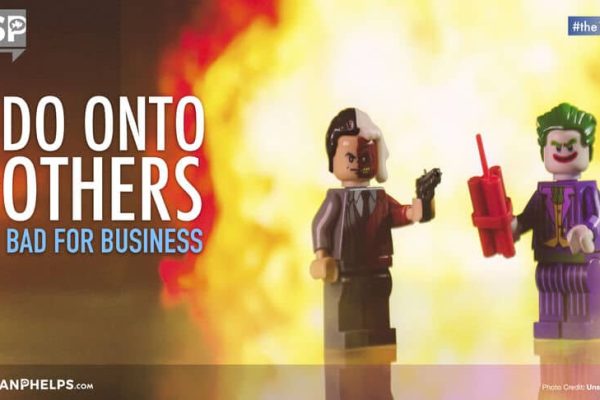
“Do unto others’ or ‘Treat unto others like you want to be treated’ is not good enough to meet consumers’ expectations anymore. And the sooner we understand and embrace that, the better off we’re going to be. Particularly in this new economy we’re in today.” 

That’s not my words. That’s from Kurt Reisig, Chairman at American Pacific Mortgage in the book “Diamond Goldfish.” I couldn’t agree with him more. Unfortunately, in sales and managing relationships, the Golden Rule is a bad rule.

Here’s why: In most sales organizations, an acceptable conversion rate is about 25 percent, which means that only one out of every four opportunities converts into a sale. Because you were taught to follow the Golden Rule, it’s fair to assume you know what your clients want based on what you would want if you were them.

TRUTH: They are not YOU.

Following the Golden Rule leads to suboptimal results. This is because not everybody wants the same thing or to be treated the same way. We always assume that if something is good for us, then it must be good for everyone else. And if we want to be treated in a certain way, then that must be how everyone else wants to be treated. Turns out, that assumption couldn’t be further from the truth.

SO, WHAT’S A BETTER APPROACH?

Some may say the Platinum Rule. The Platinum Rule shifts from “this is what I want, so I’ll give everyone the same thing” to “let me first understand what they want . . . and then I’ll give it to them.”

But, one of the challenges when completely focusing on the other person is that we can overlook how we’re feeling and reacting to a situation. For example, we may go into a meeting with the best of intentions to apply the Platinum Rule, but then something happens where we feel upset or disrespected or unheard, and then our capability to actually apply the Platinum Rule is interrupted.  

The Diamond Rule takes the Platinum Rule to the next level. It combines the best elements of both Gold and Platinum. Said simply, the Diamond Rule is

“the art of managing yourself under pressure and addressing the needs of others to avoid their triggers”

The key here is understanding both our own biology as well as that of our prospects/customers. Treating someone the way they want to be treated is tricky enough under normal circumstances—but what happens when things start to get heated? In the words of Mike Tyson, “Everyone has a plan until they get punched in the mouth.”

Pressure can trigger a biological response that causes us to act in an unpredictable and irrational manner. Under pressure, our brain activates a hard-wired survival strategy every time it detects a perceived threat. 

The Diamond Rule allows us to be true to ourselves and neutralize our biology in order to be capable of addressing the needs of others.

Follow me on Twitter or LinkedIn.

Stan Phelps

Stan Phelps walks the walk. He stands out in the sea of sameness by modeling his own Differentiated Experience (DX) message: Differentiation isn’t just about what you say, it’s about what you do and, more importantly, how and why you do it. Stan leverages his unique collection of 5,000+ case studies on customer, employee, and brand experience to engage audiences with informative learning-based experiences. He believes purposeful DX wins the hearts of employees and customers, and differentiation ultimately boosts loyalty, retention, referrals, and results.

Find Stan’s in-person and virtual keynotes, workshops, and Goldfish tank programs at StanPhelps.com.
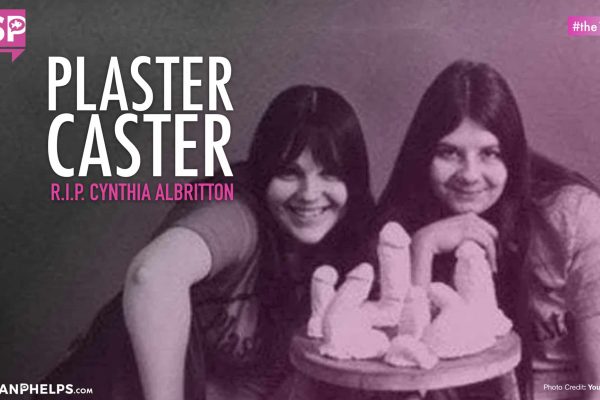
Her most famous piece of art was called “The Hendrix.” But most people call it the “Penis de Milo.”

The artist was Chicago native Cynthia Albritton. The Hendrix is one of more than 50 phallic casts. To be specific, erect phallic casts of the likes of Jimi Hendrix, Eric Burdon of “The Animals” and Zal Yanovsky of the “Lovin’ Spoonful.”

It began as an assignment for an art class she was taking at the University of Illinois back in the 1960s. Students were required to make a cast of something that could retain its shape. Something that was solid.

In Pink Goldfish fashion, the painfully shy Albritton decided to forsake the normal and embrace the weird.

She began the process of making molds of male genitalia. Combining her love for art with her passion for music, her collection and notoriety began to rise.

She became known as the “Plaster Caster” of Chicago. In 1977, the band “Kiss” immortalized her in song:

“Baby’s getting anxious
The hour’s getting late
The night is almost over
She can’t wait
The things are complicating
My love is in her hands
And there’s no more waiting
She understands
The plaster’s gettin’ harder
And my love is perfection
A token of my love
For her collection, her collection”

A true “hands-on” artist, Albritton worked hard to find the right medium for the sculptures. The original homework assignment called for sand and water. That tended to rub her subjects the wrong way.

After various other materials and a lot of ups and downs in the process, she landed on using dental molds for the job.

Not every attempt was flawless. Wayne Kramer, guitarist of the band MC5 (Motor City Five) recounted his experience to The New York Times:

“Sadly, on the night of my casting, Cynthia was ‘short handed.’ Timing was crucial, and on this night it all fell apart. I was left to attempt to reach my full manliness alone, and I failed miserably. My finished cast ended up as a small plaster representation, a mere shell of what could have been. I think it’s one of the funniest of the collection, as do so many others. And, no matter, I’m proud to be included.”

‘Short handed’ refers to the girlfriend that Cynthia would bring along to help…. prepare the subject.

It was the legendary artist Frank Zappa who embraced Cynthia and promoted her efforts. She shared with “The Sunday Age” that, “he was the first person in the world to tell me I was an artist.”

Albritton didn’t stop with penises. Later in her career she added women’s breasts. Karen O, the lead singer of the “Yeah Yeah Yeahs” was one of her subjects. I haven’t seen any of these sculptures, but I can confidently say that once you’ve seen one… you’ve seen them both.

Cynthia Albritton passed away last Thursday at the age of 74. Unlike his sculpture, Wayne Kramer was anything but soft about her legacy,

“She smashed the barriers of sexual conversation and helped open up people’s minds to the endless possibilities of art.”

Follow me on Twitter or LinkedIn.

Stan Phelps

Stan Phelps walks the walk. He stands out in the sea of sameness by modeling his own Differentiated Experience (DX) message: Differentiation isn’t just about what you say, it’s about what you do and, more importantly, how and why you do it. Stan leverages his unique collection of 5,000+ case studies on customer, employee, and brand experience to engage audiences with informative learning-based experiences. He believes purposeful DX wins the hearts of employees and customers, and differentiation ultimately boosts loyalty, retention, referrals, and results.

Find Stan’s in-person and virtual keynotes, workshops, and Goldfish tank programs at StanPhelps.com.

Want to be a better presenter? Then you need to start to S.T.O.P.

Wait, what? Yes, S.T.O.P.

S.T.O.P. is an acronym. It is one of best speaking techniques for establishing connection with an audience and becoming a better presenter.

Coined by Andrew Gilman, here’s how the acronym of S.T.O.P. works. You deliver a S – Single, T – Thought, to O – One, P – Person.

Then you pause and compose your next thought while finding a new person in the audience.

You are not allowed to start delivering the thought until you establish eye contact. Then you deliver that next single thought.

Then you do it again. And again. And again. Lather, rinse, repeat.

Why should you start to S.T.O.P? Because S.T.O.P.ing has four amazing benefits:

1. S.T.O.P. eliminates filler words

This may be the biggest benefit for the listener. Filler words (such as uh, um, and, so, like, you know) automatically disappear. According to Susan Ward, “Using excessive fillers is the most irritating speech habit. They distract your listener often to the point that he or she doesn’t hear anything you say.”

2. It allows you time to breathe by slowing you down

Breathing calms your nerves. It allows needed oxygen to your brain. It makes you smarter on your feet. It also allows you stay in the moment.

3. It reinforces eye contact

Eye contact allows your audience the ability to connect with you. The eyes are the window to the soul (Chinese proverb). With eye contact, you are seen as more trusted, you appear more confident, and you won’t read your slides.

4. S.T.O.P. also allows you to monitor your audience’s response

They will feel like you are talking to them. The pauses allow you to create flow and tempo. They also allow the audience to filter what you’ve just said. Our brains can’t effectively multitask. The gaps between thoughts give the listener needed time to process the information.

TIP- Start S.T.O.P.ing by both speaking and listening. Practice it in conversations. Use it when you rehearse your presentation. Then, listen for it. Especially when you have the radio on. The next time you hear an interview on the radio, listen for filler words. Notice the marked difference between the on-air personality and the person being interviewed. 

Great speakers understand a simple truth. The audience wants you to succeed. They want to pay attention. They want you to capture their mind and heart—to be louder than the noise in their own head. They don’t require you to be perfect.

In the words of speaking coach Stephanie Scotti, “It’s not about perfection when presenting; it’s about connection.” If you want to be a great presenter, you need to connect. Connection before content. And if you want to connect, the first thing you need to do is S.T.O.P. 

Follow me on Twitter or LinkedIn.

Stan Phelps

Stan Phelps walks the walk. He stands out in the sea of sameness by modeling his own Differentiated Experience (DX) message: Differentiation isn’t just about what you say, it’s about what you do and, more importantly, how and why you do it. Stan leverages his unique collection of 5,000+ case studies on customer, employee, and brand experience to engage audiences with informative learning-based experiences. He believes purposeful DX wins the hearts of employees and customers, and differentiation ultimately boosts loyalty, retention, referrals, and results.

Find Stan’s in-person and virtual keynotes, workshops, and Goldfish tank programs at StanPhelps.com.

Your brand today is no longer what you tell people it is. Your brand is what your customer experiences, how they feel about that experience, and most importantly…

… your brand is what your customer tells others about their experience.

It used to be that your brand was your promise.

But in the words of Russ Klein in the “Purple Goldfish 2.0” foreword,

“Today’s consumers pay little attention to the promises brands make, believing instead authentic stories about what others have experienced.”

These are stories that you can’t control.  

Klein shares, “While modern marketers can’t control the story, we absolutely can control the experience. And customers will reward great experiences by sharing positive stories about brands that, in turn, become the brand itself.”

It is our responsibility as marketers to find ways to add signature value to our customer’s experiences. Either by reducing effort to make the experience easier or by adding little extras. Doing one or both enhances differentiation and provides customers a reason to share their own stories. 

Russ Klein draws an interesting distinction about experience design,

“Brands don’t design experiences—they design for experiences.”

He reinforces the need to meet your customers where they are already at.

“The ‘dirt path’ a customer is taking is likely there because it’s now permanently etched into their habits. Stop trying to force them onto a sidewalk when they would prefer you plant flowers along their dirt path.”

How are designing around that well-worn path? Watch your step.

Follow me on Twitter or LinkedIn.

Stan Phelps

o and, more importantly, how and why you do it. Stan leverages his unique collection of 5,000+ case studies on customer, employee, and brand experience to engage audiences with informative learning-based experiences. He believes purposeful DX wins the hearts of employees and customers, and differentiation ultimately boosts loyalty, retention, referrals, and results.

Find Stan’s in-person and virtual keynotes, workshops, and Goldfish tank programs at StanPhelps.com.
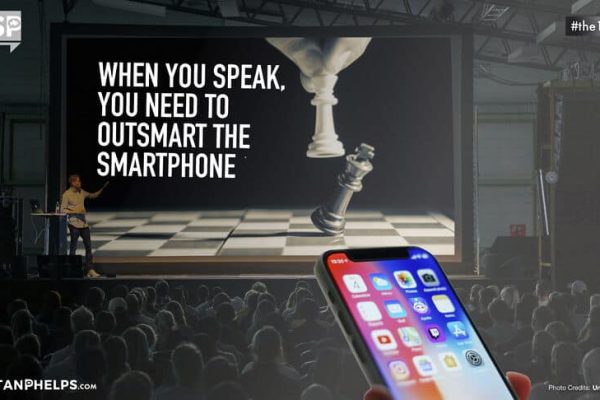
When you present, you are waging a battle against distraction. And this is your biggest competitor…

Something that the average person whips out an average of 58 times a day. One thing that’s a source of entertainment and constant stimulation.

We’re talking about the smartphone.

Our phones are always within arm’s reach. And that’s not going to change. In fact, according to research by the RescueTime app, few of us go longer than an hour during the day without touching our phones.

When presenting, you need to be relevant and compelling to keep your audience tuned in. Know that their favorite radio station is WIIFM.

WIIFM is an acronym for “What’s In It For Me” as the audience member. Why should they give you their attention? What value are you providing? What problem are you solving?

Here are five ways to keep the smartphones at bay during a presentation:

1. Use stories – get your audience engaged early and often

2. Understand your audience – speak their language

3. Address their issues – know their pain

4. Deliver hope – be a light in the darkness

5. Offer a plan of action – provide a solution

Attention isn’t given; it has to be earned. Make sure you are commanding the attention of the audience when you present. Be smarter than the smartphone.

Follow me on Twitter or LinkedIn.

Stan Phelps

Stan Phelps walks the walk. He stands out in the sea of sameness by modeling his own Differentiated Experience (DX) message: Differentiation isn’t just about what you say, it’s about what you do and, more importantly, how and why you do it. Stan leverages his unique collection of 5,000+ case studies on customer, employee, and brand experience to engage audiences with informative learning-based experiences. He believes purposeful DX wins the hearts of employees and customers, and differentiation ultimately boosts loyalty, retention, referrals, and results.

Find Stan’s in-person and virtual keynotes, workshops, and Goldfish tank programs at StanPhelps.com.
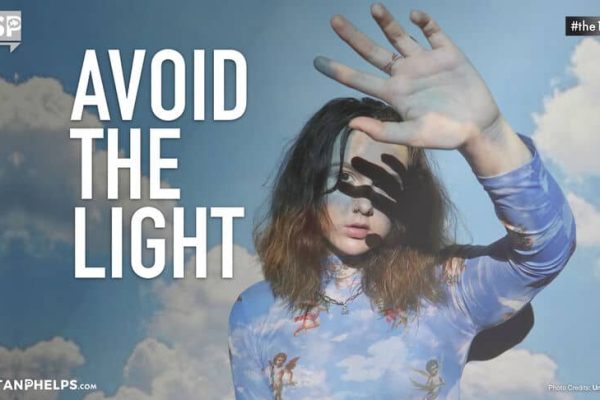
AVOID THE LIGHT

When presenting and using a projector with slides, avoid the tractor beam. Unlike Carol Anne in the classic 1980s movie “Poltergeist,” you need to avoid the light when speaking.

Here are three things you can do to avoid becoming an unfunny shadow puppet:

1. Masking tape – This is a great tip if you have an overhead projector. During set-up, move around to see where you begin to encroach on the light. Then mark the floor or table to avoid moving into that area.

2. Table it – If the projector is on a cart or table, then simply walk around it. The great news is that projectors have gotten better over the years. Short throw projectors have reduced the length of the beam.

3. Black it out – Some clickers have a blackout button. Use it when you need to walk in front of the projector. One bonus tip when talking about clickers. Don’t use the laser pointer. You are not a Jedi. If you get tempted, just think of Yoda, “Resist the urge, you must.” Want to highlight something on your slide? Then do the proper work when creating your slides. A tiny red or green dot isn’t a substitute for your lack of planning, padawan.

TIP – It’s simple, avoid the light. Be aware of the beam and don’t walk in front of the projector. 

Follow me on Twitter or LinkedIn.

Stan Phelps

Stan Phelps walks the walk. He stands out in the sea of sameness by modeling his own Differentiated Experience (DX) message: Differentiation isn’t just about what you say, it’s about what you do and, more importantly, how and why you do it. Stan leverages his unique collection of 5,000+ case studies on customer, employee, and brand experience to engage audiences with informative learning-based experiences. He believes purposeful DX wins the hearts of employees and customers, and differentiation ultimately boosts loyalty, retention, referrals, and results.

Find Stan’s in-person and virtual keynotes, workshops, and Goldfish tank programs at StanPhelps.com.

Do you know what the secret of life (and presenting) is?

That was a question asked by Jack Palance to Billy Crystal in the movie “City Slickers.”

Jack plays “Curly” the grizzled old cowboy. Billy plays a New Yorker named “Mitch.” Mitch (who is going through a mid-life crisis) perks up when he hears the question and leans in…

Mitch: No, what?

Curly: (lifts up his leather-gloved hand with index finger pointed up)

THIS

Mitch: (bewildered asks) Your finger?

Curly: One thing, just one thing.

Mitch: That’s great, but what’s the one thing?

Curly: (pointing his finger at Mitch) That’s what you’ve got to figure out.

This question is also at the heart of presenting. You’ve got to figure out your ONE THING.

So, before you start making your slides pretty… before you design your audience interaction… before you plan your Big Entrance… and before you brainstorm objections, you need to figure out what you want to say in ONE sentence.

The ONE THING the first question my “Silver Goldfish” coauthor Alan Hoffler asks anyone wanting help in their messaging. After asking hundreds of people the question, only one person has ever been able to do it on the first try.

When Alan asked me the question, I shared that the entire Goldfish series message is centered around one simple phrase:

“Little things make a big difference.”

FINDING YOUR ONE THING

It’s not going to be easy. Your One Thing may be hard to discover. Mitch needed two weeks on a horse to find his. You probably don’t need a horse, but you do need to spend some time finding your One Thing.

Here are some “One Thing” sentences from client presentations:

– Walnut Grove was a great place to grow up. (50-year reunion speech)
– Your perfect life does not exist (yet). (creativity expert)
– Self-care isn’t selfish. (stress management expert)
– You can define what you become. (given by a quadriplegic)
– Solving member problems is the ticket to growth. (Association consultant)
– The devil’s in the details. (CPA)

TIP (To Improve Presentations) – Find the “One Thing” for your presentation. 

Follow me on Twitter or LinkedIn.

Stan Phelps

Stan Phelps walks the walk. He stands out in the sea of sameness by modeling his own Differentiated Experience (DX) message: Differentiation isn’t just about what you say, it’s about what you do and, more importantly, how and why you do it. Stan leverages his unique collection of 5,000+ case studies on customer, employee, and brand experience to engage audiences with informative learning-based experiences. He believes purposeful DX wins the hearts of employees and customers, and differentiation ultimately boosts loyalty, retention, referrals, and results.

Find Stan’s in-person and virtual keynotes, workshops, and Goldfish tank programs at StanPhelps.com.

1 9 10 11 12 13 48
A simple illustration of a purple fish facing right on a plain background.

I've had the pleasure of working with teams at:

Three purple fish silhouettes swimming to the right on a dark background.

Find Your Best-Match Program

With over 18 possible keynote speaking presentations, workshops, and GOLDFISH TANK programs available to meet your ever-evolving needs, I’ve created this 2-minute, 6-question quiz to help you understand which program is best for you and your audience.

Meet Your Presenter

Through keynote speaking presentations, hands-on workshops, and GOLDFISH TANK programs, I empower you to power loyalty and growth.

Hi, I’m Stan Phelps. I work with organizations that want to increase loyalty, drive sales, and promote positive word-of-mouth by creating differentiated experiences.

As an author, keynote speaker, and workshop facilitator, my in-person and virtual programs stand out in a sea of sameness because I model my own message of differentiated experience (DX).

I leverage my unique collection of more than 5,500 case studies on customer, employee, and brand experience to engage audiences with practical ideas that inspire action.

A person wearing glasses and a gray quarter-zip sweater stands outdoors in front of a building with a triangular glass roof at dusk.

Every time we do business together, Something amazing happens in the world!

Through my partner B1G1, each program gives back to create global IMPACT

Two students in blue uniforms smile while washing their hands at an outdoor tap.

When we complete a GOLDFISH TANK, we give 1001 days of clean water to school children

Collage of three images: a person washing hands, a child drawing with colored pencils, and a group of people sitting outdoors with some raising their hands.

When we complete a GLOBAL engagement, we give 365 days of clean water access in Peru, 120 days of learning aids in Malaysia, and 50 days of business training for women in Malawi

Hand placing a brick on a surface with text: "One Book = One Brick" and an Amazon logo.

When someone downloads a GOLDFISH eBook, we give one brick toward building school facilities in Cambodia