Stan Phelp's Blog

The Goldfish Chronicles

Sharing insights on customer experience, employee engagement, and brand strategy.

“Big doors swing on little hinges.” This is one of my favorite quotes from the late W. Clement Stone. It represents the idea that little changes truly add up to make the biggest difference.

This is the principle behind the concept of micro-weirding. Micro-weirding is using minuscule actions to differentiate. The lesson is that you can set your brand apart without some cohesive master plan; you can just be a tiny bit weird.

And just because something is micro-weird, doesn’t mean it has a micro-impact. Itty-bitty actions can have a massive impact. Microweirding is doing very small things to stand out with a differentiated experience (DX). This is the easiest and least risky way to begin creating your Pink Goldfish.

Example: Sinclair Oil Corporation shared by R. Mark Macy. “They have a unique way to catch your attention while at their pump getting gas. It will display on the screen ‘lowering prices’ and it actually drops the prices 1 to 10 cents. We always stop now at Sinclair stations when possible….weird as it sounds…you just feel like you got a good deal. I find this an interesting way to combat high gasoline prices…by seeing it flash before your eyes you suddenly feel differently and are rewarded. Pretty cool.”

How are you micro-weirding?

Happiness is an emotion that people feel in response to their needs and whether these are met or exceeded. Marshall Rosenberg expounds on this in his book “Nonviolent Communication: A Language of Life.” He shares:

“There are no positive or negative emotions, but only emotions we feel when our needs are met and when our needs are not met. When our needs are not met, we feel anger, frustration, disappointment, or sadness. When our needs are met, we feel relieved, satisfied, trusting, appreciative, or happy.”

Rosaria Cirillo and I explore the connection between needs and emotions in the book, “Yellow Goldfish.”

The word emotion comes from the Greek word emotere, which means “energy in motion.” The roots for motion and emotion are virtually identical. Movere, in Latin, means to move. Exmovere or emovere means to move out, hence to excite. Emotions have the purpose of getting us in motion. Emotions move us away from a desireless state, motivating us to act.

Because dopamine is released when we approach something that meets a need, it seems evident that when we meet needs or exceed expectations, we (and our customers and employees) feel happy.

Takeaway – Get moving. To add a line to Bobby McFerrin’s classic, “Don’t Worry, Do More, Be Happy.”

Companies that excel at design grow revenues and shareholder returns at nearly twice the rate of their industry peers. That insight comes from McKinsey & Company. Two weeks ago, they shared their Top 10 articles from 2020. The one that really caught my attention at #8 was:

“Are you asking enough from your design leaders?”

In the article, Melissa Dalrymple, Samuel Pickover, and Benedict Sheppard found that 90% of companies weren’t reaching the full potential of design, even as, in the past five years, double the number of companies have added senior design roles.

Logitech shared its 3 phases of incorporating design:

1. Focusing on aesthetics and form of products.

2. Emphasis to encompass end-to-end user experiences.

3. Infusing design into everything the company does.

Logitech has seen the benefits. Its design-driven transformation between 2013-19 saw its market value increase roughly 700%.

Design Matters. For it to be effective, organizations according to McKinsey & Company “must embrace user-centric strategies, improving not only products and services but also the full user experience and, in some cases, the organization itself.”

Takeaway: Smart organizations leverage DX (differentiated brand, customer, and employee experience).

Two ways to renew employee engagement and increase productivity in 2021. Leverage the concepts of REDUCE & RECHARGE:

Let’s start with RECHARGE. DeLisa Alexander, the CPO at Red Hat shared an interesting new policy called Quarterly Recharge Days in Fast Company:

“Taking time off is always an option but people may not actually rest on those days if everybody else is working and emails keep piling up. We have also found that some associates are reluctant to take PTO when they aren’t able to travel. When they do take it, work is always in the next room and it’s difficult to truly unplug. To ensure that everybody takes a day off—and that we all take a collective breath—we’ve created quarterly Red Hat Recharge day. Studies show the virtual workday is longer for many workers, which makes this shared time away even more valuable.”

REDUCE relates to screen time and virtual meetings. Zoom fatigue is real. This idea is inspired by my teenage boys. Every Wednesday for virtual school is an asynchronous day with no virtual classes. This not only gives teachers a break, but it gives students time to get their work done. Could this idea work in the workplace? Can we pick a day or times of each day with no meetings?

What are you doing to RENEW & RECHARGE in 2021?

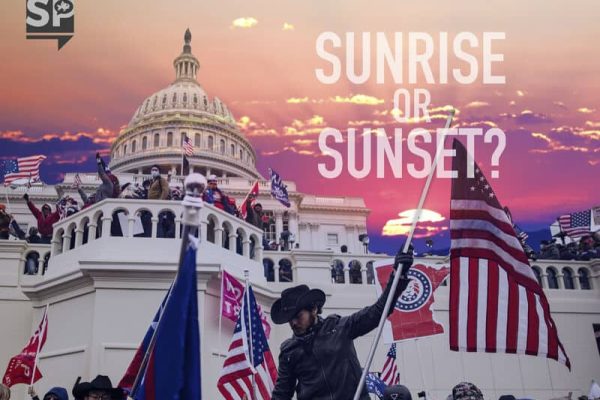
For the first time in over 200 years, the US Capitol building was overtaken and ransacked. Back in 1814, the British burned both the White House and the Capitol Building.

There were no fires yesterday, but one person lit the proverbial flame. The mob was incited by President Donald Trump. At a rally yesterday he urged the crowd,

“And after this, we’re going to walk down there, and I’ll be there with you, we’re going to walk down … to the Capitol and we are going to cheer on our brave senators and congressmen and women… And we’re probably not going to be cheering so much for some of them. Because you’ll never take back our country with weakness. You have to show strength and you have to be strong… We will never give up. We will never concede. It doesn’t happen. You don’t concede when there’s theft involved… Our country has had enough. We’re not going to take it anymore.”

There was an assault on our democracy yesterday. The good news is that Congress worked through the night to uphold their Constitutional duties and certify the results of the election.

The big question in my mind is this. Is this the beginning or the end of this unrest? Will this continue? Or can move forward as a nation? My sincere hope it’s the latter.

The sunrise or sunset question is inspired by Ben Franklin and a story from the Constitutional Convention in 1787.

The convention was chaired by George Washington in Philadelphia. For three months the delegates struggled to reach an agreement. At times, it looked like the birth of our nation would be a failed experiment. Washington sat in a unique chair while presiding over the continuous meetings. A half sun was carved into its peak.

Over the course of the proceedings, Benjamin Franklin would stare longingly at the chair, “I have often looked at that behind the president without being able to tell whether it was rising or setting. But now I know that it is a rising sun.”

Yesterday our democracy was tested. Our Constitution is only as strong as the people who take an oath of office to uphold it.

Upon exiting Constitutional Convention Benjamin Franklin was approached by a group of citizens asking what sort of government the delegates had created. His answer was, “A republic, if you can keep it.” In the words of Richard Beeman, “Democratic republics are not merely founded upon the consent of the people, they are also absolutely dependent upon the active and informed involvement of the people for their continued good health.”

CrossFit is a lopsided brand. Members are renowned for being fanatical evangelists for this highly differentiated approach to exercise and life. Not sure if someone you meet does CrossFit? Don’t worry, they’ll talk about it in almost every conversation. Members boast their warm-up is harder than most other people’s entire workout.

Founded by Greg Glassman and Lauren Jenai in 2000, CrossFit is more than just a method for working out. It is also a sport, a philosophy, and, for some, a religion.

A CrossFit gym is called a “box” and there are more than 15,000 around the world. Most are intentionally rugged. They are very hot or very cold, depending on the weather. They are loud, dirty, and smelly. Most boxes aren’t neatly organized.

While completing the WODs (Workout Of the Day), people are sweating profusely, grunting, screaming, and sometimes crying. They are pushing their bodies to the brink.

CrossFit isn’t for everyone. It isn’t even for most healthy people who exercise regularly. It is lopsided to be intentionally difficult and purposely extreme. It is about being bigger, faster, and stronger. That is what makes it so attractive for some people.

Takeaway: What makes you different and how are you lopsiding it like CrossFit?

“The role of the leader is first to inspire creative thinking about what makes you unique, how it links to purpose, and why it could be valuable—and then to encourage rigor in embedding it in your company’s core.” – McKinsey

A week ago, I wrote about one of the Top 10 articles of the year from McKinsey & Company. Today, I want to talk about another article on the list. It is entitled:

“Purpose: Shifting from why to how”

A couple of things from the article stood out to me:

1. BEYOND DOLLARS – Only 7% of Fortune 500 CEOs believe their companies should “mainly focus on making profits and not be distracted by social goals.”

2. MIND THE GAP – there is a gap between the public perceptions of business and its potential for good. And a gap between employees’ desire for meaning at work versus what they experience.

The main takeaway is that businesses need to push beyond “Why” to begin walking the talk. Moving beyond profit to become “for-purpose.”

As Graeme Newell, CSP and I shared in the 2017 book, “Red Goldfish – Motivating Sales and Loyalty Through Shared Passion and Purpose,” companies need to focus on the little things to bring purpose to life. These Red Goldfish can drive employee engagement, fuel the bottom-line, and create societal impact.

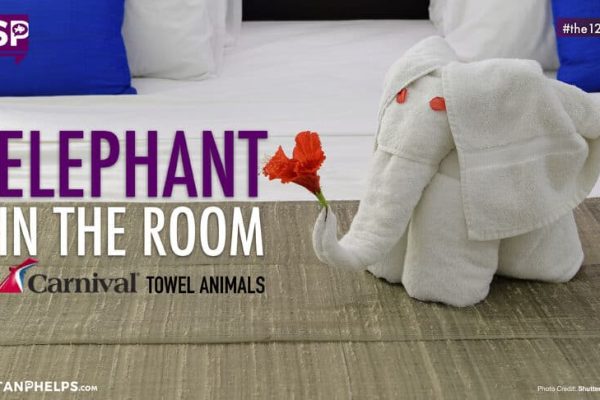
It’s 2021. Let’s talk about the elephant in the room. Of course, I’m talking about a “towel” elephant and a “state” room. One of the signature elements of a Carnival Cruise Line differentiated experience (DX) is towel animals.

Every night guests return to find one of the 40+ different types of this signature Purple Goldfish. A cruise favorite, Carnival creates millions of them a year. That’s a lot of folding.

Each creation is the culmination of hours of training and creativity from the housekeeping staff. New stewards at Carnival spend 10 hours of formal training to master the art of the fold.

Carnival describes these “whimsical terry cloth creatures” as an iconic element of the “Fun Ship” vacation experience. They first introduced towel animals in 1991. The industry-first has now been replicated by other lines.

Want to learn how? Carnival has a book called “Carnival Towel Creations.” The 88-page manual encompasses a “how-to” on towel animal making. A portion of the book sales goes to benefit St. Jude’s Children’s Hospital.

Over the years Carnival has leveraged the animals across their various touchpoints. They have been the focus of advertising, PR, and direct mail. These towel animals literally have “legs.”

What’s your Purple Goldfish?

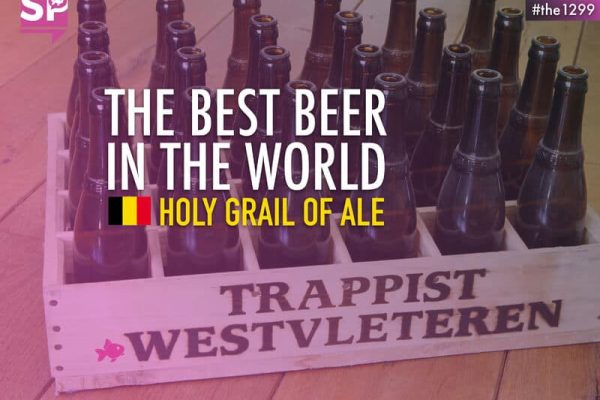
Westvleteren is the “Holy Grail of Ale.” Founded in 1838, the beer is brewed by Trappist monks at the St. Sixtus Abbey in Belgium. In 2014, Westvleteren 12 was named the best beer in the world on ratebeer.com.

Westvleteren is a strong example of the Pink Goldfish of Withholding. Withholding is about limitations, boundaries, and constraints. That sounds somewhat negative. Shouldn’t the best organizations be everywhere all the time? Even if we don’t serve everyone, we certainly want more customers don’t we?

Withholding is deliberately doing LESS of what is considered normal by others. By reducing options or completely eliminating them, brands can stand out and differentiate themselves. Let’s look at how Westvleteren withholds:

– No labels
– No marketing
– No wholesale distribution
– No bulk orders
– No production increases since 1946
– No interviews (except to warn about re-selling the beer)
– No regular business hours
– No deliveries (all beer must be picked up from the abbey)

The brewery is unapologetic about all the restrictions. Father Abbott, a St. Sixtus monk, explains, “we are not brewers. We are monks. We brew beer to be able to afford being monks.”

Takeaway: Bigger isn’t always better. Do more by offering less. Because different is better.

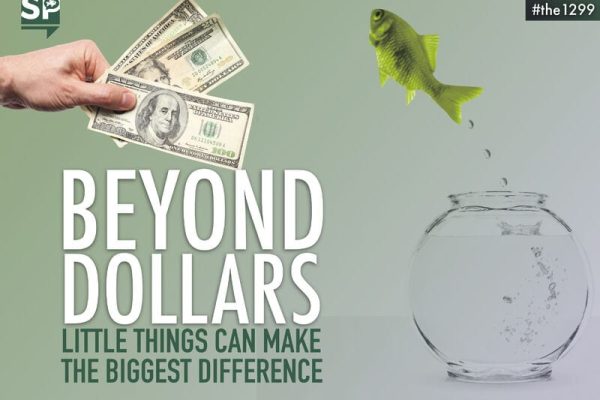
Satisfied engaged employees create happy satisfied customers. I believe today’s organizations need to do the little things to honor the relationship. I call the symbol for this a Green Goldfish. Why green?

Here are three important reasons:

1. NOLA – Green is one of the three colors of Mardi Gras (purple, green, and gold). New Orleans is the birthplace of lagniappe, the overarching concept for “giving little unexpected extras” for employees.

2. Beyond Dollars: Studies show financial compensation is not a strong long-term motivator for employees. Money can be more of a hindrance than a help.

3. Growing: Green is a symbol of growth. When you are green, you are growing. When you are ripe, you begin to rot.

Why should you make the investment? Three reasons:

1. Differentiation. Doing little extras provide a tangible way to stand out. The little extra gives the company a “remark”able difference or set of differences.

2. Retention. If you keep employees happy, they tend to stick around longer.

3. Word of mouth. By creating a culture that attracts talent, you can become a desired place to work. The result is that you’ll get more “A” players.

What little things are you doing to reinforce culture and honor the relationship with your employees?

1 39 40 41 42 43 48
A simple illustration of a purple fish facing right on a plain background.

I've had the pleasure of working with teams at:

Three purple fish silhouettes swimming to the right on a dark background.

Find Your Best-Match Program

With over 18 possible keynote speaking presentations, workshops, and GOLDFISH TANK programs available to meet your ever-evolving needs, I’ve created this 2-minute, 6-question quiz to help you understand which program is best for you and your audience.

Meet Your Presenter

Through keynote speaking presentations, hands-on workshops, and GOLDFISH TANK programs, I empower you to power loyalty and growth.

Hi, I’m Stan Phelps. I work with organizations that want to increase loyalty, drive sales, and promote positive word-of-mouth by creating differentiated experiences.

As an author, keynote speaker, and workshop facilitator, my in-person and virtual programs stand out in a sea of sameness because I model my own message of differentiated experience (DX).

I leverage my unique collection of more than 5,500 case studies on customer, employee, and brand experience to engage audiences with practical ideas that inspire action.

A person wearing glasses and a gray quarter-zip sweater stands outdoors in front of a building with a triangular glass roof at dusk.

Every time we do business together, Something amazing happens in the world!

Through my partner B1G1, each program gives back to create global IMPACT

Two students in blue uniforms smile while washing their hands at an outdoor tap.

When we complete a GOLDFISH TANK, we give 1001 days of clean water to school children

Collage of three images: a person washing hands, a child drawing with colored pencils, and a group of people sitting outdoors with some raising their hands.

When we complete a GLOBAL engagement, we give 365 days of clean water access in Peru, 120 days of learning aids in Malaysia, and 50 days of business training for women in Malawi

Hand placing a brick on a surface with text: "One Book = One Brick" and an Amazon logo.

When someone downloads a GOLDFISH eBook, we give one brick toward building school facilities in Cambodia