Stan Phelp's Blog

The Goldfish Chronicles

Sharing insights on customer experience, employee engagement, and brand strategy.

“Stay curious, not judgmental.” Thanks to Tim Letscher of Slalom who shared the quote and made the reco to watch the Apple+ series, “Ted Lasso.”

For background, Ted Lasso (Football coach now soccer manager for Premier League AFC Richmond played by Jason Sudeikis) bets on a game of darts against Rupert (the previous club owner) in one episode.

Ted is losing badly and needs a near impossible score of 170 to win.

As he’s about to throw, Ted talks about how guys have underestimated him his entire life. He shares that it used to bother him until he saw the Walt Whitman quote, “Be curious, not judgmental.” He continues his story as he hits a triple 20, “All them fellas that used to belittle me, not a single one of them were curious.”

He shares how their judgments had nothing to do with him because if they were curious, they would’ve asked questions…

“Questions like, have you played a lot of darts Ted?”

Throwing his second dart, he hits another triple 20. Now, he just needs 50 to win.

Ted confirms he played a lot of darts with his late father.

He then hits the winning bullseye and the bar erupts.

Takeaway – Curiosity is key. The first step of the I.D.E.A. experience design framework is to Inquire. Ask questions to find direction.

There are only 3 ways to manage waiting in customer experience. We allegedly spend 10 percent of our lives waiting. I know it’s true because I once read on the Internet. #truestory

Waiting is inevitable for your customers, especially if you have a successful business. How you handle those moments and the little extras you offer can make a big difference. That’s why the seventh of the 10 types of Purple Goldfish focuses on Waiting.

Waiting can be addressed in 3 ways:

1. You can work to reduce the wait.
Example – SportsClips Haircuts uses its website and mobile apps to manage the waiting process. In real-time customers can see the wait time at all nearby locations. You can check in to hold your place in line.

2. You can make the wait feel shorter or more enjoyable.
Example – When flights are delayed, JetBlue Airways often shows up at the gate with tables full of free water and snacks and then sometimes sets up a trivia game for everyone with prizes.

3. You can reduce the uncertainty of the wait.
Example – Uber and its interactive map allows you to track your ride in real-time. It doesn’t make the wait any shorter, but it allows you to eliminate the uncertainty.

Takeaway – Unburden the weight of waiting. Reduce, Renew, Re-certain.

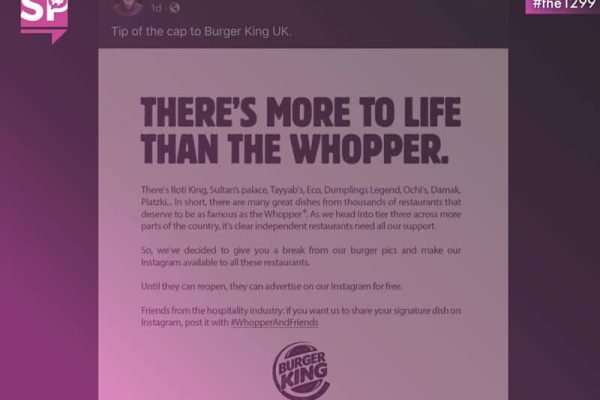
THERE’S MORE TO LIFE THAN THE WHOPPER. That’s the headline from BURGER KING® UK on a recent Facebook post. This “pay it forward” moment is a great example of the Pink Goldfish concept of Opposing.

It is normal to promote your own products and services. Here, Burger King is promoting their competition. From the post:

There’s Roti King, Sultan’s palace, Tayyab’s, Eco, Dumplings Legend, Ochi’s, Damak, Platzki… In short, there are many great dishes from thousands of restaurants that deserve to be as famous as the Whopper. As we head into tier three across more parts of the country, it’s clear independent restaurants need all our support. So, we’ve decided to give you a break from our burger pics and make our Instagram available to all these restaurants. Until they can reopen, they can advertise on our Instagram for free. Friends from the hospitality industry: If you want us to share your signature dish on Instagram, post it with #WhopperAndFriends

I’ve just checked their Instagram page and they’ve highlighted three restaurants so far. See the image encouraging people to visit 200 Degrees in the comments. That post featuring a sandwich with turkey, smoked pancetta, brie, and cranberry sauce has over 2,500 likes.

Question – Is help over hype a smart move?

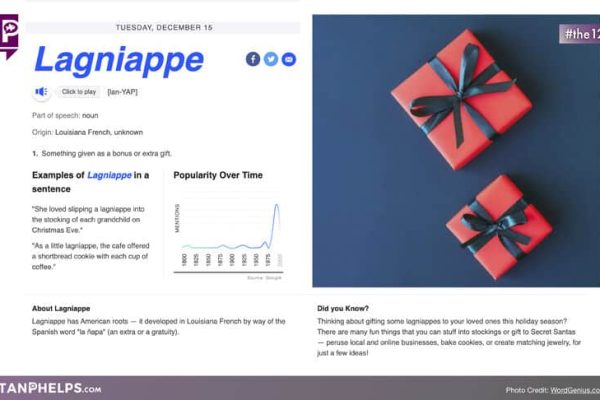
Mark Twain called it, “A word worth traveling to New Orleans to get.” That word is Lagniappe.

It is the word of the day for Tuesday, December 15th on WordGenius. It is defined as, “Something given as a bonus or extra gift.”

Twain described learning it in his autobiography Life on the Mississippi. In his words:

“We picked up one excellent word… a nice limber, expressive, handy word–‘lagniappe.’ They pronounce it lanny-yap. It is Spanish–so they said. We discovered it at the head of a column of odds and ends in the Picayune[newspaper], the first day; heard twenty people use it the second; inquired what it meant the third; adopted it and got facility in swinging it the fourth. It has a restricted meaning, but I think the people spread it out a little when they choose. It is the equivalent of the thirteenth roll in a ‘baker’s dozen.’ It is something thrown in, gratis, for good measure. The custom originated in the Spanish quarter of the city.”

Takeaway – This creole word has tremendous application in business. It is kindness embedded into your brand. Giving little unexpected extras as part of your product or service. This is rooted in the idea of “added value” that goes above the transaction to honor the relationship.

Elon Musk “outs” his 3 keys to innovation. The Tesla and SpaceX founder shared these insights last week during The Wall Street Journal‘s Annual CEO Summit. Elon’s keys with [my comments] are:

1. Have you tried it [OUT]? If it doesn’t work for you, then you can’t expect it to shine for others.

2. How can you make it better? Examine [and root OUT] negative feedback from colleagues, customers, and trusted mentors to improve as best you can.

3. Are you spending too much time in conference rooms? Theory is great, but [getting OUT and] investigating the actual product and its production process can yield better insights.

These comments back his claim of the M.B.A.-ization of America. In Musk’s words, “There should be more focus on the product or service itself, less time on board meetings, less time on financials.”

I would argue with Musk that he might be looking too narrowly. Beyond the product or service, you need to consider the entire experience and customer journey.

To quote American Marketing Association CEO Russ Klein from the foreword of Purple Goldfish 2.0, “It’s all about experience. Experience design is the next frontier for brand building. It’s on the fast track to become the most revered marketing capability for any—and every—brand.”

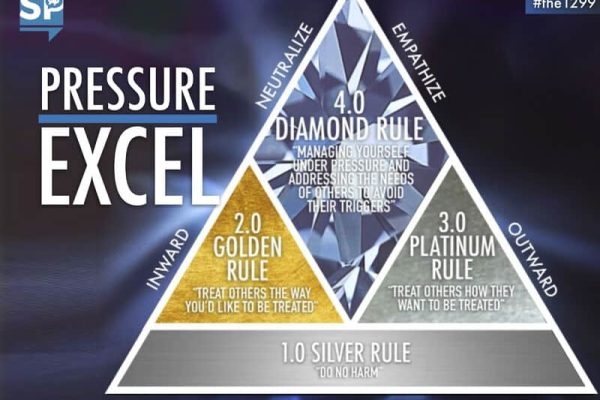
The holiday season can be packed with pressure. How can you rise above it and excel under pressure both personally and professionally?

You need to adhere to the Diamond Rule. A diamond symbolizes the best approach to achieving prosperity. Acting in accordance with the Diamond Rule is the next evolution of managing relationships. It’s the 4.0 version. Let’s look at 1.0, 2.0, and the 3.0 versions for background:

1.0 – The Silver Rule is “do no harm.” As stated by Zigong, a disciple of Confucius, in the book Analects, “What I do not wish others to do unto me, I also wish not to do unto others.”
Challenge – Silver is not prescriptive.

2.0 – The Golden Rule has become [no pun intended] the gold standard of human dynamics. The Golden Rule is simply “treating others the way you would like to be treated.”
Challenge – Not everyone is like you.

3.0 – The Platinum Rule was popularized by Dr. Tony Alessandra in 1996. It simply is “treating others the way that they want to be treated.”
Challenge – Focusing on others neglects how we are feeling and reacting to a situation.

The Diamond Rule is “the art of managing yourself under pressure and addressing the needs of others to avoid their triggers.” It is rooted in understanding our behavioral style and the style of others.

Is Elon right? “There’s the M.B.A.-ization of America, which I think is maybe not that great. There should be more focus on the product or service itself, less time on board meetings, less time on financials.”

Musk made the comments during The Wall Street Journal‘s CEO Council Summit. Business school Dean’s can’t be too happy with his outlook. He went further, “I think there might be too many M.B.A.s running companies.“

The degree isn’t really the issue. The issue is that Musk feels that today’s executives are too focused on spreadsheets and powerpoints. They need to get out of the boardroom and spend more time on the factory floor. The Japanese [hat tip to Adrian Swinscoe for alerting me to this practice] call it the Gemba. The Gemba is an opportunity for execs to step away and walk the floor of their workplace. The objective of Gemba Walk is to understand the value stream and its problems rather just results.

Takeaway – There is too much of a focus solely on the bottom line. The problem is that this pursuit can begin to neglect the product and take the customer for granted. Jack Welch had it right. There are only 2 keys to competitive advantage. Learn about your customers faster than your competition . . . and put those insights into action.

IT’S NOT ABOUT THE MONEY. Doing a signature little extra in customer experience doesn’t have to cost anything.

Here are three examples:

1. BMW of Darien courtesy of Jack Sarsen:
“When I dropped my car off for service, I had to move 2 car seats to the loaner. Upon my return, a service guy, obviously recognizing the number on the car, walks out to the loaner as soon as I parked and told me to hold tight. Within a minute my car pulled up and two service guys helped me make the car seat switch with my small children in tow. Another walked out and handed me my paperwork and said, ‘Thank you, have a nice day.’”

2. Les Schwab Tires from G Cody QJ Goldberg:
“The service people jog to your car when you pull in to the service center.”

3. Four Seasons Hotels and Resorts from Stephanie Hadden:
“When you check-in, the front desk attendant will walk around to the front of the counter and hand you your key while using your name and anticipating your every need. This customer service costs them nothing extra but makes you feel like a million bucks.”

Takeaway: You don’t have to tap into big dollars to go the extra mile. Being quick, responsive, and alert while delivering a customer experience sends a signal and can make all the difference.

The Trojan Horse of Employee Experience in DX needs to be smashed. Organizations need to start taking small steps to add value to the experience over time.

Here is a great analysis by Peter Fryar on the concept of Trojan Mice:

Much change is of the “Trojan horse” variety. The planned changes are presented at a grand event (the Trojan Horse) amid much loud music, bright lights, and dry ice. More often than not, however, a few weeks later the organization will have settled back into its usual ways and rejected much of the change. This is usually because the change was too great to be properly understood and owned by the workforce. Trojan mice, on the other hand, are small, well-focused changes, which are introduced on an ongoing basis in an inconspicuous way. They are small enough to be understood and owned by all concerned, but their effects can be far-reaching. Collectively a few Trojan mice will change more than one Trojan horse ever could.

CASE IN POINT: Joe Judge, coach of the NY Giants, made a small change this season regarding travel. The team now stays overnight after a road game. It allows for a better night of sleep and a quicker recovery. Is it working? They’ve won four straight and have gone from worst to first in their division.

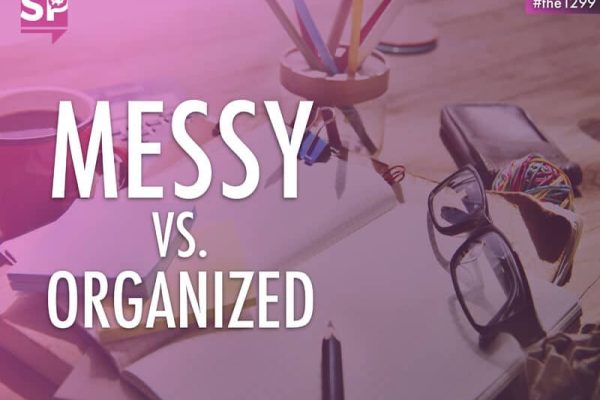
It’s good to be neat and it’s bad to be messy. Isn’t it? At least that’s what we’re told. We’ve all heard that cleanliness is next to godliness and a cluttered desk is a sign of a cluttered mind. Most people believe that they would be happier and more successful if they were more organized.

This desire is evidenced by the success of The Container Store and the endless list of TV shows dedicated to cleaning up and reorganizing. Did that last sentence spark joy for you? Being disorganized seems like an obvious weakness that needs to be fixed.

Isn’t Marie Kondo right?

Not necessarily. In “A Perfect Mess: The Hidden Benefits of Disorder,” David Freedman and Eric Abrahamson argue that messiness is actually a strength and should be “celebrated rather than avoided.” They provide evidence that there are significant benefits to disorder.

For example, Alexander Fleming discovered penicillin while sorting through his cluttered lab after returning from vacation. If his lab had been clean and organized, we might not have access to life-saving antibiotics.

Albert Einstein challenged enemies of clutter by asking, “If a cluttered desk is a sign of a cluttered mind, then what is an empty desk a sign of?”

Pink Goldfish Takeaway – Every weakness has a corresponding strength.


1 41 42 43 44 45 48
A simple illustration of a purple fish facing right on a plain background.

I've had the pleasure of working with teams at:

Three purple fish silhouettes swimming to the right on a dark background.

Find Your Best-Match Program

With over 18 possible keynote speaking presentations, workshops, and GOLDFISH TANK programs available to meet your ever-evolving needs, I’ve created this 2-minute, 6-question quiz to help you understand which program is best for you and your audience.

Meet Your Presenter

Through keynote speaking presentations, hands-on workshops, and GOLDFISH TANK programs, I empower you to power loyalty and growth.

Hi, I’m Stan Phelps. I work with organizations that want to increase loyalty, drive sales, and promote positive word-of-mouth by creating differentiated experiences.

As an author, keynote speaker, and workshop facilitator, my in-person and virtual programs stand out in a sea of sameness because I model my own message of differentiated experience (DX).

I leverage my unique collection of more than 5,500 case studies on customer, employee, and brand experience to engage audiences with practical ideas that inspire action.

A person wearing glasses and a gray quarter-zip sweater stands outdoors in front of a building with a triangular glass roof at dusk.

Every time we do business together, Something amazing happens in the world!

Through my partner B1G1, each program gives back to create global IMPACT

Two students in blue uniforms smile while washing their hands at an outdoor tap.

When we complete a GOLDFISH TANK, we give 1001 days of clean water to school children

Collage of three images: a person washing hands, a child drawing with colored pencils, and a group of people sitting outdoors with some raising their hands.

When we complete a GLOBAL engagement, we give 365 days of clean water access in Peru, 120 days of learning aids in Malaysia, and 50 days of business training for women in Malawi

Hand placing a brick on a surface with text: "One Book = One Brick" and an Amazon logo.

When someone downloads a GOLDFISH eBook, we give one brick toward building school facilities in Cambodia