
Stan Phelp's Blog

The Goldfish Chronicles

Sharing insights on customer experience, employee engagement, and brand strategy.

Victoria’s Secret is undergoing a major rebrand. A major change is the abandoning of the ANGELS. Not familiar with the Angels? The Angels were a group of notably thin models who would strut in heavy wings and sky-high stilettos. These runway extravaganzas were televised fashion shows.

A bit of background. Victoria’s Secret launched in 1977 by the husband and wife team of Roy and Gaye Redmond. The launch was inspired by discomfort.

Roy was embarrassed when purchasing lingerie for his wife at a department store. According to reporting by Newsweek, Roy shared, “When I tried to buy lingerie for my wife, I was faced with racks of terry-cloth robes and ugly floral-print nylon nightgowns, and I always had the feeling the department store saleswomen thought I was an unwelcome intruder.”

Roy spent the next eight years studying the lingerie market before opening the first store in Palo Alto. Victoria was a nod to Queen Victoria and the Victorian era in the 19th century. This conservative era was defined by a strong drive for higher moral standards. Hence, the “secret” was what was worn under those prim and proper clothes.

By 1982, the Raymonds had five stores and a booming mail-order business. Victoria Secret went all-in and lopsided the catalog. The 12th catalog debuted at 40-pages and a cost to customers of $3 (that’s equivalent to over $8 today). Catalog sales accounted for 55% of sales and caught the eye of Leslie Wexner. The founder of The Limited acquired the brand in 1982.

Within four years, the brand would boast 100 locations as the only national chain devoted solely to lingerie. The growth would continue through 2016 making Victoria’s Secret the largest lingerie retailer in the US with more than 30% market share. The last 5 years haven’t been so kind.

In P!NK GOLDF!SH 2.0 (launching July 6th), David Rendall and I share how model Ashley Graham antagonized the brand. One of her recent projects is for the plus-sized fashion brand Lane Bryant. The campaign is called #ImNoAngel. A not-so-subtle shot at Victoria’s Secret. 

What’s replacing the Angels?

Enter the VS Collective. A group of 7 women who will advise and promote the brand. According to The Guardian, the new group includes “US soccer player, women’s pay equity advocate and prominent anti-Trump voice Megan Rapinoe, actor-entrepreneur Priyanka Chopra Jonas, LGBTQ+ activist and model Valentina Sampaio, model and South Sudanese refugee Adut Akech, British journalist and equality advocate Amanda de Cadenet, champion Chinese-American freestyle skier Eileen Gu, as well as model and body-positivity advocate Paloma Elsesser.”

It’s an opposing move for Victoria’s Secret. For a brand that sold supermodel sexy and a selective illusion of beauty, this is a drastic shift towards inclusion.

CEO Martin Waters shared in a press release, “We are on an incredible journey to become the world’s leading advocate for women.”

Question – is this a smart strategic move?

Follow me on Twitter or LinkedIn.
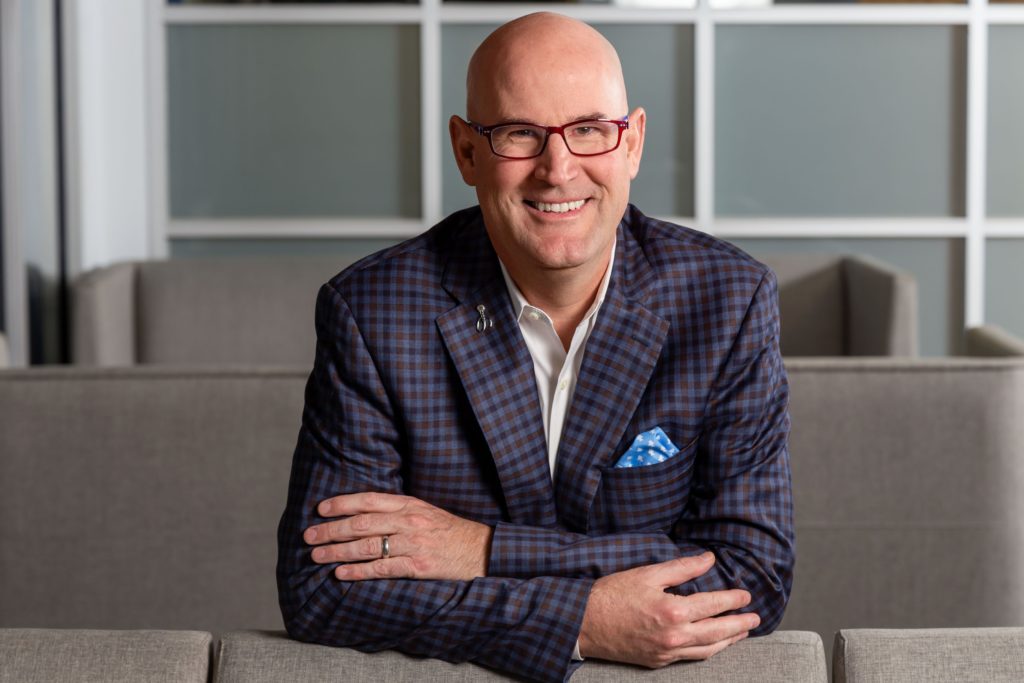
Stan Phelps

Stan Phelps walks the walk. He stands out in the sea of sameness by modeling his own Differentiated Experience (DX) message: Differentiation isn’t just about what you say, it’s about what you do and, more importantly, how and why you do it. Stan leverages his unique collection of 5,000+ case studies on customer, employee, and brand experience to engage audiences with informative learning-based experiences. He believes purposeful DX wins the hearts of employees and customers, and differentiation ultimately boosts loyalty, retention, referrals, and results.

Find Stan’s in-person and virtual keynotes, workshops, and Goldfish tank programs at StanPhelps.com.
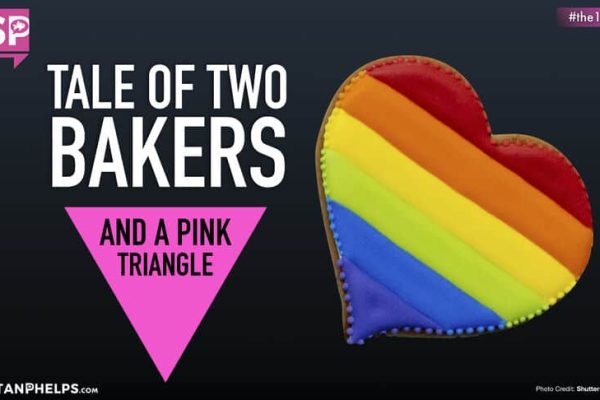

A tale of two Bakers and a pink triangle. Those Bakers are Gilbert Baker and the Confections Bakery in East Texas.

Let’s start with the pink triangle. The pink “pointing down” triangle was a Nazi symbol. The Germans used it during World War II to identify and stigmatize homosexuals. It was meant to be a badge of shame. In the 1970s, the pink triangle was revived in an effort of Opposing. It was reclaimed as a symbol of protest against homophobia. It soon became a popular symbol of LGBTQ pride.

Enter Gilbert Baker. In 1978, Baker was challenged by politician and activist Harvey Milk to create a new symbol. Gilbert designed a flag with eight colored stripes.

Each color had a meaning:

Hot Pink = Sex
Red = Life
Orange = Healing
Yellow = Sunlight
Green = Nature
Tourquoise = Magic
Indigo = Serenity
Violet = Spirit

The flag first flew in June of 1978 at the pride parade. Months later Harvey Milk was assassinated and the flag was cemented as the new symbol of LGBTQ pride.

What happened to the hot pink? Pink was dropped because the fabric was hard to source.

A year later, turquoise would also hit the cutting room floor. The organizers of the 1979 San Fran parade decided to split the flag into two in order to decorate each side of the route. This required an even number of stripes. Hence a six stripe version of the flag that is still the standard today — red, orange, yellow, green, blue, and violet.

The flag quickly lost its sex, and now it apparently lost its magic.

That brings us to the second baker and a batch of heart-shaped, rainbow-iced cookies in honor of Pride Month.

The owners of Confections Bakery have received significant backlash after posting a photo of the cookies they were selling. The bakery lost Facebook followers and the cancellations started to roll in.

The two sisters (Dawn and Miranda) posted on Facebook:

“Today has been hard. Really hard.
We lost a significant amount of followers because of a rainbow heart cookie we posted.
We received a very hateful message on our business page canceling a large order (5 dozen) of summer-themed cookies for tomorrow morning (that we just finished decorating) because of a rainbow heart cookie we posted.
My heart is heavy. Honestly, I never thought a post that literally said more love less hate would result in this kind of backlash to a very small business that is struggling to stay afloat and spread a little cheer through baked goods.
So. If you love our cookies we will have an overabundance of them tomorrow. Hopefully, tomorrow will be better.”

[My wife Jennifer bakes cookies and I can tell you that 60 custom cookies are a big deal]

And was it better the next day? Yes, lines formed around the block the following day. Confections had to close an hour early because they were sold out.

The sisters are appreciative and they are doing their best to keep up with the demand.

Not afraid of Antagonizing some . . .they are also still baking the rainbow cookie.

Follow me on Twitter or LinkedIn.

Stan Phelps

Stan Phelps walks the walk. He stands out in the sea of sameness by modeling his own Differentiated Experience (DX) message: Differentiation isn’t just about what you say, it’s about what you do and, more importantly, how and why you do it. Stan leverages his unique collection of 5,000+ case studies on customer, employee, and brand experience to engage audiences with informative learning-based experiences. He believes purposeful DX wins the hearts of employees and customers, and differentiation ultimately boosts loyalty, retention, referrals, and results.

Find Stan’s in-person and virtual keynotes, workshops, and Goldfish tank programs at StanPhelps.com.

If there’s one work perk that rises above the rest, it’s flexible work arrangements.  Flexible work arrangements are about control . . . and everyone wants flex.

It was important 10 years ago. In 2011, a Coqual study showed that 87% of boomers, 79% of Gen Xers, and 89% of millennials cited flex as important. And it’s vital today as 1 out of 4 employees who’ve worked remotely during the pandemic want to stay remote.

Today, work is no longer defined by where you go. It is defined by what you do. Technology allows us to get work done anytime, anywhere—outside the traditional office space.

Flexibility is a win/win/win scenario. It produces savings for employees, employers, and the environment. Let’s break down the benefits: 

Employer – Workplace flexibility can save employers up to $20,000 per employee per year. It also increases productivity by 27% according to research by Citrix

Employee – Flex is a happy four-letter word. Workshifters are 55% percent more engaged than non-workshifters. 

Environment – Half-time telecommuting nationwide would spare the environment the equivalent of taking 10 million cars permanently off the road. Energy costs for employers with flexible work arrangements decrease by 18%.

With all these benefits, why the resistance???

The resistance in my opinion is old-school thinking. Managers struggle to judge employees on outcomes, not hours. If I can’t see you, how do I know that you are doing your work?

According to Bonny Simi of Joby Aviation, “Bosses need to just relax. They don’t have to see the employee for the work to get done. That’s the hardest shift in mindset for some managers. They [employees] don’t want to work 9 to 5—and it doesn’t matter to me if they work better from six at night until three in the morning or if they can do the work in six hours instead of eight.” 

MILLENNIAL AND GENZ DEMAND IT
Flexibility over finances. That’s right, HubSpot shows us that 45% of millennials would choose work flexibility over pay any day of the week and twice on Sunday. If millennials want it, GenZers may demand it. Truthfully, all generations are desiring more flexibility in their work hours and locations. While this may seem foreign to certain businesses and industries, optimal engagement means significant productivity. Just ask a millennial or GenZ which coffee shop in town has the best WiFi. 

Takeaway – You can’t take the pee out of the pool. The pandemic has proved that flexible and remote work is viable. Employees value it. Leaders need to find ways to broaden flex as we prepare for a return to the office. We have to think differently to work differently. Perhaps Tony Schwartz puts it best, “It’s not just the number of hours we sit at a desk that determines the value we generate. It’s the energy we bring to the hours we work.” It’s what, not where. It’s and, not or.

Follow me on Twitter or LinkedIn.

Stan Phelps

Stan Phelps walks the walk. He stands out in the sea of sameness by modeling his own Differentiated Experience (DX) message: Differentiation isn’t just about what you say, it’s about what you do and, more importantly, how and why you do it. Stan leverages his unique collection of 5,000+ case studies on customer, employee, and brand experience to engage audiences with informative learning-based experiences. He believes purposeful DX wins the hearts of employees and customers, and differentiation ultimately boosts loyalty, retention, referrals, and results.

Find Stan’s in-person and virtual keynotes, workshops, and Goldfish tank programs at StanPhelps.com.
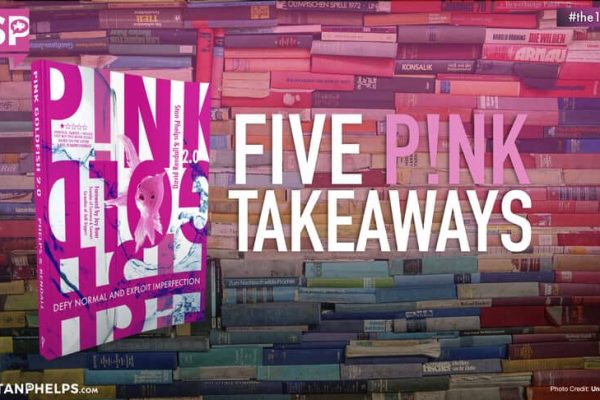
Employee benefits with the biggest impact on culture seem to be those that bring employees together.

In “Green Goldfish 2.0” Lauren McGhee and I featured the case study of Assurance. The Illinois-based insurance brokerage has a whole host of incentives for its employees, including Starbucks coffee and yoga classes. Plus big-ticket items such as referral bonuses for new clients, education reimbursements, and companywide bonuses for reaching goals.

Yet, they’ve learned all benefits aren’t created equal. “I think we’re really thoughtful about the things we emphasize,” says Jackie Gould, the company’s COO. “A lot of [the benefits] aren’t really about the money. It’s more about fostering the relationships.”

Relationships flourish when people come together around a common goal or purpose.

According to Steven Handmaker, former CMO at Assurance (now CMO at its parent Marsh McLennan), culture is the secret sauce for engagement. Each year the company rallies around a specific theme and an accompanying song.

The songs are typically from the 1980s with a fun/irreverent feel. In 2017, it was the “Power of Love” by Huey Lewis. The previous year was Salt-N-Pepa’s “Push It,” and the theme was wellness.

Assurance’s “Shared Success” bonus program is based on four components, two of which are financial and two that tie in with the cultural theme. For example, during the wellness year, everyone in the company would achieve success if 84% of the company completed a 5K race at some point during the year. Over 95% ended up completing a race.

[HOLD MY BEER: Anheuser-Busch InBev has instituted a shared success goal with regard to COVID-19 vaccinations. The company plans to give every American a free beer if 70% of Americans are vaccinated with at least one shot by the Fourth of July. Do we have a shot at this? Unfortunately, it doesn’t look good given current vaccination rates. I don’t have high hopes. But, that’s not the case if you live in the State of Washington. They just announced they are giving away a joint for a jab. I can hear Austin Powers in my ear, “A poke and a toke”]

Back to Assurance. In 2017, the goal was 37 handwritten notes. Twenty were meant for customers and 17 for friends/family. They also achieved that shared goal.

Has it worked? Over the years, Assurance has become a fixture on Fortune’s “Best Place to Work “(for Small to Medium businesses), and they won “Best Place to Work in Chicago” by the Chicago Tribune.

Not bad for a “boring” insurance brokerage.

Takeaway: Better together

Follow me on Twitter or LinkedIn.

Stan Phelps

Stan Phelps walks the walk. He stands out in the sea of sameness by modeling his own Differentiated Experience (DX) message: Differentiation isn’t just about what you say, it’s about what you do and, more importantly, how and why you do it. Stan leverages his unique collection of 5,000+ case studies on customer, employee, and brand experience to engage audiences with informative learning-based experiences. He believes purposeful DX wins the hearts of employees and customers, and differentiation ultimately boosts loyalty, retention, referrals, and results.

Find Stan’s in-person and virtual keynotes, workshops, and Goldfish tank programs at StanPhelps.com.
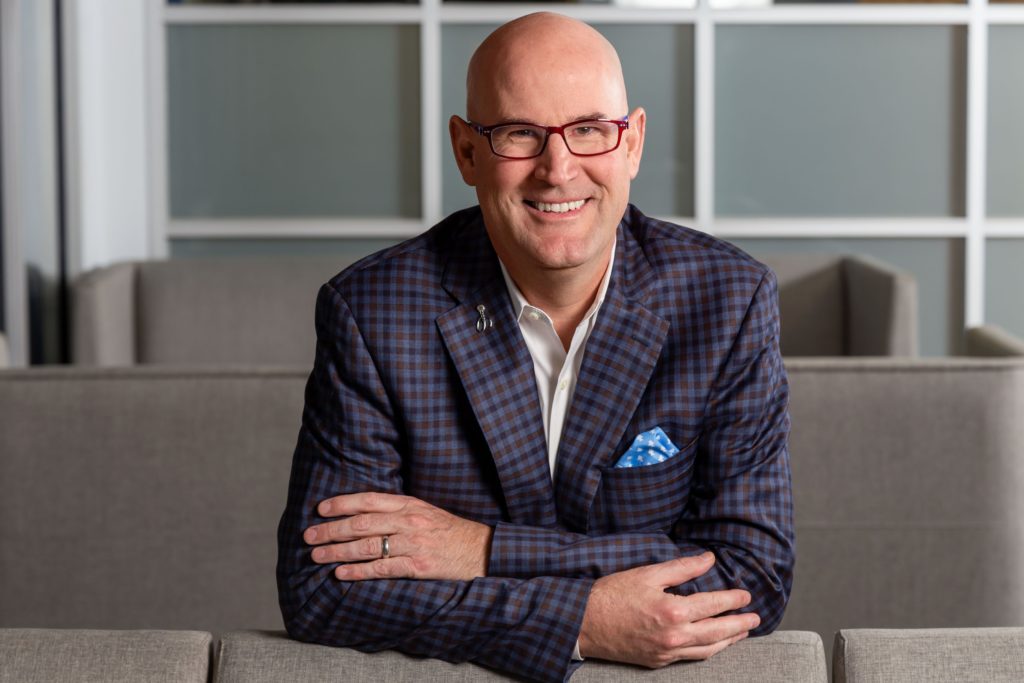
Here are the top five takeaways from our upcoming book (launches July 6th) P!NK GOLDF!SH 2.0:

1. IMPERFECTION WORKS
It’s easy to follow the crowd. It’s easy to blend in. It seems smart to do what other brands are doing. It feels safe. But it’s not. Successful brands stick out. They are different. They are unusual. Every weakness has a corresponding strength.

2. THERE ARE MANY DIFFERENT WAYS TO BE DIFFERENT
We provided a lot of examples in this book, but we don’t recommend that you imitate those examples. In the words of author and speaker Joseph Jaffe, “Once is witty, twice is shitty.” We want you to see that there are an infinite number of ways to be unique. You can learn the principle from other brands, but you have to practice it in your own way. Who can you antagonize? How can you do the opposite? What can you withhold?

3. BE UNAPOLOGETIC
Be proud of what your brand does and what it doesn’t do. Be proud of your brand’s strengths and weaknesses. Don’t apologize for your flaws and don’t try to fix them. Instead, exploit your brand’s imperfections.

4. TO PLEASE SOME CUSTOMERS, YOU HAVE TO DISPLEASE OTHERS
You can’t be good at everything. You can’t make everyone happy. So don’t try. In fact, we think you should go out of your way to make some people unhappy. Choose whom you will reject. Decide whom to repel. Do it deliberately.

5. START SMALL—START NOW
You don’t have to change your entire strategy all at once. You don’t have to turn around completely, just swerve to the left or right. Look for a way to be micro-weird. Little things have a big impact (remember lagniappe). Don’t wait. Deviate.

Follow me on Twitter or LinkedIn.

Stan Phelps

Stan Phelps walks the walk. He stands out in the sea of sameness by modeling his own Differentiated Experience (DX) message: Differentiation isn’t just about what you say, it’s about what you do and, more importantly, how and why you do it. Stan leverages his unique collection of 5,000+ case studies on customer, employee, and brand experience to engage audiences with informative learning-based experiences. He believes purposeful DX wins the hearts of employees and customers, and differentiation ultimately boosts loyalty, retention, referrals, and results.

Find Stan’s in-person and virtual keynotes, workshops, and Goldfish tank programs at StanPhelps.com.
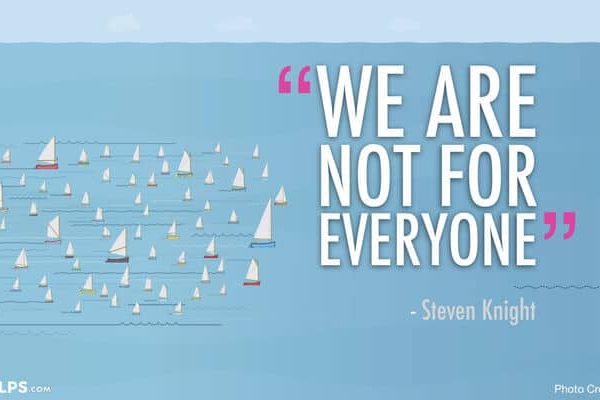
WE ARE NOT FOR EVERYONE. This is a central tenet of Pink Goldfish strategy. It was also the “Aha” moment that Steven Knight of Mosaic Home Services Ltd. took away from a Pink program with David Rendall.

In a recent Inc. Magazine article (see link in the comments), Steven recounts the experience:

“Until I heard David Rendall’s talk, I made the same mistake many entrepreneurs in various industries make: They don’t narrowly define their core customer.

Digging deeper, I realized that my core customer is homeowners. I always thought, ‘A homeowner is a homeowner, right?’

Wrong.

The single mother of two hiring a plumber to fix a leaky tap on a Saturday morning has very different expectations, purchasing behaviors, and budgets than the family who hires that same plumber to remodel one of their six bathrooms. Once I looked deeper into the market and analyzed our customer data, I was amazed at what I learned.”

Armed with this insight, Steven charted a new course:

“That’s when my partners and I implemented a new campaign with our marketing, sales, and customer service teams:

‘We’re not for everyone.’

When we introduced that concept, it was met with anxiety, frustration, confusion, and a litany of other emotions. One of our best sales representatives exclaimed, ‘What the heck do you mean? We’re supposed to turn customers away?’

That’s precisely what we did. We looked into our market, deeply defined exactly who we were for, and cut out all other distractions. We published marketing campaigns and social media posts about who we are for, and who we are not for.

We empowered sales reps and client care teams to say no and give our competitors referrals. We turned away more business than we had ever done. Every bone in my entrepreneurial body ached. The experience made me cringe, and I endured many sleepless nights. But, within two weeks, my business became so much simpler, more efficient, and my team was so much happier.”

Did it work? That’s the 64,000 dollar question in business. Here are the results:

– warranty callbacks decreased by 49% within 30 days
– monthly sales increased by 35% within 14 days
– turnover in customer service dropped by 75% within 90 days
– accounts receivable decreased from 78 to 15 days within 4 months

Be great at what your most important customers value. Steven summed up his thinking:

“We want to work with homeowners who see value in our products and services, who want something done the right way, on time, on budget, and treat us with respect. If you do, welcome. If you don’t, sorry: We’re not for everyone.”

Who are you not for?

Follow me on Twitter or LinkedIn.

Stan Phelps

Stan Phelps walks the walk. He stands out in the sea of sameness by modeling his own Differentiated Experience (DX) message: Differentiation isn’t just about what you say, it’s about what you do and, more importantly, how and why you do it. Stan leverages his unique collection of 5,000+ case studies on customer, employee, and brand experience to engage audiences with informative learning-based experiences. He believes purposeful DX wins the hearts of employees and customers, and differentiation ultimately boosts loyalty, retention, referrals, and results.

Find Stan’s in-person and virtual keynotes, workshops, and Goldfish tank programs at StanPhelps.com.

Ever heard of this smear campaign? The 1870s Dairy Lobby turned Margarine PINK.

What?

Margarine, s’il vous plaît. Let’s go back 152 years. In 1869, margarine was invented in France. It was an immediate hit given the sky-high price for butter.

It only took one year for it to spread to the US. Oleomargarine was an instant hit here as well.

According to Rebecca Rupp in National Geographic, not everyone was pleased as punch. Its introduction came “to the universal horror of American dairy farmers.” Uh-oh. Within a few years, 37 companies were producing the yellow butter substitute.

The Dairy Lobby went to work positioning the wholesome butter against the unhealthy substitute. That’s right, a full-blown “processed smear” campaign.

Kat Eschner shared in the Smithsonian (see the great article in the comments), how their efforts, “resulted in the 1886 Margarine Act, which was the first of a series of laws imposing restrictive tariffs and fees on margarine producers. They didn’t all stick, but the damage to the burgeoning margarine industry was done. The spread was actually banned in Maine, Michigan, Minnesota, Pennsylvania, Wisconsin… and Ohio.”

It wasn’t banned in New Hampshire. The Granite State had another more colorful idea. In 1891, a new law regulated that any margarine sold must be tinted pink. Sellers of normal margarine faced stiff penalties. You could get whacked with a $100 fine (equivalent to almost $3,000 today) or 2 months in jail.

After 7 years of pink margarine, the Supreme Court of New Hampshire had enough. The court struck down that law according to reporting by Eschner,

“’Pink is not the color of oleomargarine in its natural state,’ the Court stated in its ruling. The law stating that margarine had to be colored pink rendered the product ‘unsalable,’ the court concluded: ‘To color the substance as provided for in the statute naturally excites a prejudice and strengthens a repugnance up to the point of a positive and absolute refusal to purchase the article at any price.’ The judgment argued that even though margarine producers were technically allowed to sell margarine—provided it was pink—they effectively couldn’t sell their product, because nobody would buy pink margarine.”

I love, love this story. Hat tip to my P!NK GOLDF!SH 2.0 co-author David Rendall for sharing it.

As we share in our upcoming book (launching July 5th), Pink is polarizing as a color. In the book, “Pink: The Exposed Color in Contemporary Culture,” Barbara Nemitz points out that pink seldom occurs in nature and is uncommon in architecture and design. Pink “attracts attention by virtue of its rarity in natural environments.”

Additionally, pink is one of the most infrequently used color terms.
Valerie Steele, in her book, “Pink: The History of a Punk, Pretty, Powerful Color,” argues that “pink always stands out from other colors, making it a special color.”

Pink the color of differentiation. It is perfectly imperfect.

Follow me on Twitter or LinkedIn.

Stan Phelps

Stan Phelps walks the walk. He stands out in the sea of sameness by modeling his own Differentiated Experience (DX) message: Differentiation isn’t just about what you say, it’s about what you do and, more importantly, how and why you do it. Stan leverages his unique collection of 5,000+ case studies on customer, employee, and brand experience to engage audiences with informative learning-based experiences. He believes purposeful DX wins the hearts of employees and customers, and differentiation ultimately boosts loyalty, retention, referrals, and results.

Find Stan’s in-person and virtual keynotes, workshops, and Goldfish tank programs at StanPhelps.com.
“Follow the path of the unsafe, independent thinker. Expose your ideas to the danger of controversy. Speak your mind and fear less the label of ‘crackpot’ than the stigma of conformity.”
— Thomas J. Watson 

Naomi Osaka made some serious waves this week when she pulled out of Roland Garros. The reigning US Open and Australian Open Champion had taken a controversial stance heading into the tournament. She decided to forego post-match press conferences at the French Open to safeguard her mental health.

After winning her first-round match, Osaka did an on-court press interview but skipped the press conference. She was fined $15,000. Facing escalating fines, a potential default, and further long-term repercussions from the other Grand Slams, Osaka decided to withdraw. She shared a statement on Twitter (here’s full statement). In the tweet, Naomi opened up about her issues with depression.

Is Osaka right or wrong? Could both she and the tournament handled this better? Both are a matter of opinion.

As for the tournament, before her withdrawal, they tweeted pictures of Rafael Nadal, Kei Nishikori, Aryna Sabalenka, and Coco Gauff engaging with the media along with the caption: “They understood the assignment.” They have since deleted the tweet.

In the ultimate bit of irony, the tournament held a press conference in reaction to Osaka and her decision to withdraw. After reading a brief statement . . . they declined to answer any questions from the media.

I applaud Naomi for having the courage to stand up and EXPOSE this important issue. She was not afraid to challenge the norm.

The E in our Pink Goldfish FLAWSOME framework stands for exposing. Exposing is about honesty, transparency, and authenticity.

In order to create a Pink Goldfish, you have to be willing to reveal, instead of conceal; declare, instead of deny; disclose, instead of disguise; confide, instead of hide. You need a foundation of truth, which is uncommon in a world of spin control and subjectivity.

This post began with a quote by Thomas J. Watson. I’ll end with one by Mother Teresa…

“Honesty and transparency make you vulnerable. Be honest and transparent anyway.”

Follow me on Twitter or LinkedIn.

Stan Phelps

Stan Phelps walks the walk. He stands out in the sea of sameness by modeling his own Differentiated Experience (DX) message: Differentiation isn’t just about what you say, it’s about what you do and, more importantly, how and why you do it. Stan leverages his unique collection of 5,000+ case studies on customer, employee, and brand experience to engage audiences with informative learning-based experiences. He believes purposeful DX wins the hearts of employees and customers, and differentiation ultimately boosts loyalty, retention, referrals, and results.

Find Stan’s in-person and virtual keynotes, workshops, and Goldfish tank programs at StanPhelps.com.
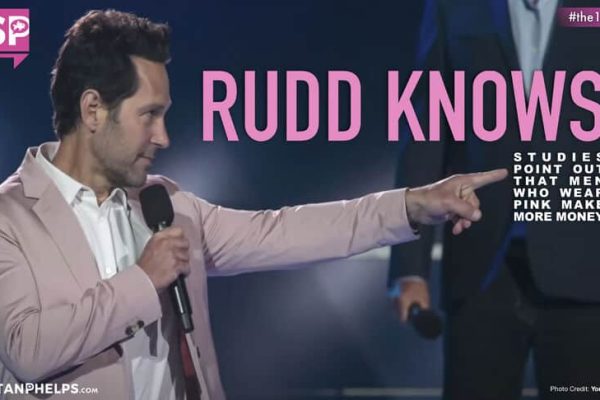
Paul Ruud knows it. Recent studies show that men who wear PINK make more money. Ant-Man nearly broke Twitter this week while rocking a pink suit at the launch of the Avengers Campus at Disney’s California Adventure Park.

FYI Marvel fans and fashionistas, the Campus opens to the public today June 4th and the suit was made by Paul Smith.

Back to wearing pink and this more money thing. COTTON USA™ released a study showing that men who wear pink shirts make $1,600 more a year than colleagues who stick to traditional blue or white shirts.

In addition to the extra cash, there are some other fringe benefits:

– more compliments from female colleagues
– perceived as more confident
– twice as likely to have a master’s degree

This is music to my P!NK GOLDF!SH 2.0 co-author David Rendall. He wears head-to-toe Pink on stage. His unconventional commitment to pink makes him memorable.

David has lopsided pink and it has become inextricably linked to his brand. It’s on the cover of his books. It’s on his website.

It’s everywhere, even off-stage. Because he competes in Ironman triathlons and ultramarathons, he had his bike custom-painted pink. He also has a pink helmet, sunglasses, hat, tri-suit, and socks. Even his wedding ring is pink, thanks to QALO.

More than once David has been approached in an airport
by someone who recognized him because of his pink clothes. David receives pink gifts from his clients and fans, most notably, pink underwear and a pink cowboy hat. His Instagram feed is a constant barrage of interesting pink objects, like cars and buildings, sent from people all over the world. 

In the past, I’ve ribbed David Rendall about the superiority of Purple over Pink. And the study backs this up. It turns out I might need to lighten up a bit though. Men who wear lilac shirts have the most office romances and a better chance of receiving promotions.

One geographical caveat and an interesting note:

1. This was a British study. Mileage might vary outside the UK.

2. Is this preference deep-seeded? Throughout the 1800s and into the early 1900s, pink ribbons or decorations were often worn by young boys in England. That’s right. Boys. They were considered small men, and while men in England wore red uniforms, boys wore pink. Pink was seen as a more masculine color than light blue. Let that sink in for a minute. Pink was considered masculine. Pink was strong. Blue was delicate. Theories to explain this have varied over the years, but it’s generally believed that blue was associated with the Virgin Mary, hence its more feminine connotations, while pink was linked to red, which was seen as a strong and masculine color.

Questions: Are you on TEAM PINK or TEAM PURPLE? Why do you think men in pink make mo’ money?

Follow me on Twitter or LinkedIn.

Stan Phelps

Stan Phelps walks the walk. He stands out in the sea of sameness by modeling his own Differentiated Experience (DX) message: Differentiation isn’t just about what you say, it’s about what you do and, more importantly, how and why you do it. Stan leverages his unique collection of 5,000+ case studies on customer, employee, and brand experience to engage audiences with informative learning-based experiences. He believes purposeful DX wins the hearts of employees and customers, and differentiation ultimately boosts loyalty, retention, referrals, and results.

Find Stan’s in-person and virtual keynotes, workshops, and Goldfish tank programs at StanPhelps.com.
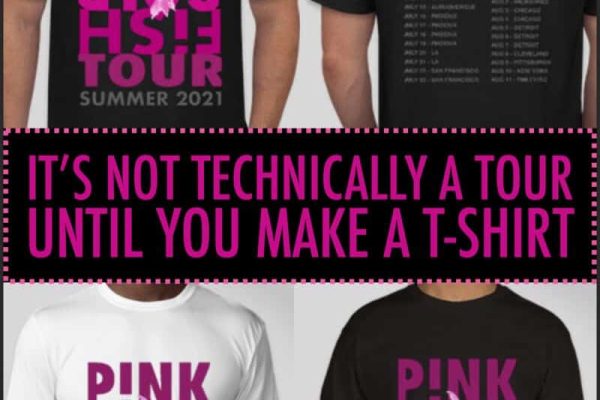
It’s not officially a tour until you have a T-SHIRT. Big thanks to Mike and the team from Custom Ink for their help. David Rendall and I will be looking dapper for our road trip to launch our upcoming book “Pink Goldfish 2.0 – Defy Normal & Exploit Imperfection.” Excited about getting on the road in July.

Here’s our itinerary:

JULY 6 – RALEIGH
JULY 7 – NASHVILLE
JULY 8 – MEMPHIS
JULY 9 – NEW ORLEANS
JULY 10 – NEW ORLEANS
JULY 11 – AUSTIN
JULY 12 – AUSTIN
JULY 13 – DALLAS
JULY 14 – OKC
JULY 15 – ALBUQUERQUE
JULY 16 – PHOENIX
JULY 17 – PHOENIX
JULY 18 – PHOENIX
JULY 19 – PHOENIX
JULY 20 – LA
JULY 21 – LA
JULY 22 – SAN FRANCISCO
JULY 23 – SAN FRANCISCO
JULY 24 – PORTLAND
JULY 25 – PORTLAND
JULY 26 – SEATTLE
JULY 27 – SEATTLE
JULY 28 – BOISE
JULY 29 – SALT LAKE
JULY 30 – DENVER
JULY 31 – DENVER
AUG 1 – KANSAS
AUG 2 – MILWAUKEE
AUG 3 – CHICAGO
AUG 4 – CHICAGO
AUG 5 – DETROIT
AUG 6 – DETROIT
AUG 7 – DETROIT
AUG 8 – CLEVELAND
AUG 9 – PITTSBURGH
AUG 10 – NEW YORK
AUG 11 – PHILLY/DC

We’ll be doing book signing events, luncheon keynotes, strategy sessions, and workshops along the way. Interested in putting together a program, let’s talk…

Follow me on Twitter or LinkedIn.

Stan Phelps

Stan Phelps walks the walk. He stands out in the sea of sameness by modeling his own Differentiated Experience (DX) message: Differentiation isn’t just about what you say, it’s about what you do and, more importantly, how and why you do it. Stan leverages his unique collection of 5,000+ case studies on customer, employee, and brand experience to engage audiences with informative learning-based experiences. He believes purposeful DX wins the hearts of employees and customers, and differentiation ultimately boosts loyalty, retention, referrals, and results.

Find Stan’s in-person and virtual keynotes, workshops, and Goldfish tank programs at StanPhelps.com.

1 26 27 28 29 30 48
A simple illustration of a purple fish facing right on a plain background.

I've had the pleasure of working with teams at:

Three purple fish silhouettes swimming to the right on a dark background.

Find Your Best-Match Program

With over 18 possible keynote speaking presentations, workshops, and GOLDFISH TANK programs available to meet your ever-evolving needs, I’ve created this 2-minute, 6-question quiz to help you understand which program is best for you and your audience.

Meet Your Presenter

Through keynote speaking presentations, hands-on workshops, and GOLDFISH TANK programs, I empower you to power loyalty and growth.

Hi, I’m Stan Phelps. I work with organizations that want to increase loyalty, drive sales, and promote positive word-of-mouth by creating differentiated experiences.

As an author, keynote speaker, and workshop facilitator, my in-person and virtual programs stand out in a sea of sameness because I model my own message of differentiated experience (DX).

I leverage my unique collection of more than 5,500 case studies on customer, employee, and brand experience to engage audiences with practical ideas that inspire action.

A person wearing glasses and a gray quarter-zip sweater stands outdoors in front of a building with a triangular glass roof at dusk.

Every time we do business together, Something amazing happens in the world!

Through my partner B1G1, each program gives back to create global IMPACT

Two students in blue uniforms smile while washing their hands at an outdoor tap.

When we complete a GOLDFISH TANK, we give 1001 days of clean water to school children

Collage of three images: a person washing hands, a child drawing with colored pencils, and a group of people sitting outdoors with some raising their hands.

When we complete a GLOBAL engagement, we give 365 days of clean water access in Peru, 120 days of learning aids in Malaysia, and 50 days of business training for women in Malawi

Hand placing a brick on a surface with text: "One Book = One Brick" and an Amazon logo.

When someone downloads a GOLDFISH eBook, we give one brick toward building school facilities in Cambodia