
Stan Phelp's Blog

The Goldfish Chronicles

Sharing insights on customer experience, employee engagement, and brand strategy.

Forrest Gump didn’t create the smiley face. Harvey Ross Ball gets credit for that moment of genius. An artist and ad guy, Ball was commissioned in 1963 to create a graphic to help raise morale for employees of an insurance company that had been through a few tough mergers and acquisitions.

The goal? Get the employees to cheer up and smile more. Just 10 minutes of brilliance and $45 later, the iconic black-and-yellow smiley face was born.

The Science Behind The Smile

Ball’s art has science on its side. Smiling and laughing release endorphins, “feel-good” chemicals that boost happiness and relieve stress and pain. Bonus: When you smile, you activate the joy region of the brain in a cool feedback loop—you either smile and are joyful, or are joyful and then smile.

“Smile” is the ninth and final factor of the H.A.P.P.I.N.E.S.S. equation. It’s the last in a nine blog series on Forbes taking a closer look at all of the factors that help businesses increase happiness to drive growth, productivity and bottom-line results.

The post looks at several companies creating happy moments that make employees smile.

Are you creating experiences such as awards and recognitions, special celebrations and acts of kindness to drive engagement?

Follow me on Twitter or LinkedIn.
Stan Phelps

Stan Phelps walks the walk. He stands out in the sea of sameness by modeling his own Differentiated Experience (DX) message: Differentiation isn’t just about what you say, it’s about what you do and, more importantly, how and why you do it. Stan leverages his unique collection of 5,000+ case studies on customer, employee, and brand experience to engage audiences with informative learning-based experiences. He believes purposeful DX wins the hearts of employees and customers, and differentiation ultimately boosts loyalty, retention, referrals, and results.

Find Stan’s in-person and virtual keynotes, workshops, and Goldfish tank programs at StanPhelps.com.
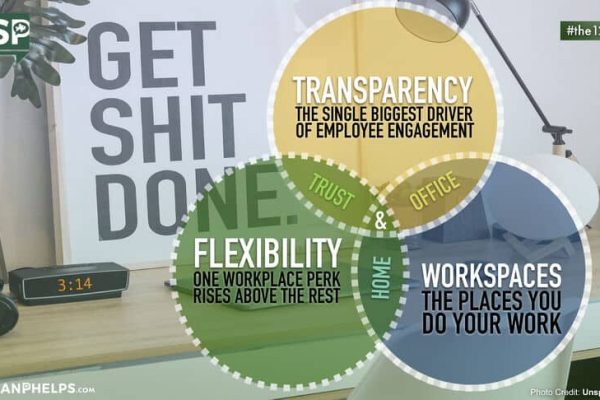
“Should I stay or should I go?” Are you ready for The Workplace CLASH? Leaders want workers back in the office. Workers want to stay home and work remotely.

“Should I stay or should I go” isn’t just a classic punk anthem. It’s a challenge that’s shaping up to be a standoff in corporate America.

Leaders like Morgan Stanley‘s CEO have thrown down the gauntlet. James Morgan shared the expectation that staff return to the office by Labor Day. Hinting that’s he’d be “disappointed” if the troops didn’t comply . . . and intimated that “other” conversations might need to happen.

How did remote work become a black or white issue? It seemed to work well during a global pandemic. To quote The Clash’s late lead singer Joe Strummer:

“One day it’s fine and next it’s black
So if you want me off your back
Well, come on and let me know
Should I stay or should I go?
This indecision is bugging me.”

This conundrum got me thinking about a few of the most important drivers of employee engagement. Those three drivers are the Green Goldfish of Transparency, Flexibility, and Shelter.

1. Clear as mud – Transparency speaks to employees and their level of trust from leadership. It is marked by the extent that employees believe that their leaders have a sincere interest in their well-being. Do they understand the intent behind decisions?

2. By choice – Flexibility or flex is the most coveted perk by employees. The ability to choose “where” and “how” to do work is valued by every generation. For many, work is no longer where you go. It’s simply what you do.

3. Gimme’ Shelter – Shelter refers to the spaces where you do your work. Smart companies realize there isn’t a one-size-fits-all solution. They provide a palette of space.

Can we summon the late English logician and philosopher John Venn? Perhaps we can diagram an ideal situation where flexibility, transparency, and space overlap. Here’s my attempt at the sweet-spot:

“Leaders provide their employees with the power to choose where & when to get their work done. Enabling them with the tools, space, & trust to deliver meaningful work.”

What are your thoughts on this tug of war?

Follow me on Twitter or LinkedIn.

Stan Phelps

Stan Phelps walks the walk. He stands out in the sea of sameness by modeling his own Differentiated Experience (DX) message: Differentiation isn’t just about what you say, it’s about what you do and, more importantly, how and why you do it. Stan leverages his unique collection of 5,000+ case studies on customer, employee, and brand experience to engage audiences with informative learning-based experiences. He believes purposeful DX wins the hearts of employees and customers, and differentiation ultimately boosts loyalty, retention, referrals, and results.

Find Stan’s in-person and virtual keynotes, workshops, and Goldfish tank programs at StanPhelps.com.

YOU ARE INVITED. David Rendall and I will do a virtual launch for “P!NK GOLDF!SH 2.0 – DEFY NORMAL AND EXPLOIT IMPERFECTION” on Tuesday, July 6th at noon EST. Register here: https://lnkd.in/dext_Cj

We’ll share how can you create one of the few organizations that become extraordinary? P!NK GOLDF!SH 2.0 is about helping you compete more effectively by becoming truly different.

What’s the book about? The book is broken into three main sections:

Section I outlines the Why:
P!NK 2.0 explores the need to embrace weirdness and amplify weakness to differentiate in business. We reveal how everything we’ve learned about weakness is wrong. We show how every weakness has a corresponding strength. We examine the seven reasons to embrace weirdness. The section ends with an explanation of our metaphor of the Pink Goldfish.

Section II showcases the What:
Here we examine the concept of being F.L.A.W.S.O.M.E. This is the idea of embracing your flaws. You can succeed because of your flaws, not despite them. We use F.L.A.W.S.O.M.E. as our acronym for the eight types of Pink Goldfish. We share our flaunting matrix and each type: Flaunting, Lopsiding, Antagonizing, Withholding, Swerving, Opposing, Micro-weirding, and Exposing. This section points out the ways to stand out by doing more of what makes you inherently imperfect, and intentionally less of what others consider normal and strong in business.

Section III explains the How:
Here we share the process of finding your own Pink Goldfish. We delve into the six A’s. The first A is Assess, and it involves understanding what makes you imperfect. The second A is Appreciate. Appreciation is accepting and taking ownership of your uniqueness. The third A is Align. Aligning is about finding those areas of weirdness and weakness that resonate with your customer and create meaningful differentiation. The fourth A is Amplifi. Amplification is the process of turning up or turning down the dial to bring your differentiation to life. The fifth A is Augment. Augmenting is combining two or more strategies to become even more unique. The sixth and final A is Attack. Attack will provide insight on how to exploit the weaknesses of your competition. 

Look forward to seeing you for the virtual launch on July 6th.

Follow me on Twitter or LinkedIn.

Stan Phelps

Stan Phelps walks the walk. He stands out in the sea of sameness by modeling his own Differentiated Experience (DX) message: Differentiation isn’t just about what you say, it’s about what you do and, more importantly, how and why you do it. Stan leverages his unique collection of 5,000+ case studies on customer, employee, and brand experience to engage audiences with informative learning-based experiences. He believes purposeful DX wins the hearts of employees and customers, and differentiation ultimately boosts loyalty, retention, referrals, and results.

Find Stan’s in-person and virtual keynotes, workshops, and Goldfish tank programs at StanPhelps.com.
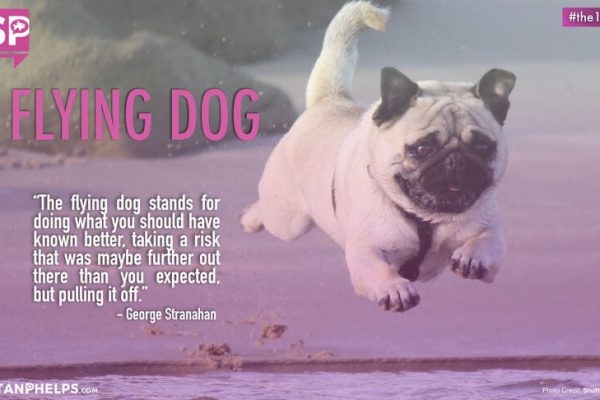
“The flying dog stands for doing what you should have known better, taking a risk that was maybe further out there than you expected, but pulling it off.” This is a quote by the late George Stranahan. Stranahan passed away last week at the age of 89.

If you have a few minutes, I’d highly recommend you read this profile by Alex Traub of The New York Times: https://lnkd.in/dxTXt6a

I guarantee you’ll read it and wish you’d have met Stranahan. This self-described “pilgrimosopher” would laugh at Dos Equis’ “World’s Most Interesting Man” commercials.

Stranahan was a physicist, think-tanker, professor, rancher, taverner, distiller, and brewer. He might be best known for the latter. Stranahan created the Flying Dog Brewery, now the 35th largest microbrewery.

Flying Dog is a brilliant example of a Pink Goldfish. The brewery creates labels that defy normal. Not afraid of antagonizing, they named their beers with references to sexual positions “Doggie Style” and female dogs “Raging Bitch.”

GOOD BEER, NO SHIT

According to Flying Dog, designer Ralph Steadman scrawled these four simple words across his canvas and the mantra for the brewery was born. “We embrace the weirrrd and view craft beer as an art form unlike any other.”

MY TAKEAWAY – A life worth living involves taking leaps. How can we all embrace who we are…. realizing that it is our flaws that make us truly awesome? I raise my glass to you George Stranahan and more flying dogs in my life.

Follow me on Twitter or LinkedIn.

Stan Phelps

Stan Phelps walks the walk. He stands out in the sea of sameness by modeling his own Differentiated Experience (DX) message: Differentiation isn’t just about what you say, it’s about what you do and, more importantly, how and why you do it. Stan leverages his unique collection of 5,000+ case studies on customer, employee, and brand experience to engage audiences with informative learning-based experiences. He believes purposeful DX wins the hearts of employees and customers, and differentiation ultimately boosts loyalty, retention, referrals, and results.

Find Stan’s in-person and virtual keynotes, workshops, and Goldfish tank programs at StanPhelps.com.
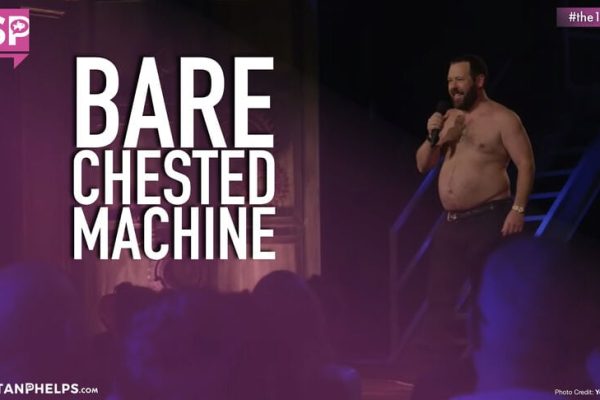
Bert Kreischer is a stand-up comedian. If you’ve ever seen him perform, you’ll remember him for one particular reason.

It’s not because he is a straight, white, and middle-aged man. None of that is very unique.

So how does he differentiate himself?

He swerves as his Pink Goldfish and does his shows shirtless. This is not doubling down on a strength.

To be clear, Bert is not fit. You will not see washboard abs. He doesn’t seem to be a fan of manscaping either. He’s hairy and overweight and proud of it. He shows it off by taking it off.

Why shirtless?

Kreischer shared with Joe Rogan that many comedians get jaded or angry when they stop having fun with their comedy. To avoid that, Kreischer wanted a reminder to have fun while performing. That reminder was removing his shirt. Kreischer becomes aware that he should be having a good time and his audience should be doing the same.

His willingness to expose his imperfect body makes him stand out in the world of stand-up. This flaw makes him awesome.

His nickname is “The Machine” from his days at Florida State University and an infamous school trip to Russia. The story is so unbelievable that it is believable.

Sometimes a Pink Goldfish is a bare-chested comic. 

Follow me on Twitter or LinkedIn.

Stan Phelps

Stan Phelps walks the walk. He stands out in the sea of sameness by modeling his own Differentiated Experience (DX) message: Differentiation isn’t just about what you say, it’s about what you do and, more importantly, how and why you do it. Stan leverages his unique collection of 5,000+ case studies on customer, employee, and brand experience to engage audiences with informative learning-based experiences. He believes purposeful DX wins the hearts of employees and customers, and differentiation ultimately boosts loyalty, retention, referrals, and results.

Find Stan’s in-person and virtual keynotes, workshops, and Goldfish tank programs at StanPhelps.com.

Warning: This post contains a BIG ASS lesson.

Big Ass Fans makes … well, pretty big fans. The first fan nearly two decades ago spanned 20 feet. The company prides itself on being customer-focused and having a direct line to its industrial, agricultural, commercial and residential customers. To bring this to life, they created a role called the Customer Advocacy Manager.

Since 2011, the Customer Advocacy Manager has been centered on making follow up calls to the customers. As a result, customers tend to take these calls seriously and open up more than if they were called by a salesperson.

Being proactive makes a huge difference. Studies have shown that fewer than 5 percent of customers will actually complain when they’ve had a bad experience. By following up, they are not only able to catch mistakes, but also improve processes and product by talking to all customers.

In the follow-up calls, they ask three simple questions:

1. Did you receive the product?
2. Do you have any questions?
3. Is everything OK?

Beyond simple surveys, are you picking up the phone to follow up with your customers to uncover issues and opportunities like Big Ass Fans? Simply saying following up is one of the simplest ways to build repeat business and referrals.

Follow me on Twitter or LinkedIn.

Stan Phelps

Stan Phelps walks the walk. He stands out in the sea of sameness by modeling his own Differentiated Experience (DX) message: Differentiation isn’t just about what you say, it’s about what you do and, more importantly, how and why you do it. Stan leverages his unique collection of 5,000+ case studies on customer, employee, and brand experience to engage audiences with informative learning-based experiences. He believes purposeful DX wins the hearts of employees and customers, and differentiation ultimately boosts loyalty, retention, referrals, and results.

Find Stan’s in-person and virtual keynotes, workshops, and Goldfish tank programs at StanPhelps.com.
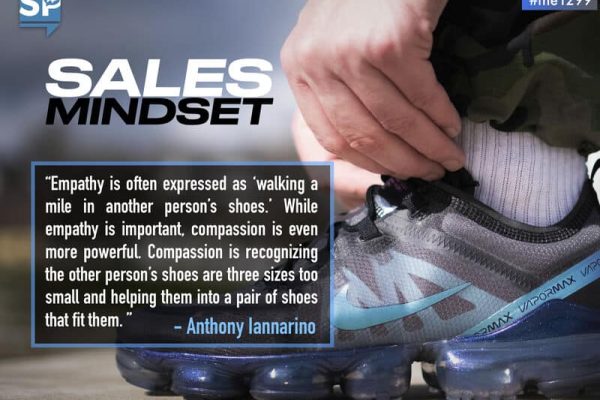
Sales is about finding fit for clients. In the Diamond Goldfish Foreword by best-selling author Anthony Iannarino, he shares the importance of empathy and managing pressure:

“If you work in sales, you have the pressure of reaching your goals or quota, scheduling meetings with prospective clients and taking care of your existing clients. You get the added bonus pressure of having your success officially measured at the end of each quarter—and losing deals you believed you would win. That pressure creates a biological response, which you will gain control of after reading this book.”

“Now, put yourself in your client or prospect’s shoes. They are struggling to produce the results they’re responsible for creating. They don’t really know why they can’t achieve the results that used to be possible for them, let alone the better results their company demands of them. They feel a very similar pressure to yours.”

“The way to eliminate your fears is to eliminate your client’s and prospect’s fears. Empathy is often expressed as ‘walking a mile in another person’s shoes.’ While empathy is important, compassion is even more powerful. Compassion is recognizing the other person’s shoes are three sizes too small and helping them into a pair of shoes that fit them.”

Follow me on Twitter or LinkedIn.

Stan Phelps

Stan Phelps walks the walk. He stands out in the sea of sameness by modeling his own Differentiated Experience (DX) message: Differentiation isn’t just about what you say, it’s about what you do and, more importantly, how and why you do it. Stan leverages his unique collection of 5,000+ case studies on customer, employee, and brand experience to engage audiences with informative learning-based experiences. He believes purposeful DX wins the hearts of employees and customers, and differentiation ultimately boosts loyalty, retention, referrals, and results.

Find Stan’s in-person and virtual keynotes, workshops, and Goldfish tank programs at StanPhelps.com.

The human brain is the most powerful processor on the planet. It’s responsible for incredible advances in art, culture and technology. Yet at times it can cause us to act like anything but a human being. Even though we live in the modern world, it turns out we are still operating on fairly primitive biology. And under pressure, that biology predictably runs our hard-wired survival strategy every time it detects a threat.

To succeed in business and life, we need to UPGRADE OUR HUMANWARE and learn to behave in ways that are counter to what our biology wants us to do. It begins with awareness and making better choices. Applying the Diamond Rule means keeping your wits about you, focusing on the other person and not succumbing to the pressure.

There are two primary skills you’ll need to develop to employ the Diamond Rule:

1. Learning how to manage your own behavior under pressure

Before you will ever be able to relate better to others, it’s important to look in the mirror, understand your behavioral style and manage yourself.

2. Increasing your focus on the concerns of others

When you learn what causes other people to feel stress, you can help reduce their pressure and instantly improve your identity along the way.

Follow me on Twitter or LinkedIn.

Stan Phelps

Stan Phelps walks the walk. He stands out in the sea of sameness by modeling his own Differentiated Experience (DX) message: Differentiation isn’t just about what you say, it’s about what you do and, more importantly, how and why you do it. Stan leverages his unique collection of 5,000+ case studies on customer, employee, and brand experience to engage audiences with informative learning-based experiences. He believes purposeful DX wins the hearts of employees and customers, and differentiation ultimately boosts loyalty, retention, referrals, and results.

Find Stan’s in-person and virtual keynotes, workshops, and Goldfish tank programs at StanPhelps.com.

Throw-ins are the most classic form of lagniappe (a little something extra) and one of the easiest types of Purple Goldfish to implement. Five Guys Enterprises is a hall of fame example of doing the little things to take care of the customer and honor the relationship. Founded by Jerry Murrell and his five sons (Five Guys) run the business. The concept of added value is baked into their model.

Here are a few of the things they do:

• Free peanuts while you wait
• 15 free toppings for your burger/dog
• An extra handful or two of bonus fries

[Author’s Note: It is scientifically proven that the bonus fries taste better than the regular fries. True story. I once read it somewhere. OK, maybe I wrote it down and then read it ;-)]

Do little things make a big difference? For a company that does little to no advertising, here is the mantra from founder Jerry Murrell:

“We figure our best salesman is our customer. Treat that person right, he’ll walk out the door and sell for you. From the beginning, I wanted people to know that we put all our money into the food. That’s why the décor is so simple—red and white tiles. We don’t spend our money on décor. Or on guys in chicken suits. But we’ll go overboard on food.”

What are you throwing in as added value?

Follow me on Twitter or LinkedIn.

Stan Phelps

Stan Phelps walks the walk. He stands out in the sea of sameness by modeling his own Differentiated Experience (DX) message: Differentiation isn’t just about what you say, it’s about what you do and, more importantly, how and why you do it. Stan leverages his unique collection of 5,000+ case studies on customer, employee, and brand experience to engage audiences with informative learning-based experiences. He believes purposeful DX wins the hearts of employees and customers, and differentiation ultimately boosts loyalty, retention, referrals, and results.

Find Stan’s in-person and virtual keynotes, workshops, and Goldfish tank programs at StanPhelps.com.
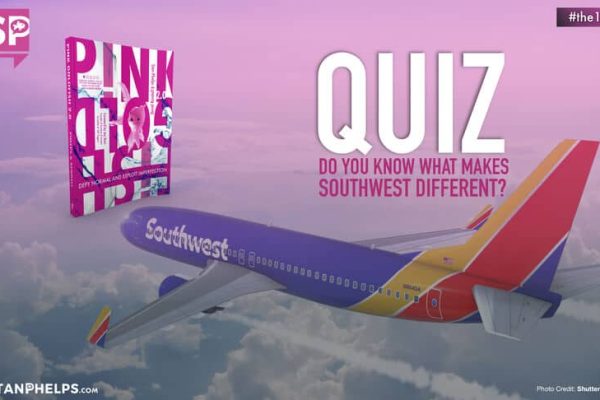
Southwest Airlines is probably the most well-known and most successful example of differentiation in American business.

David Rendall and I came up with a way to capitalize on Southwest’s awesomeness in P!NK GOLDF!SH 2.0. We created a short quiz to test the FLAWSOME knowledge of our readers.

Here’s how it works:

We share what Southwest does differently and you fill in the blank with the corresponding FLAWSOME strategy.

Here’s a sample. . . Southwest doesn’t provide in-flight meals.
This is an example of Withholding.

Here’s your quiz:
Question 1. Southwest is unapologetic about its cheap no-frills flights. This is an example of? _________

Question 2. Southwest Airlines is built on love. Their base is at Dallas Love Field. There is a heart in their logo. There is also a heart on the belly of each one of their planes. “It’s the finishing touch that makes the Southwest brand unique, demonstrating that Southwest cares about each and every customer. Even on the belly of the plane, the heart is a symbolic reminder that we put our hearts into every flight.” Southwest hires staff based specifically on their friendliness and empathy.
This is an example of? ________

Question 3. After a customer consistently sent complaints about Southwest’s failure to provide first-class, in-flight meals, assigned seating, and just about everything else, Herb Kelleher, the late founder and CEO, sent her a letter that said simply, “We will miss you. Love, Herb.”
This is an example of? ______

Question 4. Southwest doesn’t have first class. They don’t have assigned seating. They only sell tickets on their website or app. They don’t have airport lounges. You can’t fly Southwest to Europe, Asia, Africa, Australia, or South America. They have no partner airlines.
This is an example of? ______

Question 5. Most airlines fly an entire fleet of planes. By contrast, Southwest only has one type of plane from one manufacturer. They exclusively fly the Boeing 737. They have 747 . . . 737s to be exact.
This is an example of _______

Question 6. Southwest flies point to point. They don’t have hub and spoke routes like the other airlines. Southwest also flies into and out of smaller secondary airports, instead of the large major airports used by most other carriers.
This is an example of? _______

Question 7. Southwest flight attendants often will often create their own version of the flight safety announcement, changing the boring lingo into a rap or comedy routine.
This is an example of? _______

Question 8. Transfarency. Southwest makes clear and simple what others make complex and murky. Southwest doesn’t charge fees like other airlines. Not only do Bags Fly Free, there are no change or cancellation fees when you fly Southwest.
This is an example of? ______

Here’s the Answer Key:
1. Flaunting
2. Lopsiding
3. Antagonizing
4. Withholding
5. Swerving
6. Opposing
7. Micro-Weirding
8. Exposing

How’d you do?

Follow me on Twitter or LinkedIn.

Stan Phelps

Stan Phelps walks the walk. He stands out in the sea of sameness by modeling his own Differentiated Experience (DX) message: Differentiation isn’t just about what you say, it’s about what you do and, more importantly, how and why you do it. Stan leverages his unique collection of 5,000+ case studies on customer, employee, and brand experience to engage audiences with informative learning-based experiences. He believes purposeful DX wins the hearts of employees and customers, and differentiation ultimately boosts loyalty, retention, referrals, and results.

Find Stan’s in-person and virtual keynotes, workshops, and Goldfish tank programs at StanPhelps.com.

1 25 26 27 28 29 48
A simple illustration of a purple fish facing right on a plain background.

I've had the pleasure of working with teams at:

Three purple fish silhouettes swimming to the right on a dark background.

Find Your Best-Match Program

With over 18 possible keynote speaking presentations, workshops, and GOLDFISH TANK programs available to meet your ever-evolving needs, I’ve created this 2-minute, 6-question quiz to help you understand which program is best for you and your audience.

Meet Your Presenter

Through keynote speaking presentations, hands-on workshops, and GOLDFISH TANK programs, I empower you to power loyalty and growth.

Hi, I’m Stan Phelps. I work with organizations that want to increase loyalty, drive sales, and promote positive word-of-mouth by creating differentiated experiences.

As an author, keynote speaker, and workshop facilitator, my in-person and virtual programs stand out in a sea of sameness because I model my own message of differentiated experience (DX).

I leverage my unique collection of more than 5,500 case studies on customer, employee, and brand experience to engage audiences with practical ideas that inspire action.

A person wearing glasses and a gray quarter-zip sweater stands outdoors in front of a building with a triangular glass roof at dusk.

Every time we do business together, Something amazing happens in the world!

Through my partner B1G1, each program gives back to create global IMPACT

Two students in blue uniforms smile while washing their hands at an outdoor tap.

When we complete a GOLDFISH TANK, we give 1001 days of clean water to school children

Collage of three images: a person washing hands, a child drawing with colored pencils, and a group of people sitting outdoors with some raising their hands.

When we complete a GLOBAL engagement, we give 365 days of clean water access in Peru, 120 days of learning aids in Malaysia, and 50 days of business training for women in Malawi

Hand placing a brick on a surface with text: "One Book = One Brick" and an Amazon logo.

When someone downloads a GOLDFISH eBook, we give one brick toward building school facilities in Cambodia